
We are processing your request.
Please, don’t close or refresh the page.
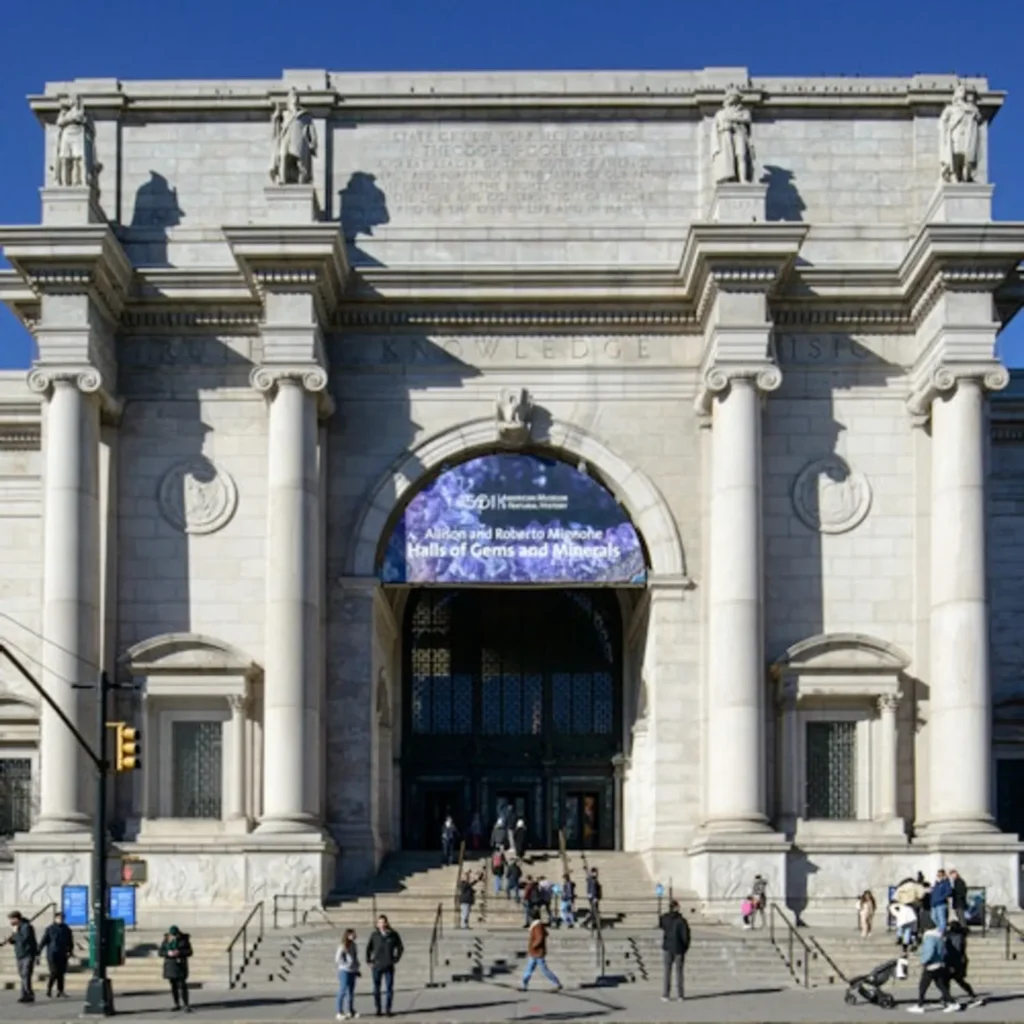
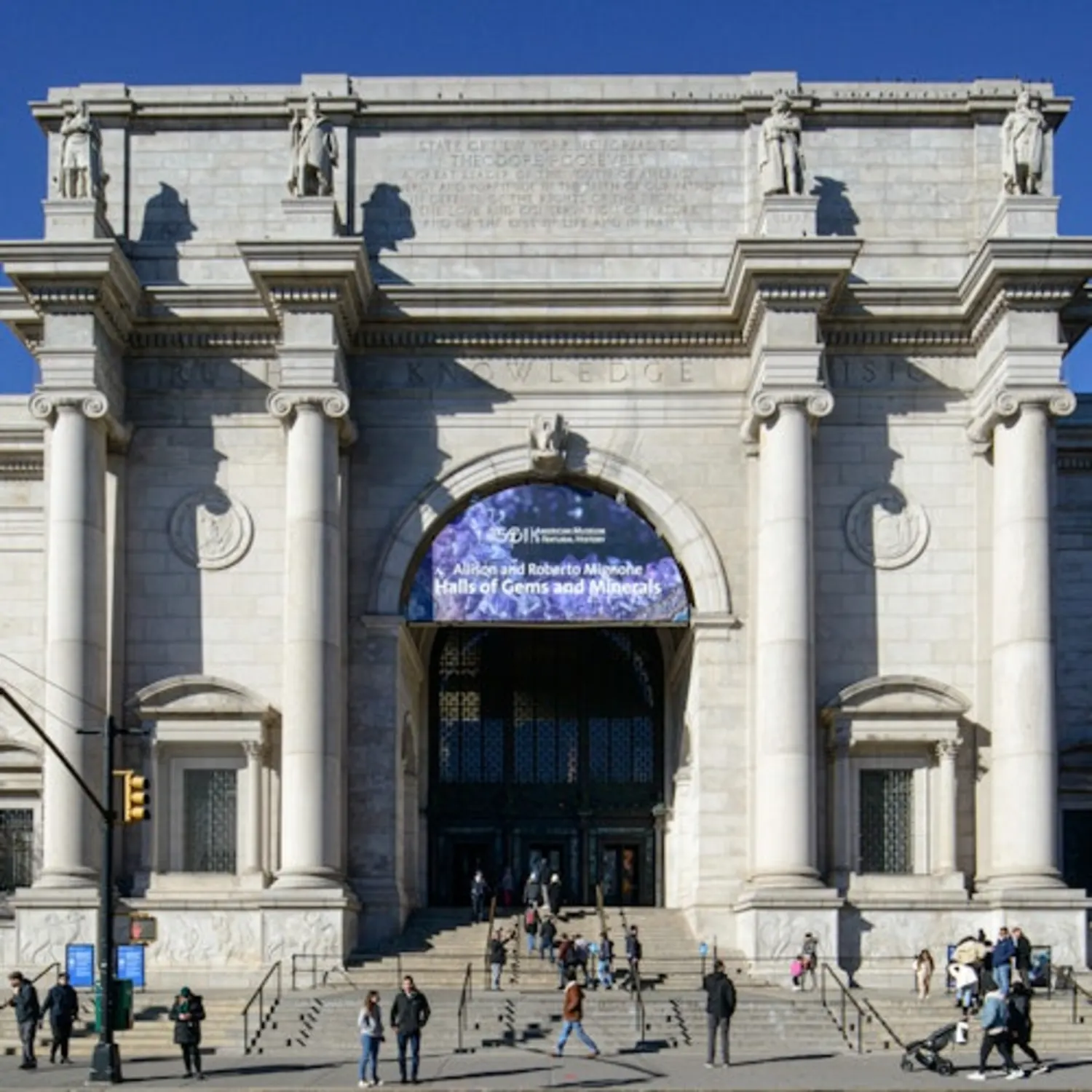
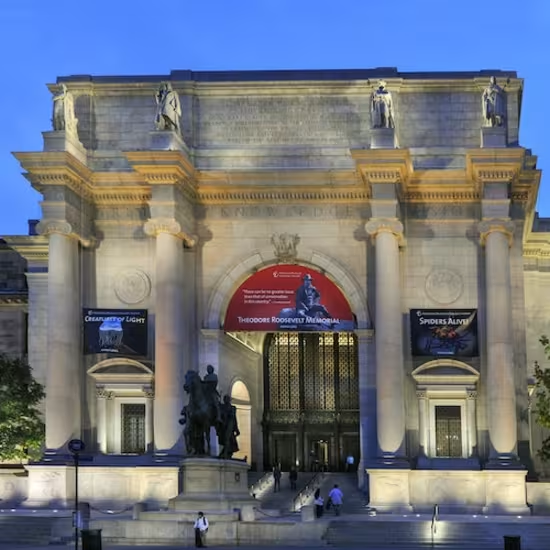
Theodore Roosevelt statue outside the American Museum of Natural History

AMNH Dinosaurs: Fossil Halls, T. rex and Titanosaur

The American Museum of Natural History shows about 100 dinosaur fossils on its fourth floor, from a 122-foot Titanosaur to a Tyrannosaurus rex. Here is what each hall holds and how to plan the visit.

The American Museum of Natural History keeps its dinosaur fossils in a group of halls on the fourth floor. In total the fourth-floor halls display 600 fossil specimens, including about 100 dinosaurs and more than 250 mammal fossils, and about 85 percent are real fossils rather than casts. The stars are a 122-foot Titanosaur, a Tyrannosaurus rex and a Triceratops. This guide walks through the halls in order, explains how they are arranged, and covers the ticketed dinosaur exhibition and the practical details of the visit.

4.6
(362)

American Museum of Natural History

Highlights

Explore over 40 permanent gallery spaces showcasing natural wonders.

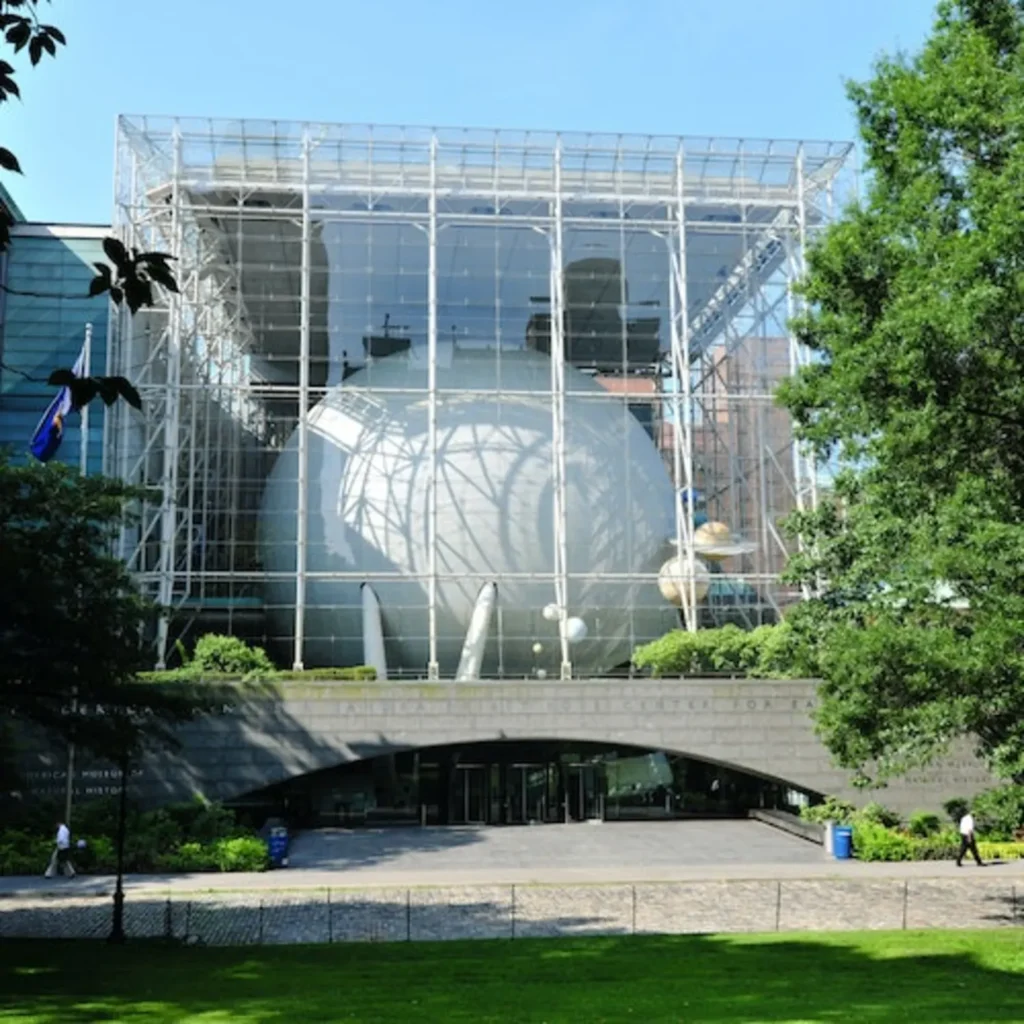
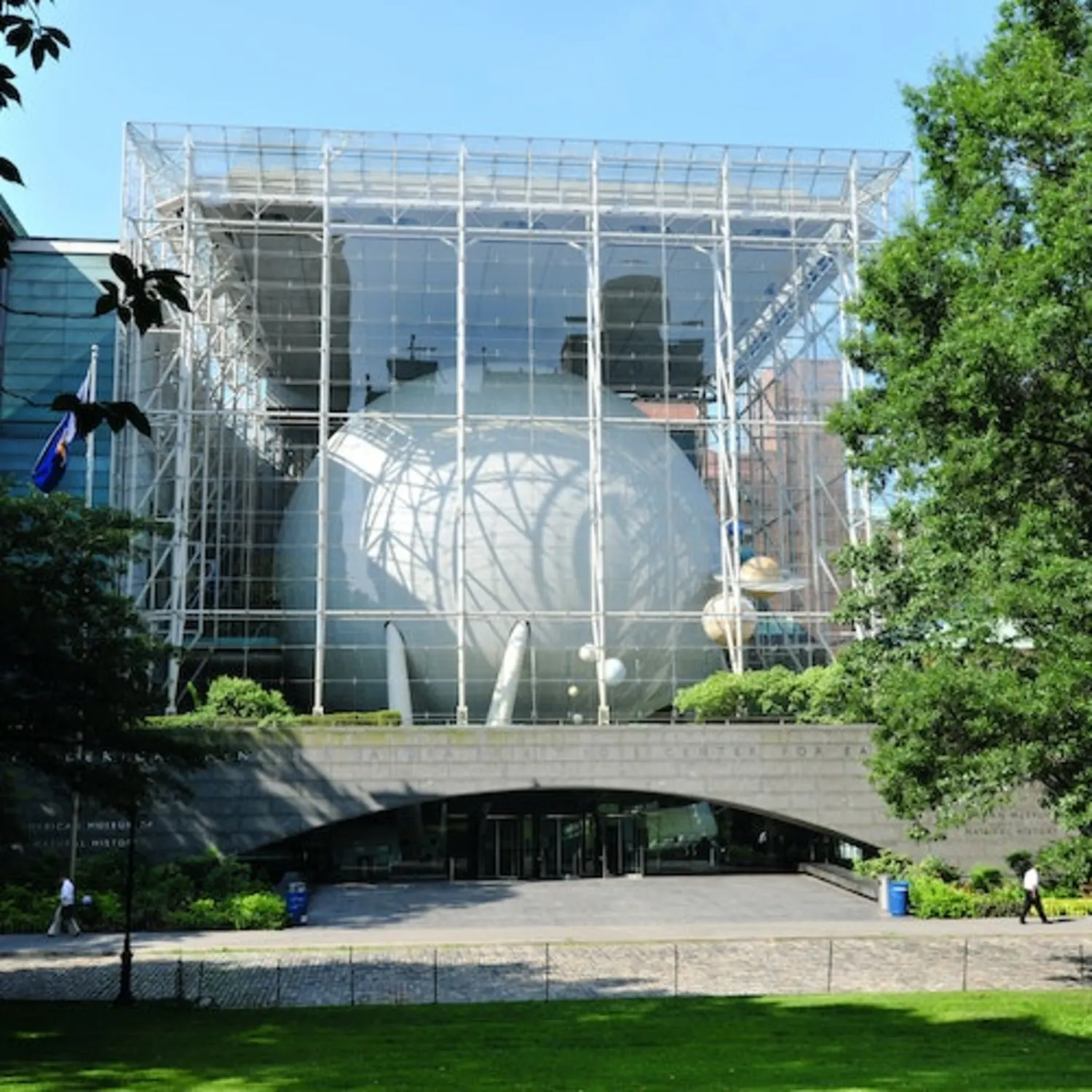
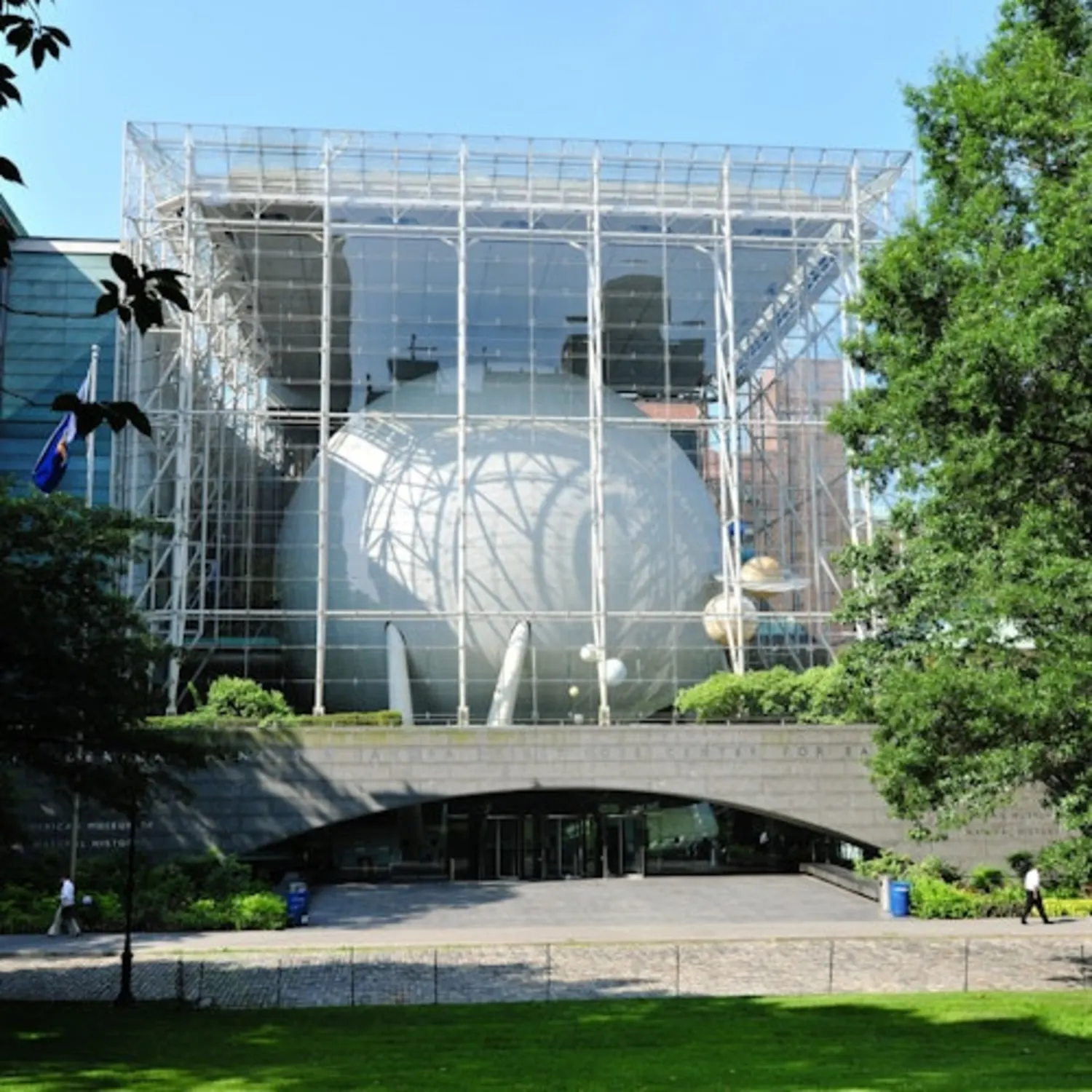
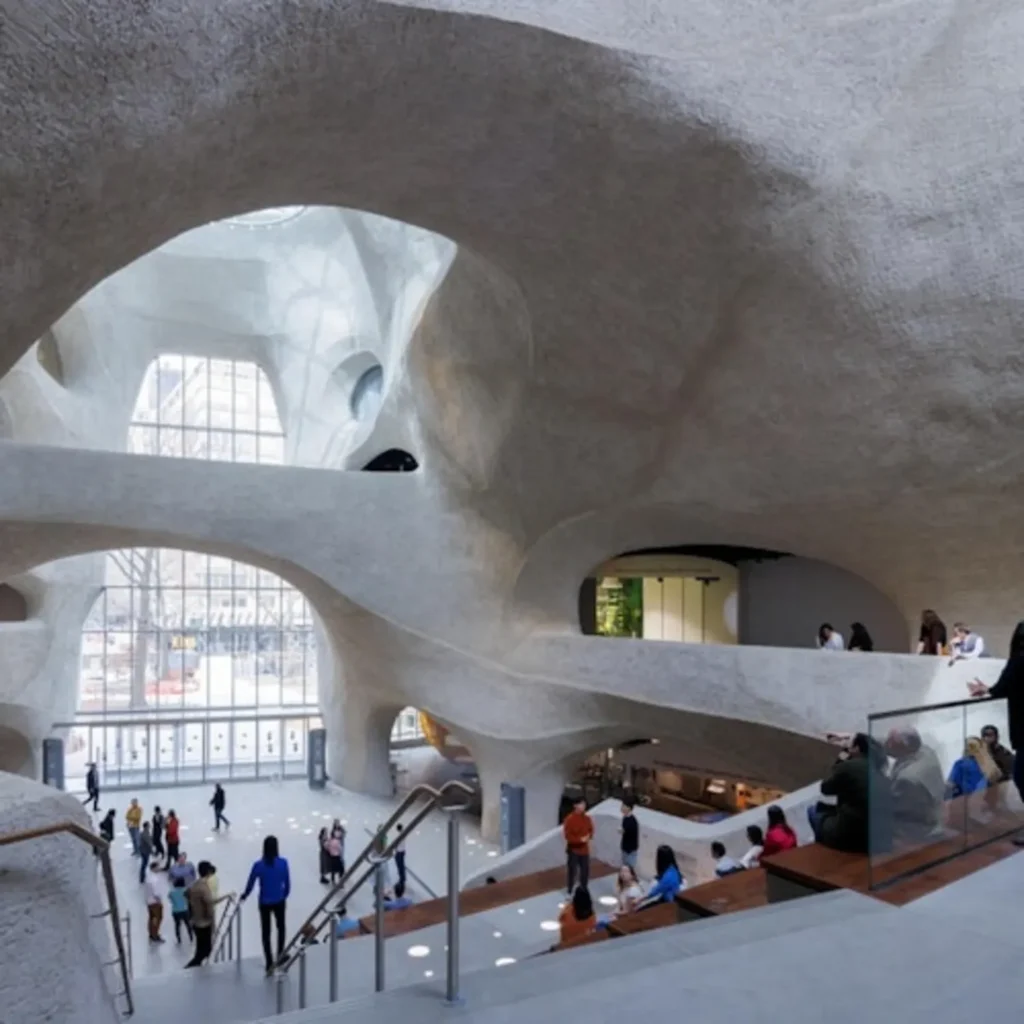
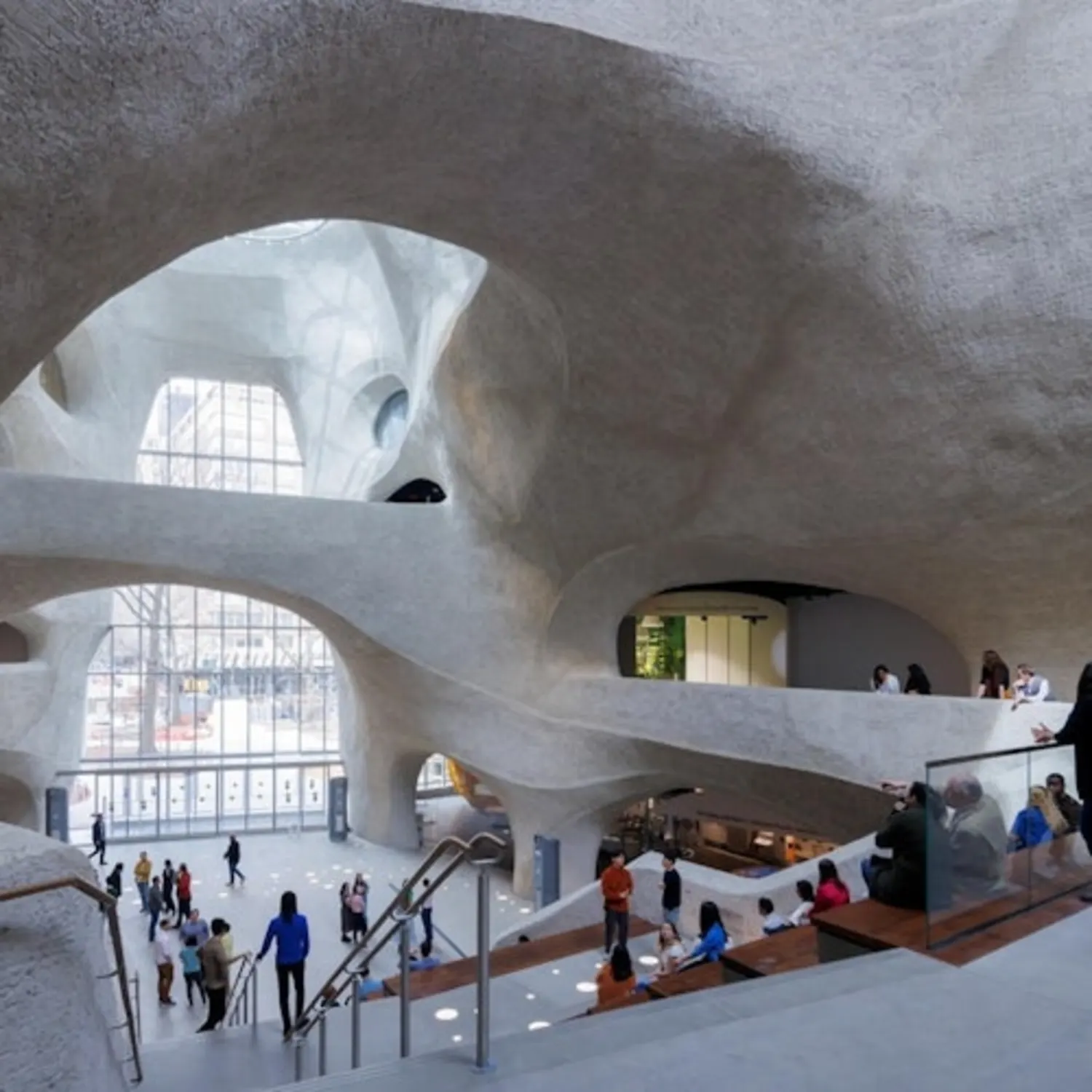
Visit the Rose Center for Earth and Space and the Gilder Center for Science, Education, and Innovation.

Discover extensive dinosaur fossil collections including the T. rex and the giant Titanosaur.

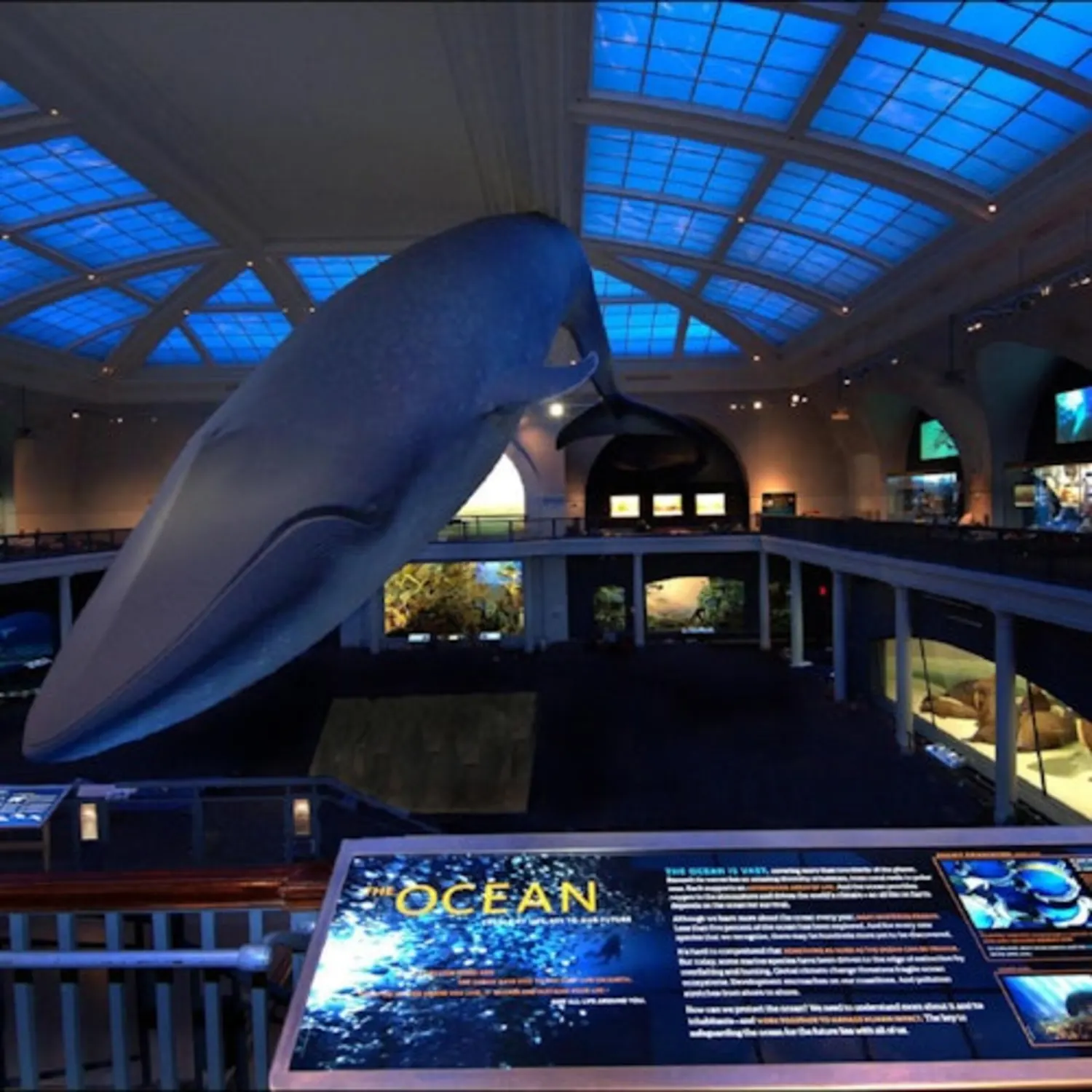
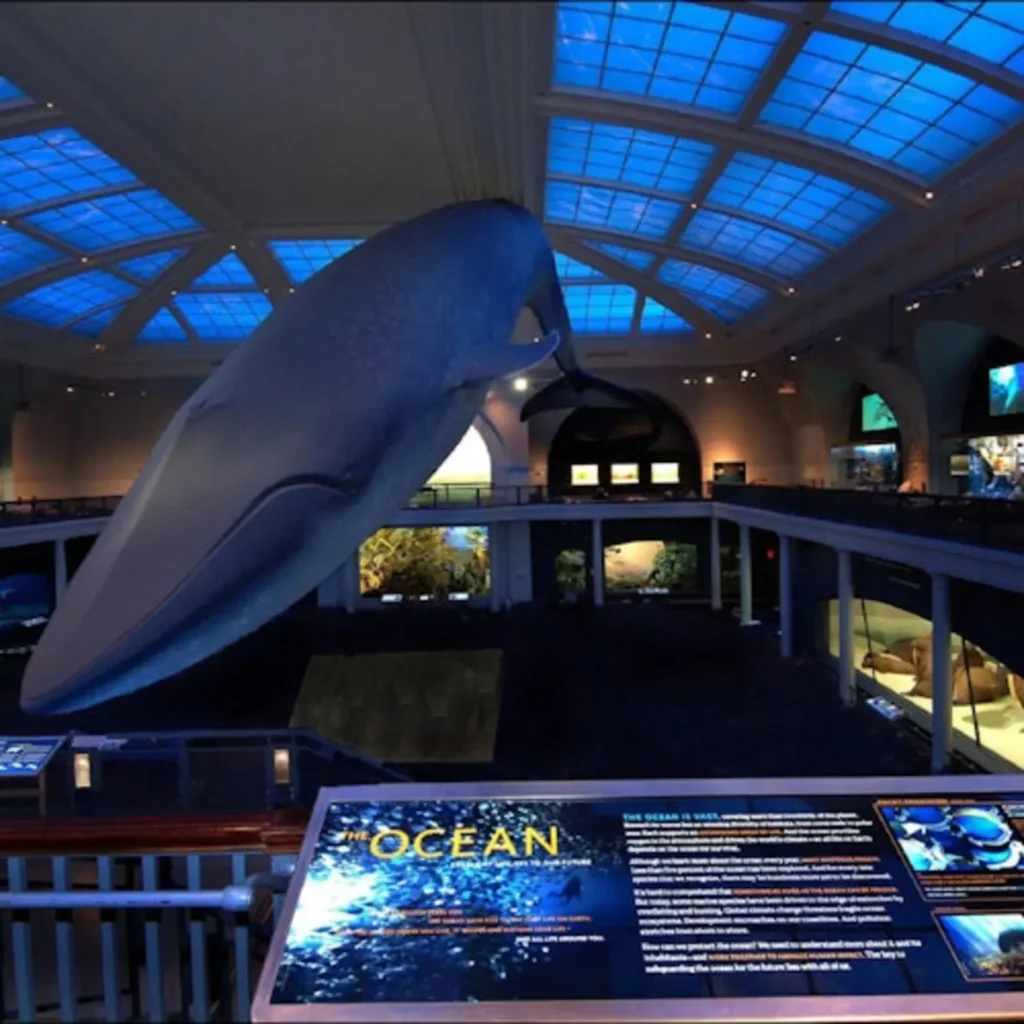
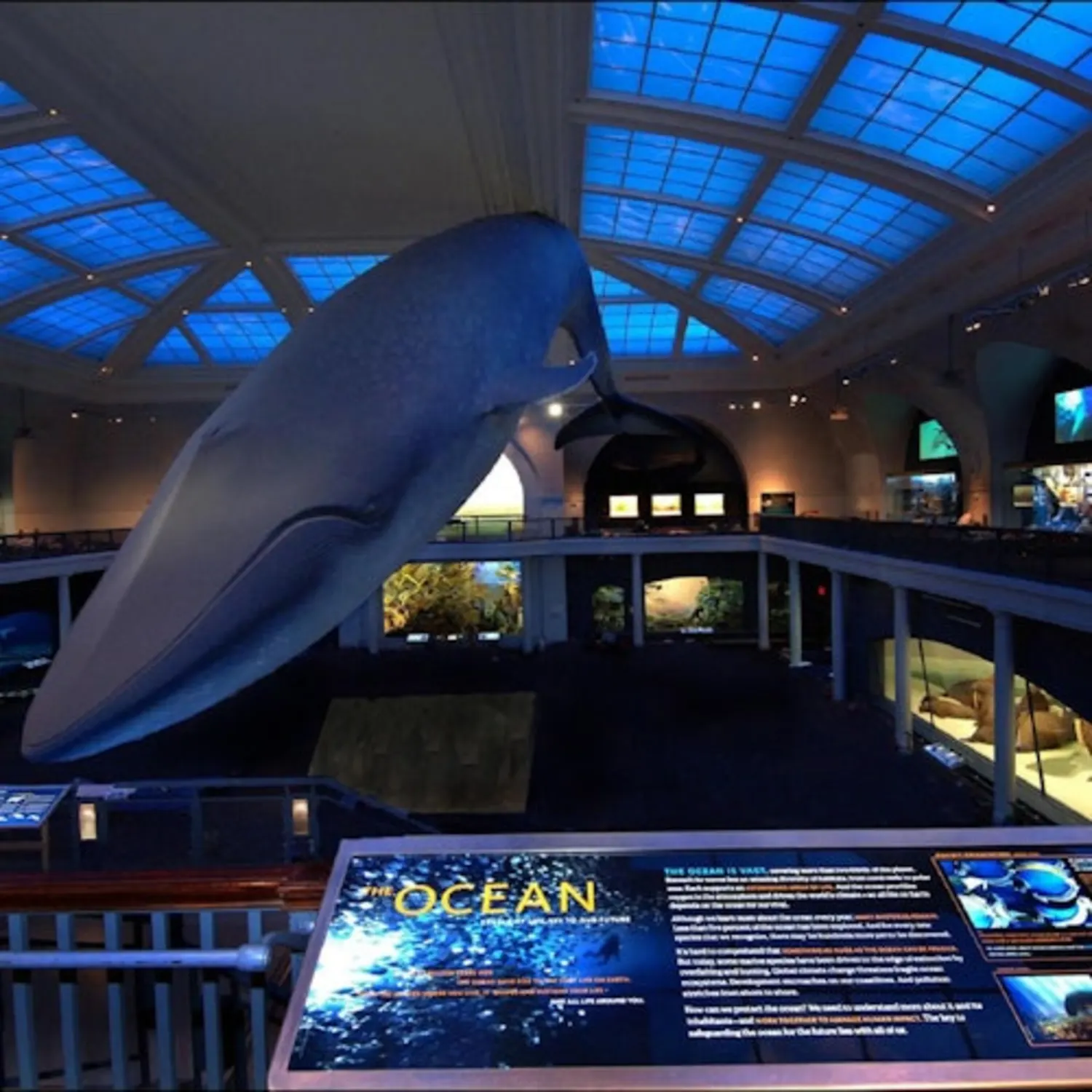
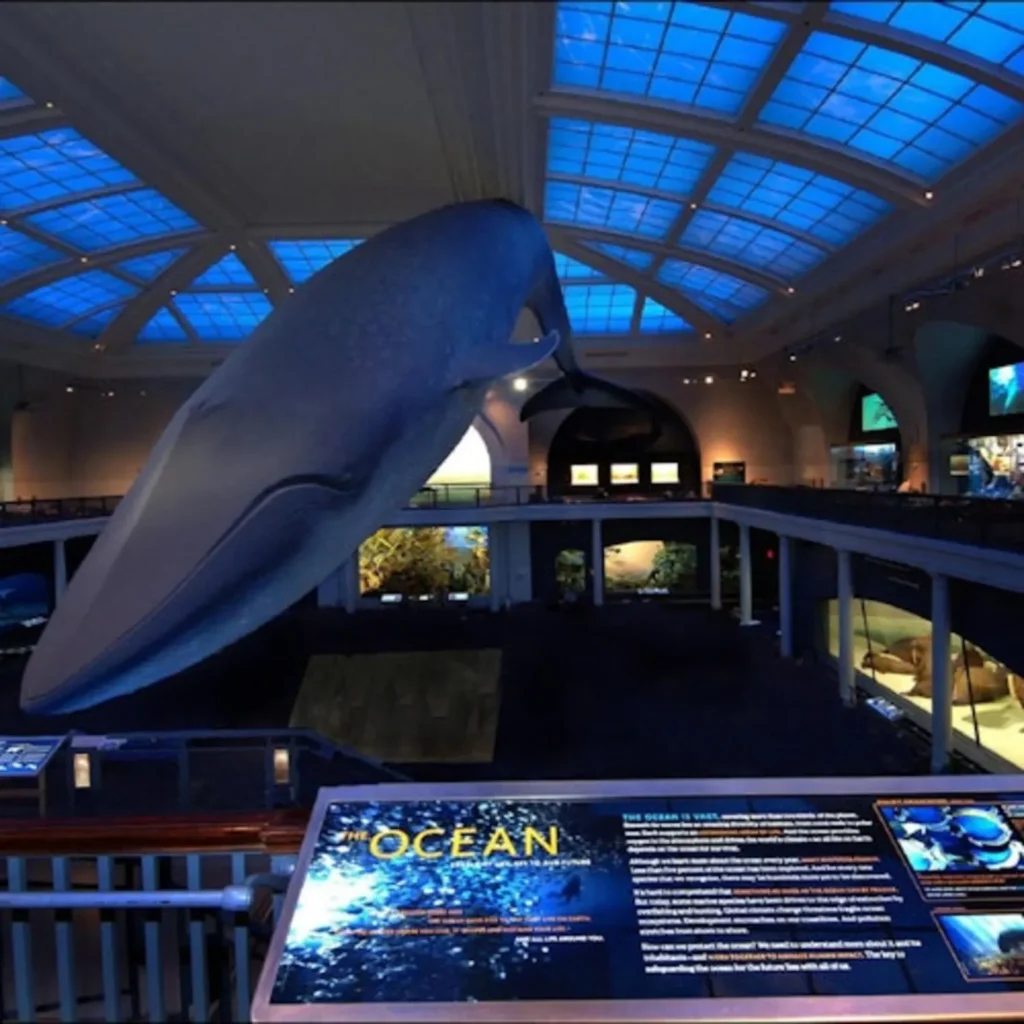
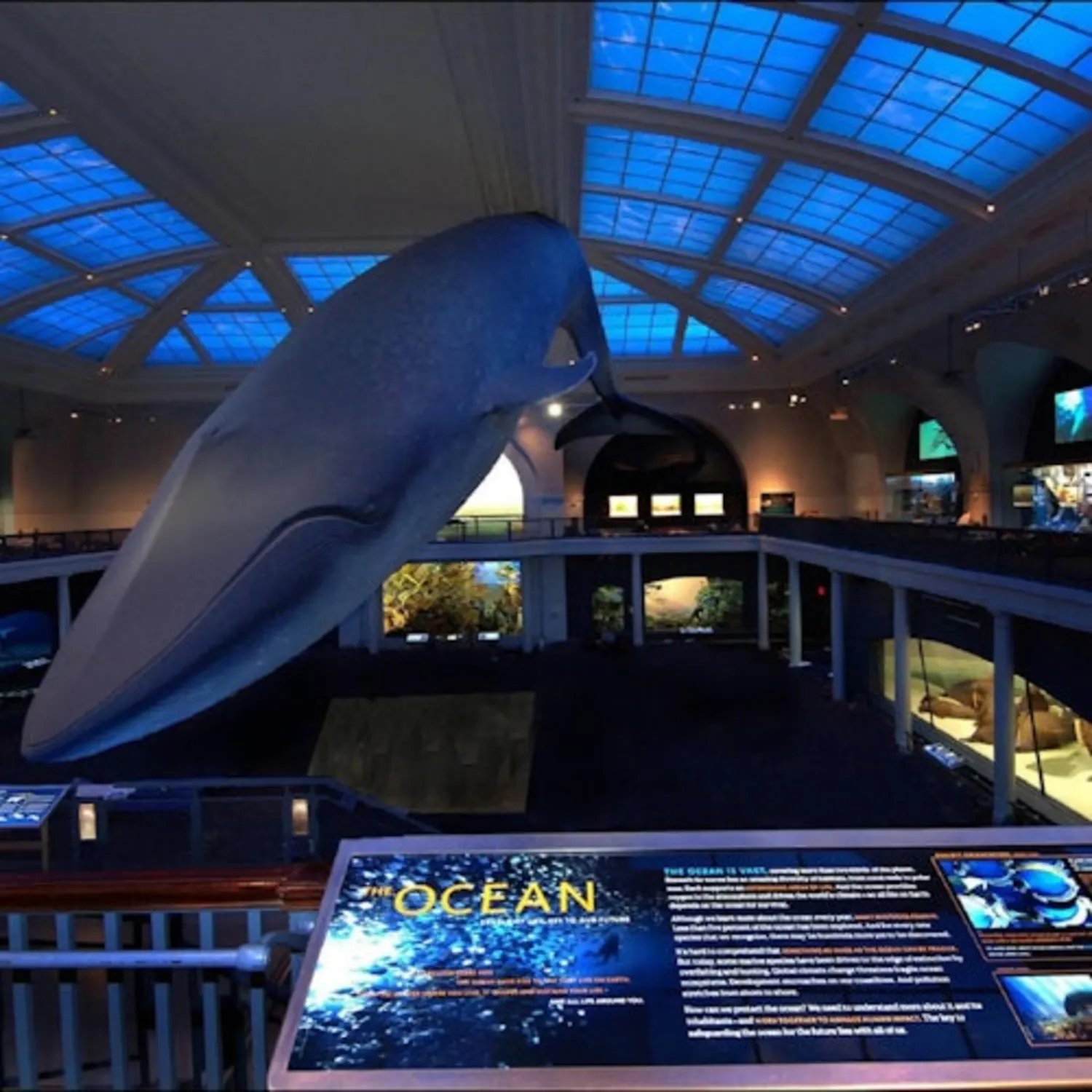
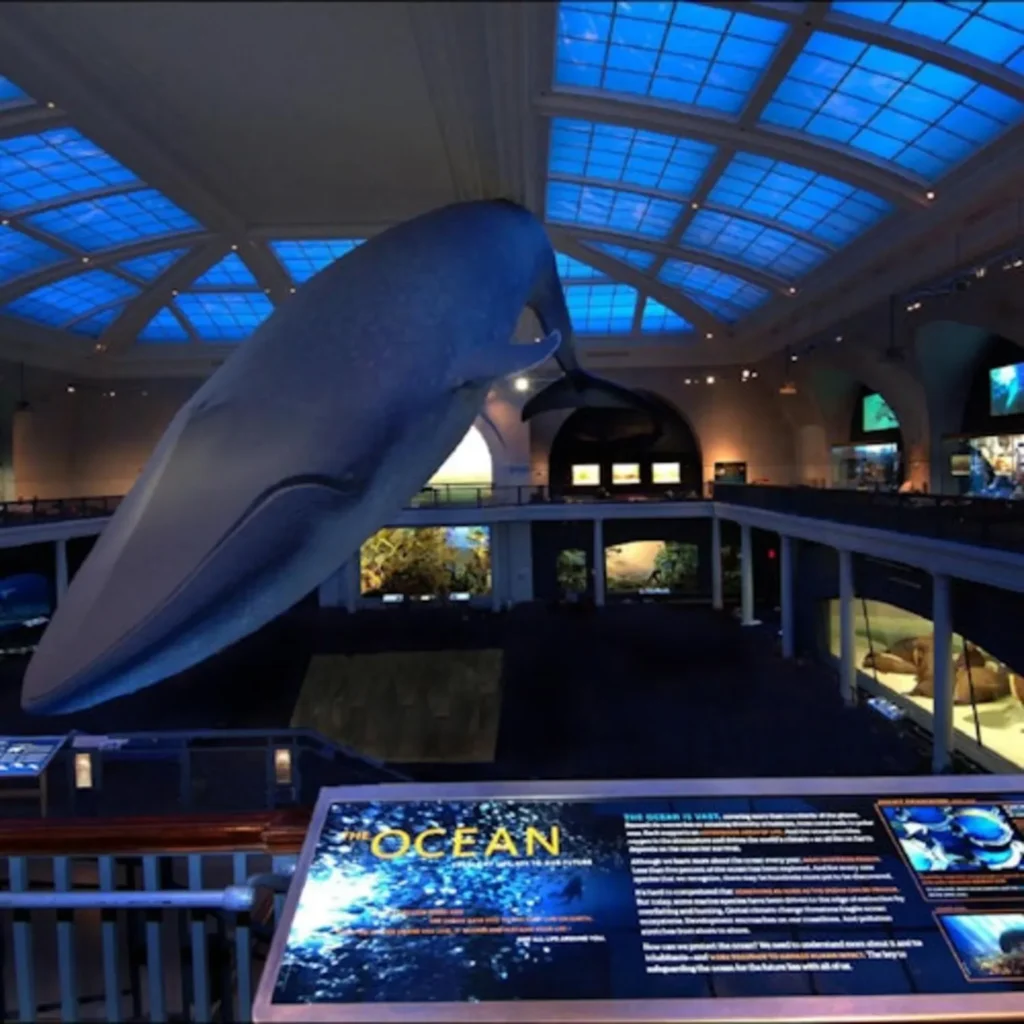
Admire the life-size blue whale model in the Milstein Hall of Ocean Life.

Current special exhibitions like “Encounters in the Milky Way” and “Impact: The End of the Age of Dinosaurs” enhance your visit.
3.7
(6)

American Museum of Natural History (AMNH): Plus One Ticket

Highlights

Stand beneath the colossal Titanosaur’s 122-foot skeleton in the Dinosaur Halls

Marvel at the life-like 94-foot blue whale suspended in the Milstein Hall

Journey through 13 billion years of cosmic history at the Rose Center for Earth and Space

Explore over 40 permanent halls covering Earth, life, and culture

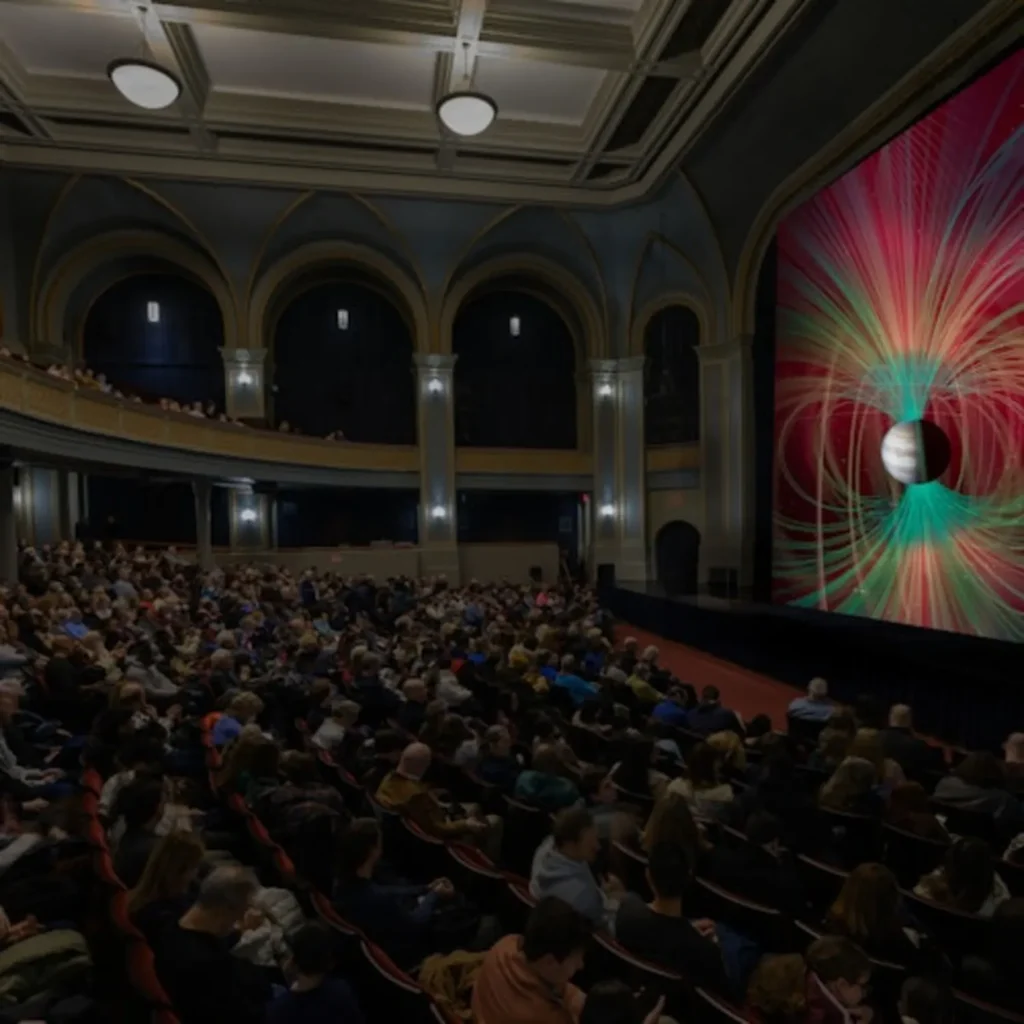
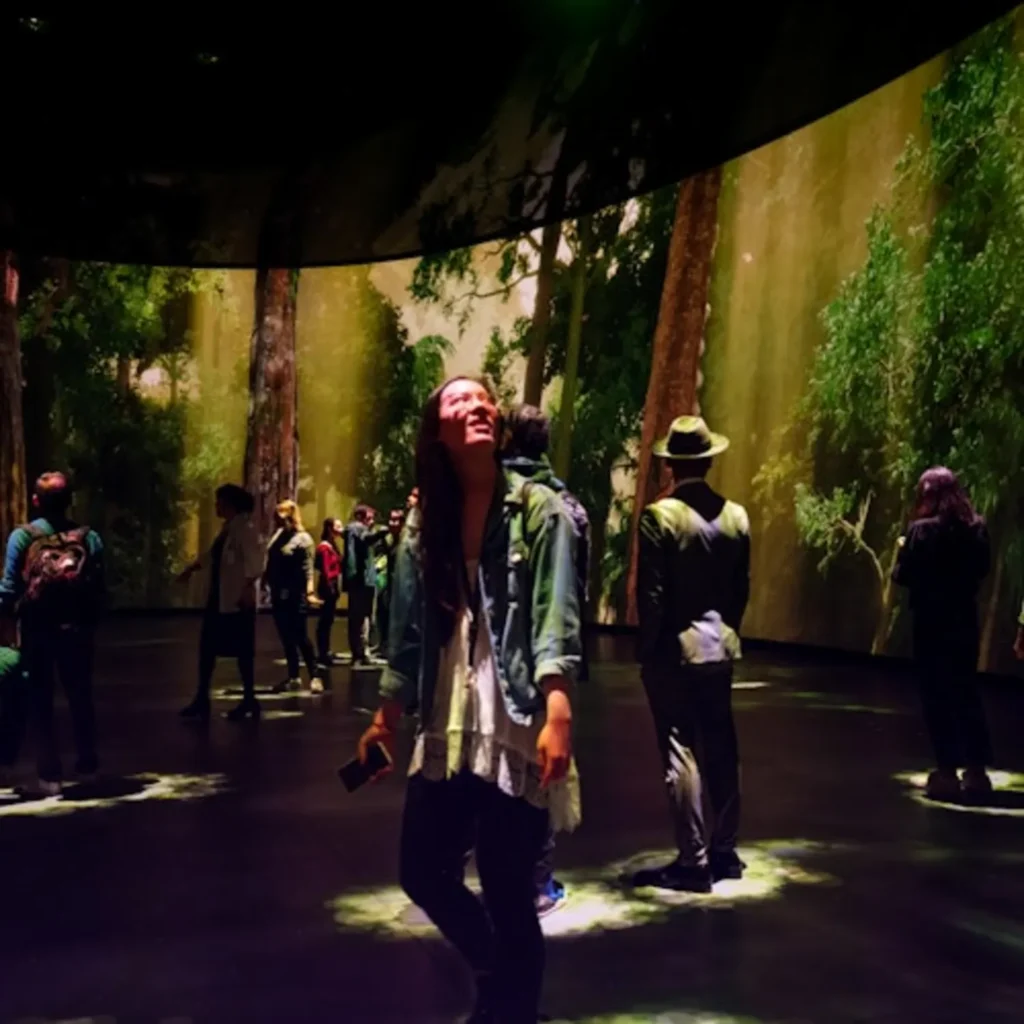
Choose one exclusive experience – from the immersive “Invisible Worlds” to the Butterfly Vivarium or the new Hayden Planetarium show, “Encounters in the Milky Way.”
4.3
(9)

American Museum of Natural History (AMNH): All Ticketed Exhibitions

Highlights

Encounter the towering Titanosaur and the mighty T. rex, marveling at their colossal skeletons.

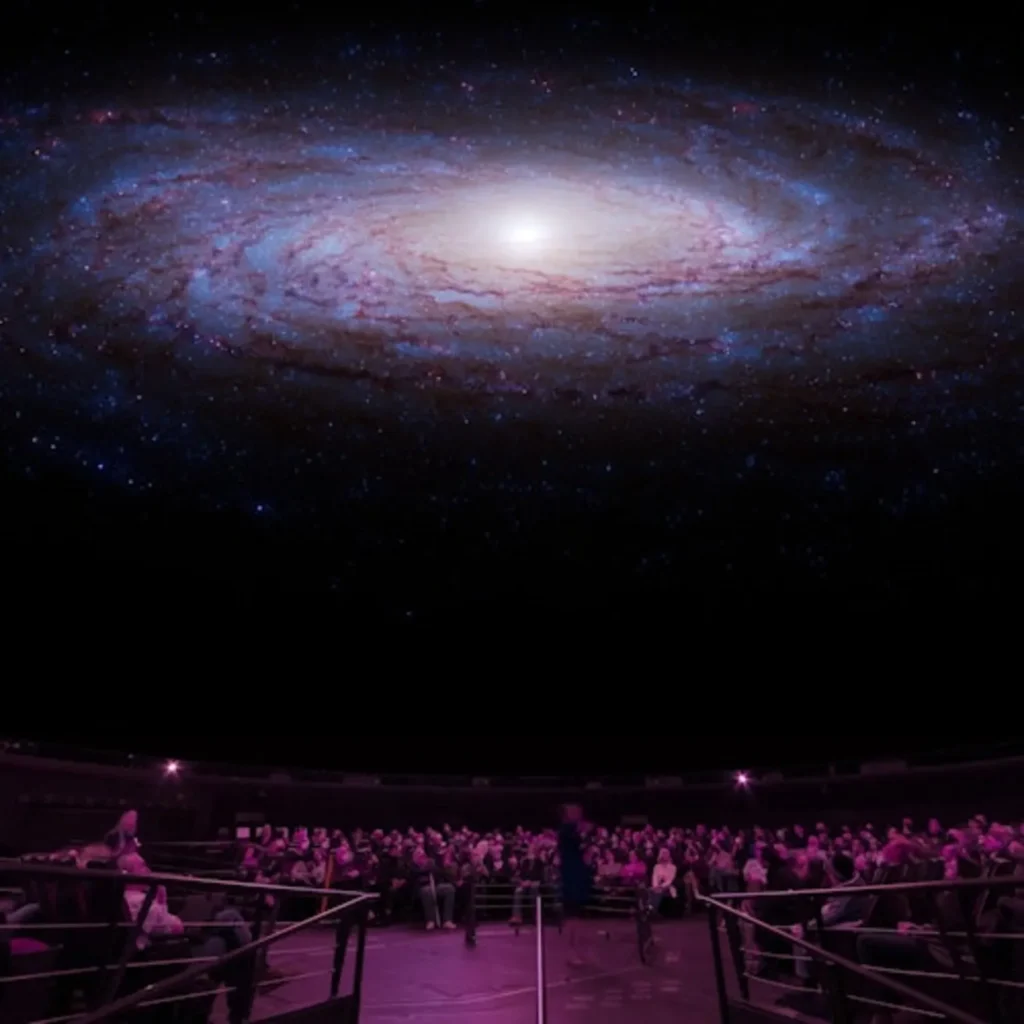
Journey through the 13-billion-year history of the universe, exploring cosmic evolution and the mysteries of space at the Rose Center for Earth and Space and the Hayden Planetarium Space Shows.

At the Milstein Hall of Ocean Life, stand beneath the life-size model of a blue whale and delve into the wonders of marine biodiversity.

Discover the interconnectedness of all life through immersive exhibits and cutting-edge displays.

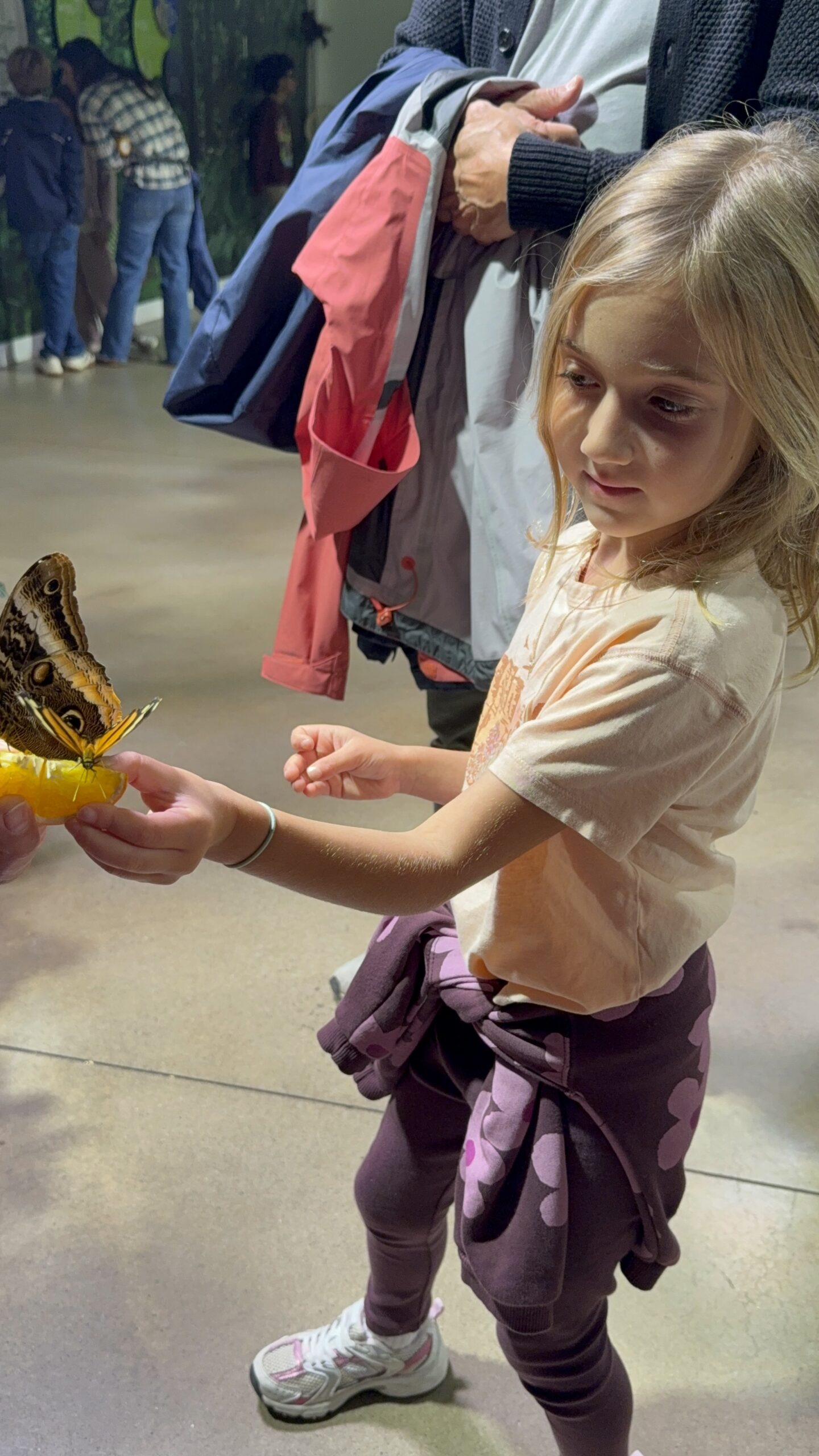
Get a chance to walk among hundreds of free-flying butterflies in the lush, tropical environment of the Davis Family Butterfly Vivarium, now a permanent, year-round centerpiece of the Gilder Center.

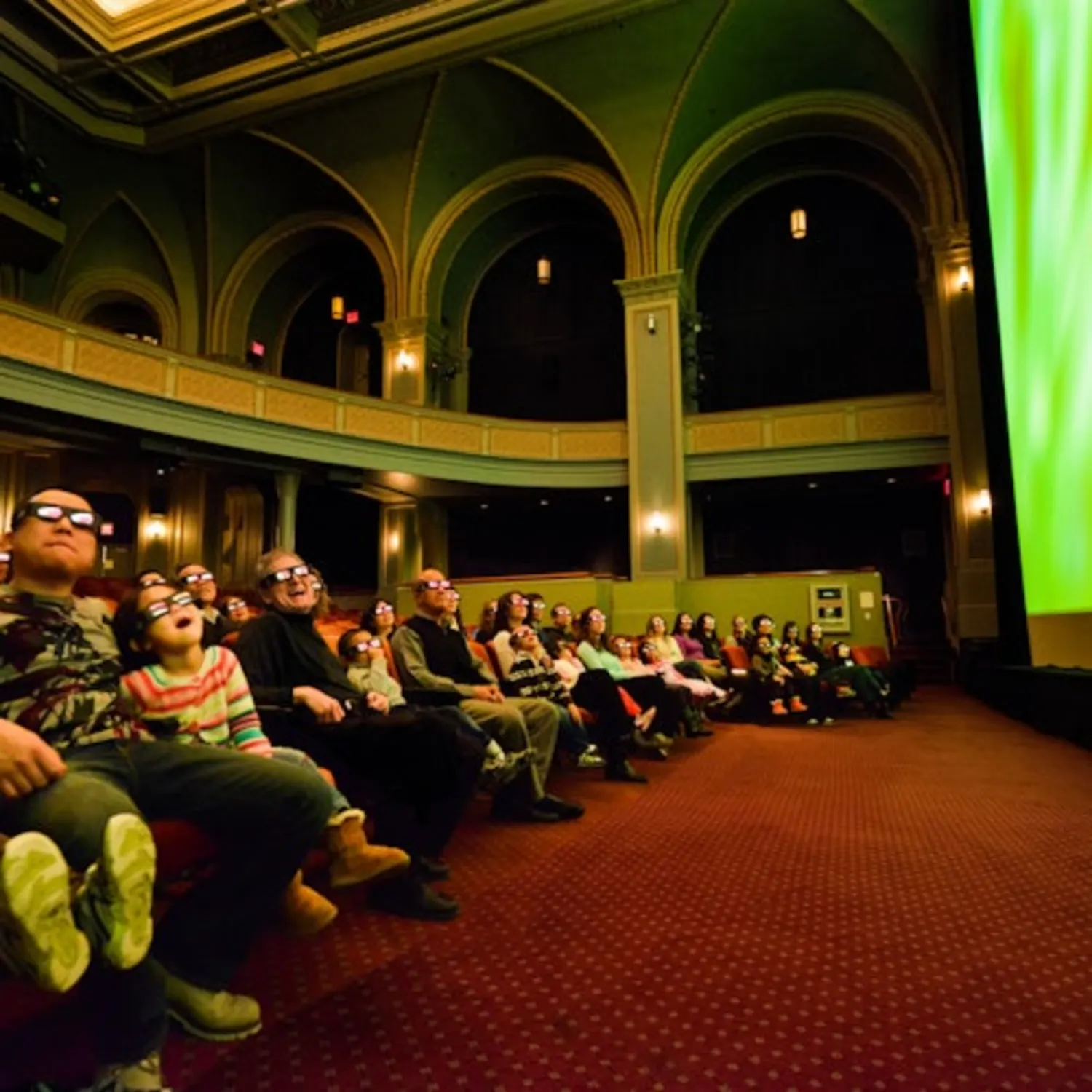
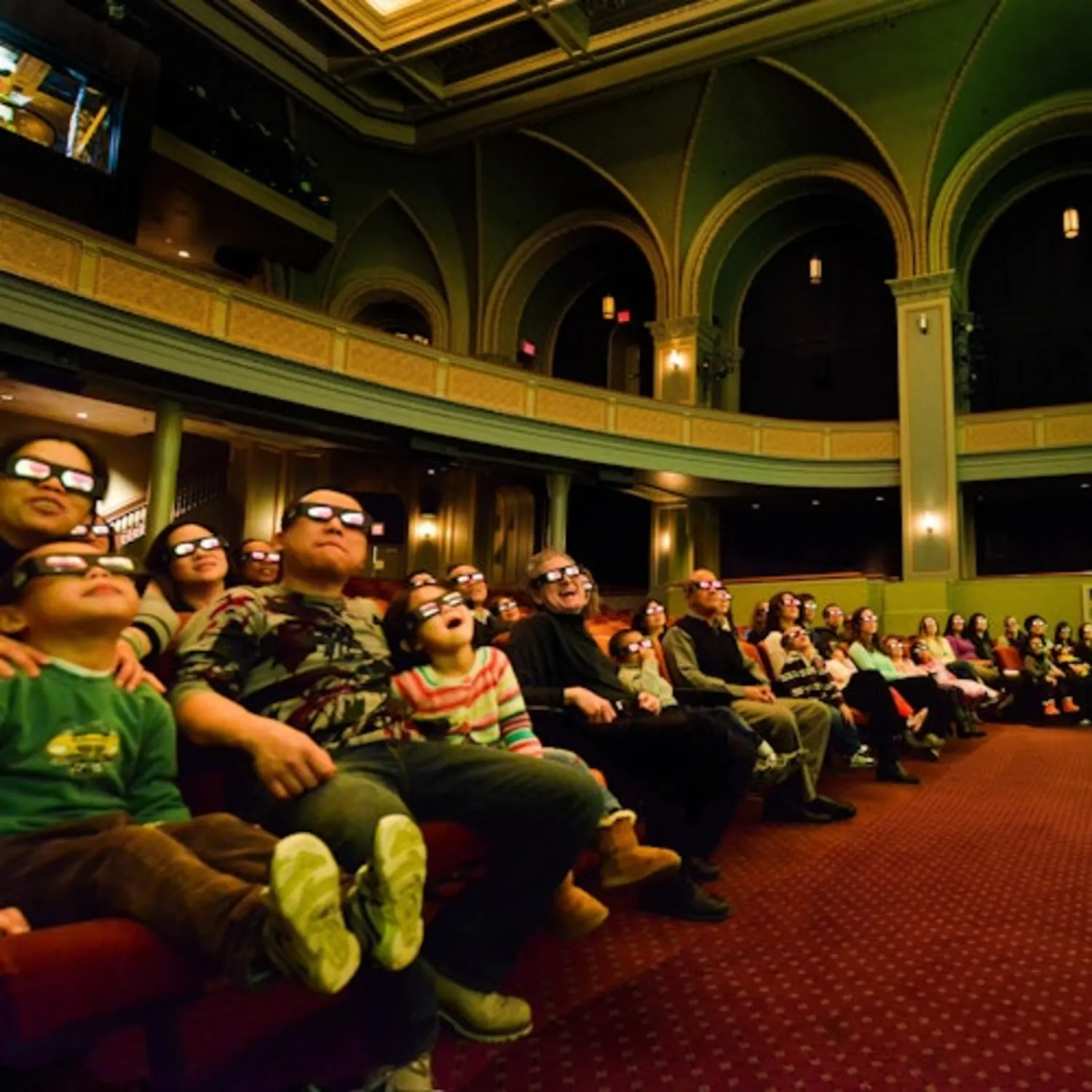
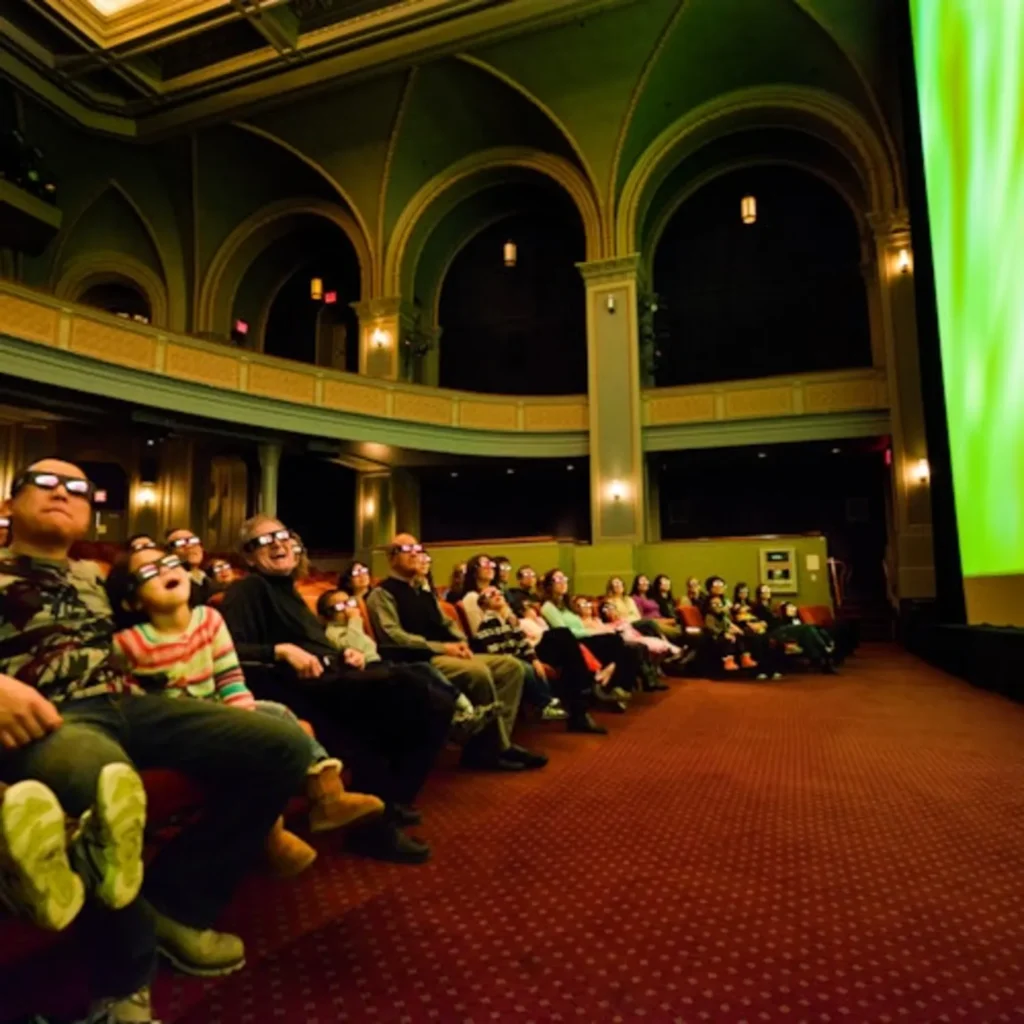
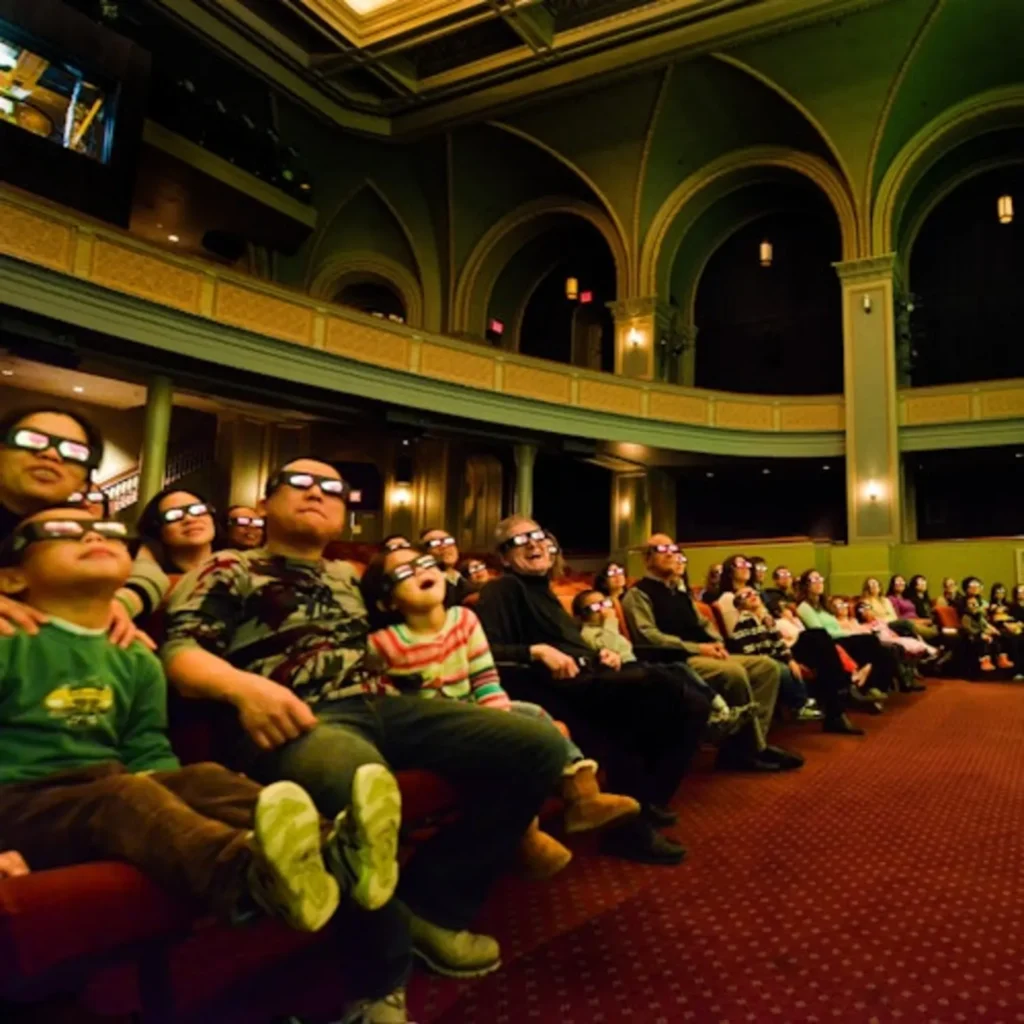
Enjoy breathtaking documentaries showcasing the natural world and beyond on giant-screen.
AMNH dinosaurs at a glance

Where: the fourth floor, in the Hall of Vertebrate Origins, the Hall of Saurischian Dinosaurs, the Hall of Ornithischian Dinosaurs, the Hall of Primitive Mammals and the Hall of Advanced Mammals.

Scale: 600 fossil specimens on the floor, about 100 of them dinosaurs and more than 250 of them mammals.

Real fossils: about 85 percent of the specimens are real fossils, and the rest are exact casts.

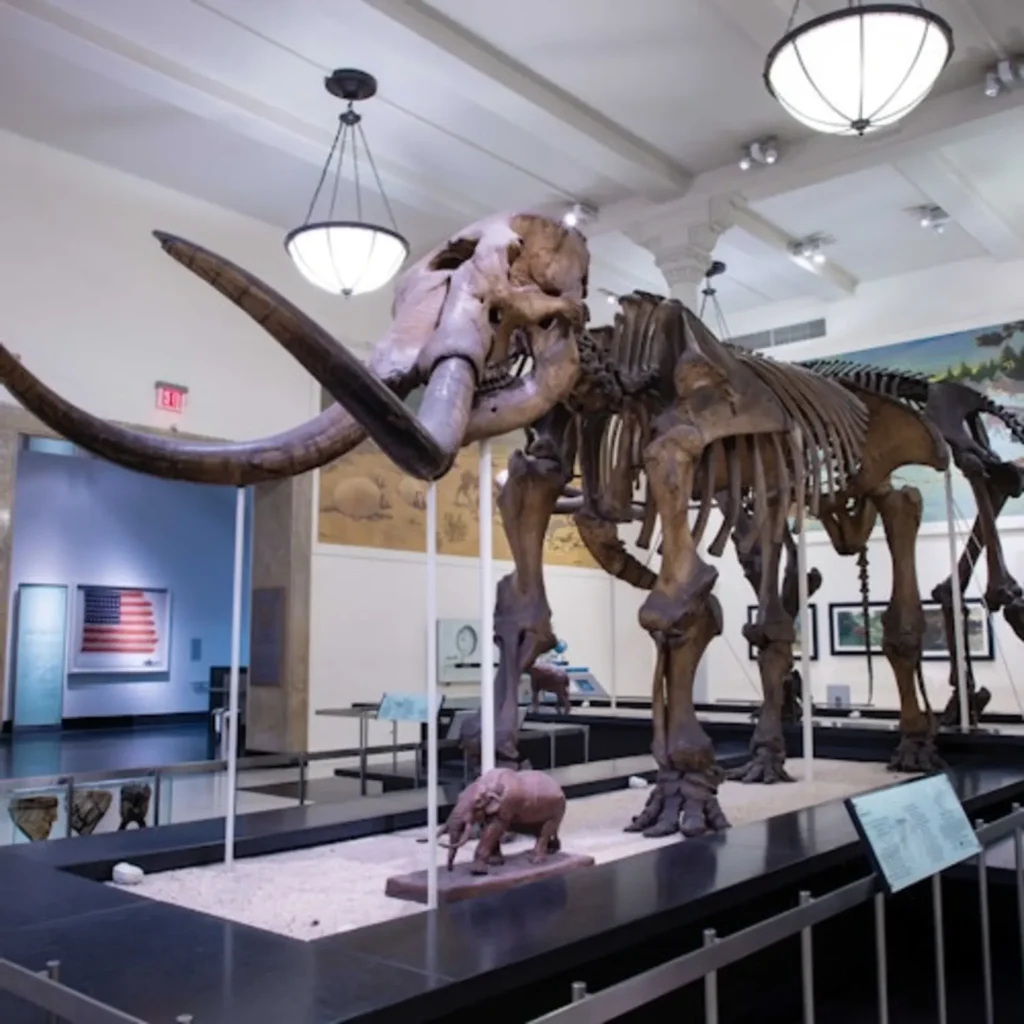
Titanosaur: a 122-foot cast of Patagotitan mayorum, discovered in 2014.

Tyrannosaurus rex: in the Hall of Saurischian Dinosaurs, a mount that is about 45 percent fossil and has been on view since 1915.

Triceratops: in the Hall of Ornithischian Dinosaurs.

Ticketed exhibition: Impact: The End of the Age of Dinosaurs, in the LeFrak Family Gallery on the fourth floor.

Where the dinosaurs are

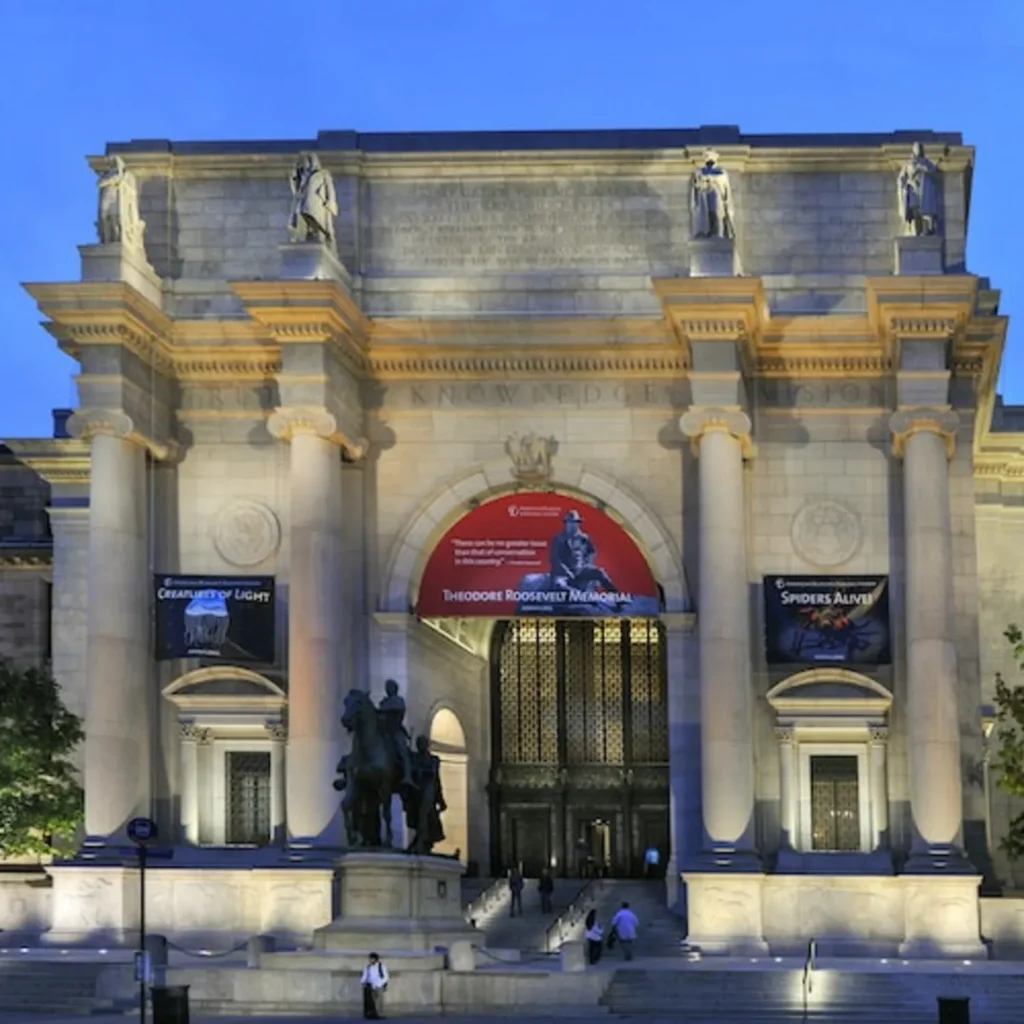
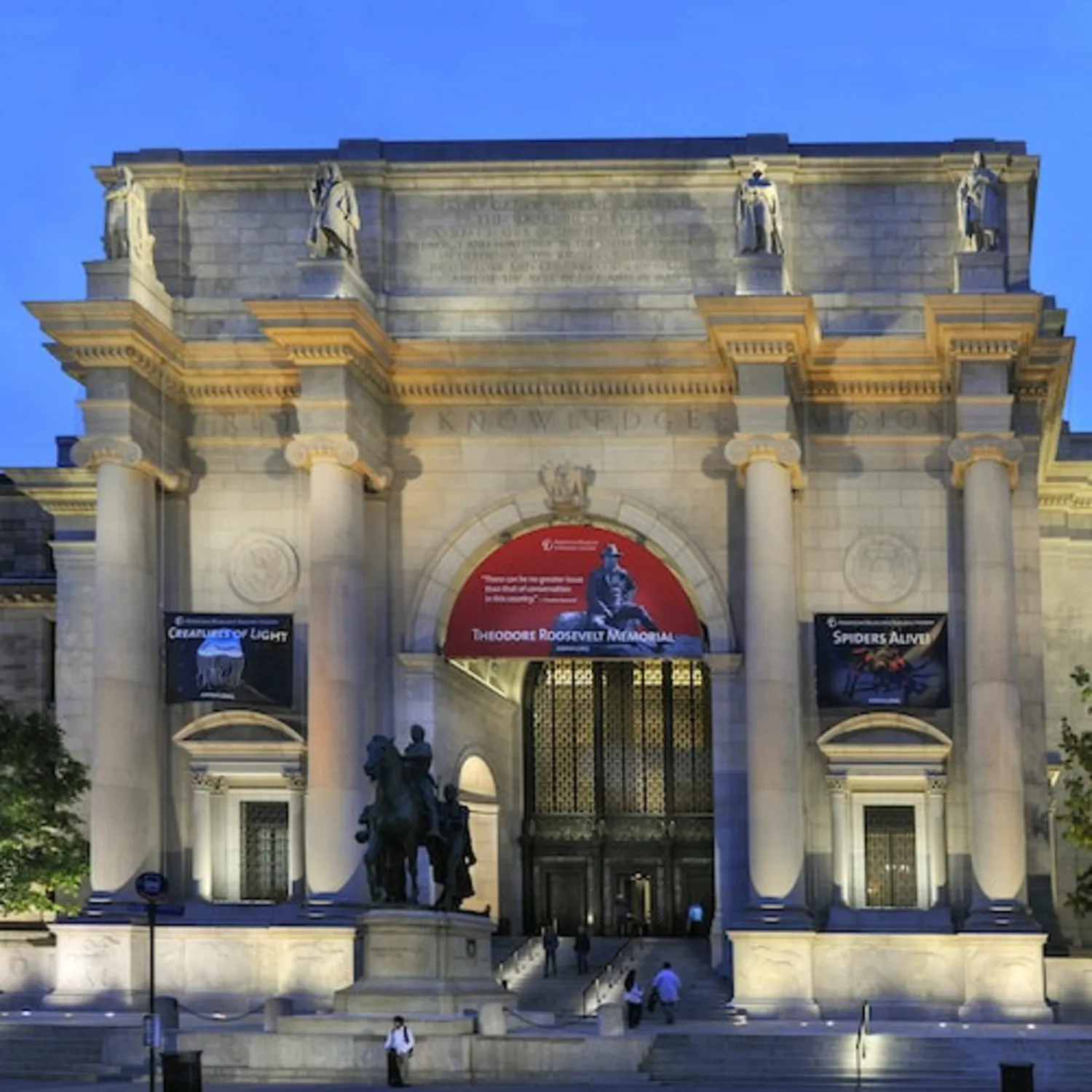
Theodore Roosevelt memorial statue on the museum facade

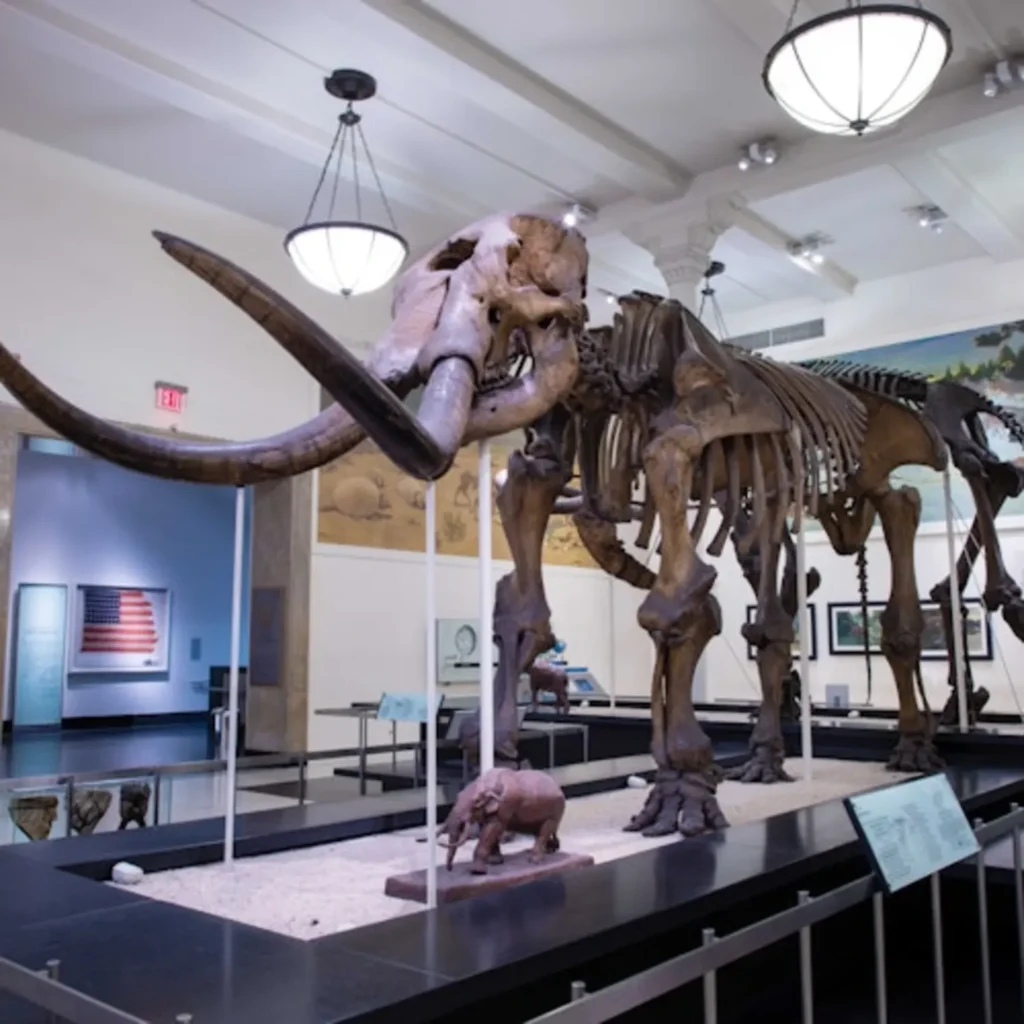
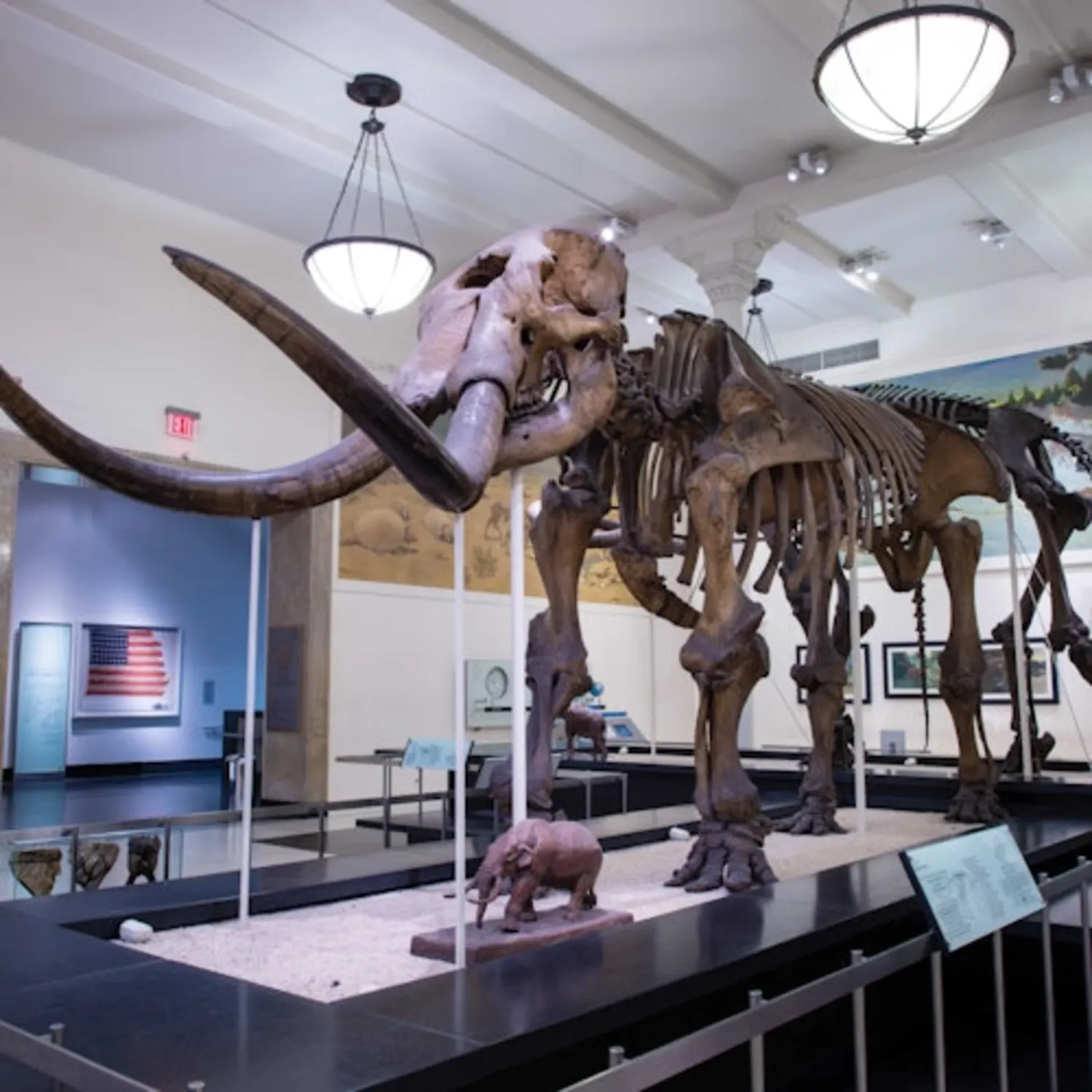
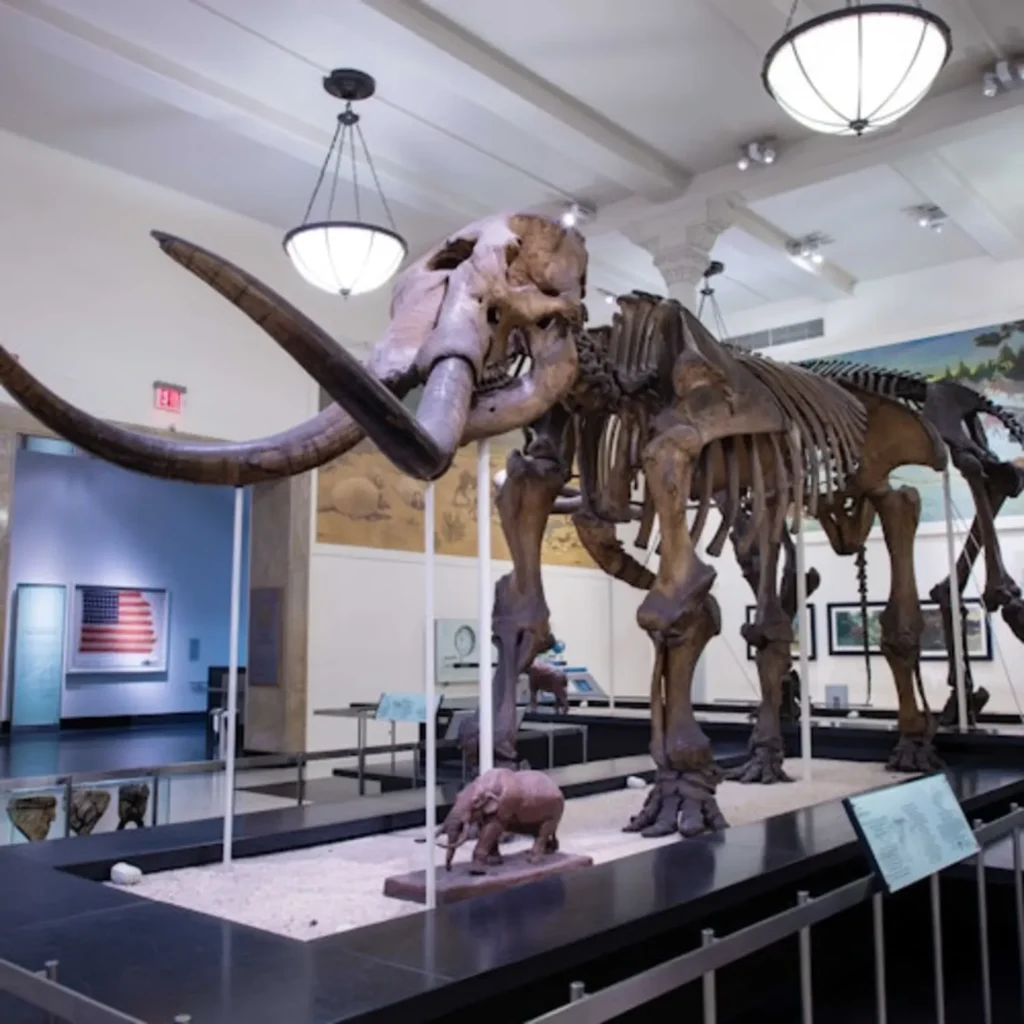
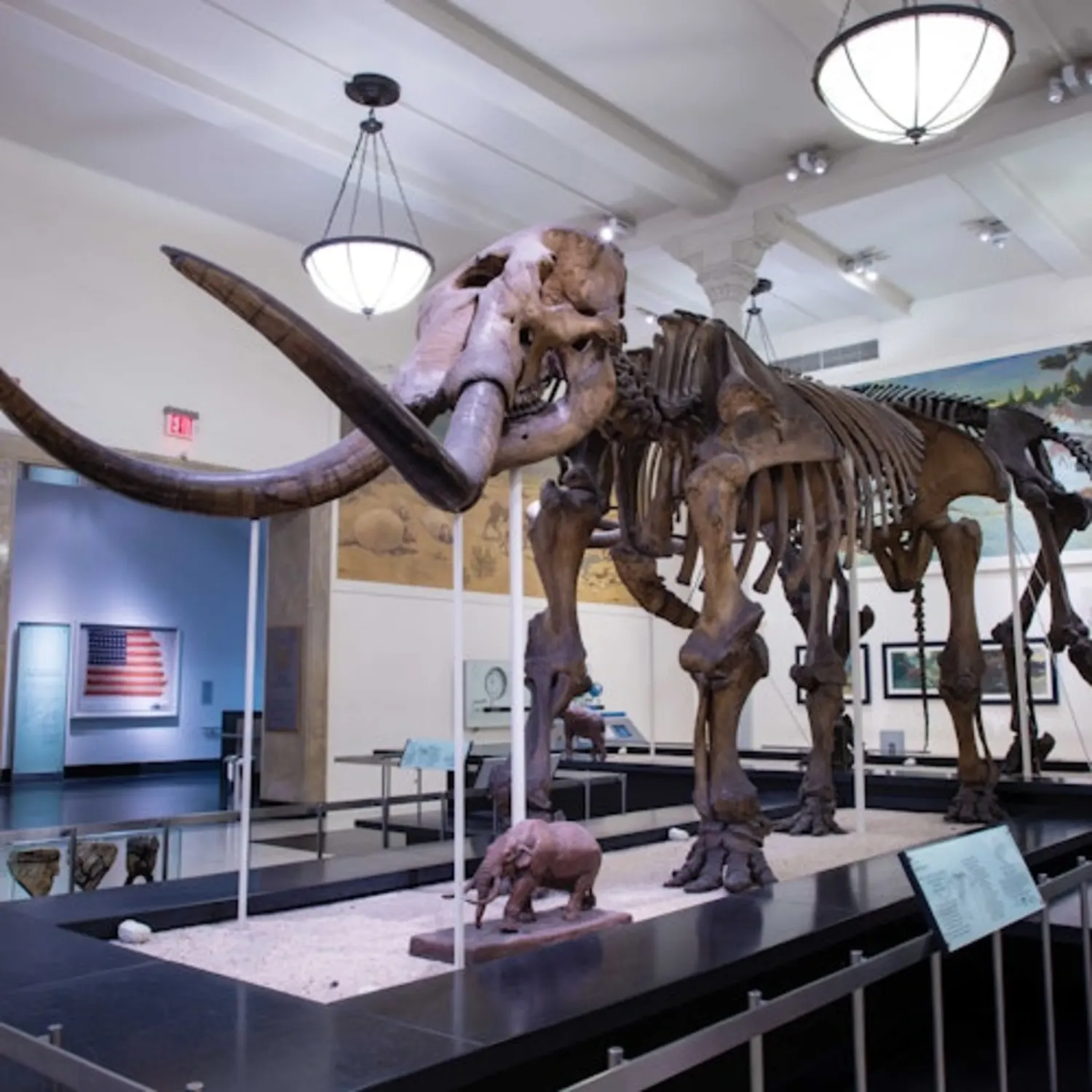
The dinosaur fossil halls are on the fourth floor, and they form one path through the history of backboned animals. The path begins in the Hall of Vertebrate Origins, continues through the Hall of Saurischian Dinosaurs and the Hall of Ornithischian Dinosaurs, and ends in the Hall of Primitive Mammals and the Hall of Advanced Mammals. The Miriam and Ira D. Wallach Orientation Center is part of the same floor.

All of these are permanent halls, part of the more than 40 permanent halls that general admission covers, so the dinosaurs need no extra ticket. The museum itself has 45 permanent exhibition halls in 21 connected buildings and holds about 32 million specimens.

The Titanosaur: 122 feet long

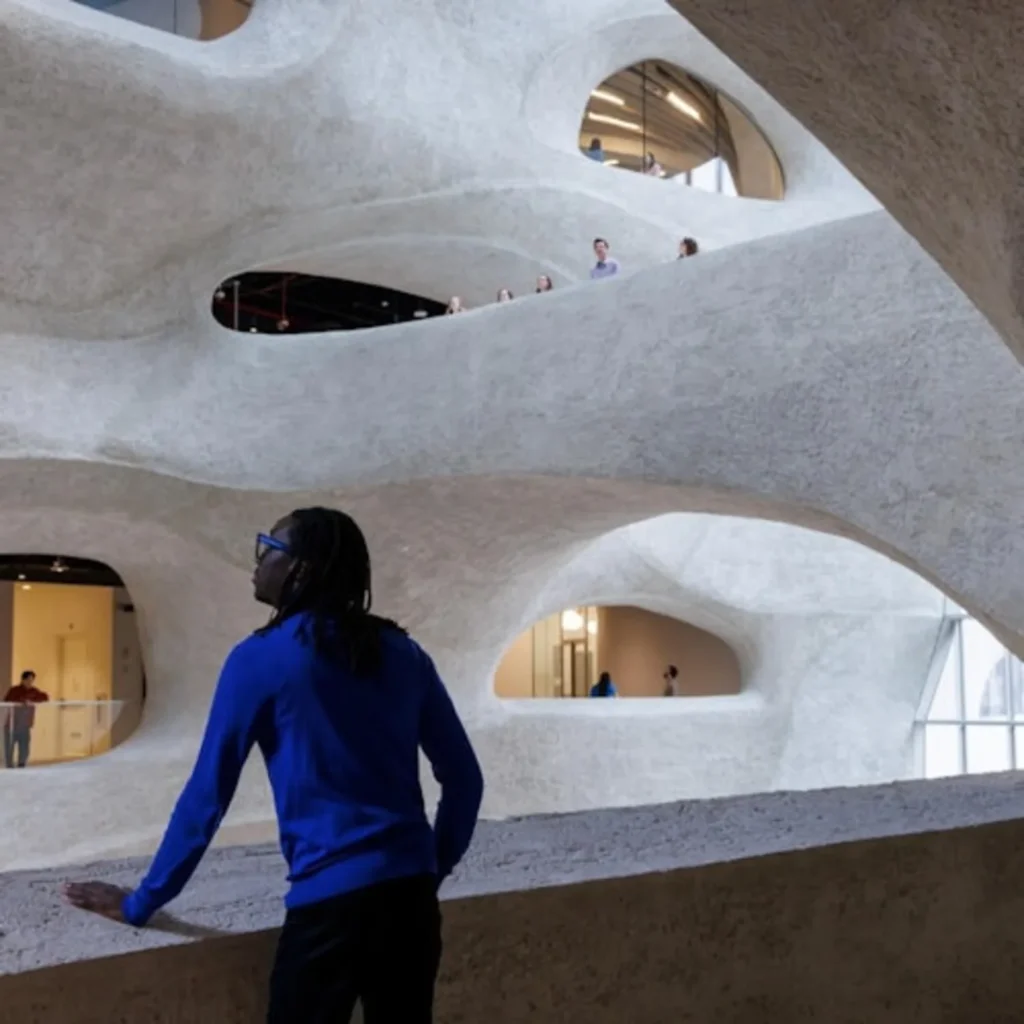
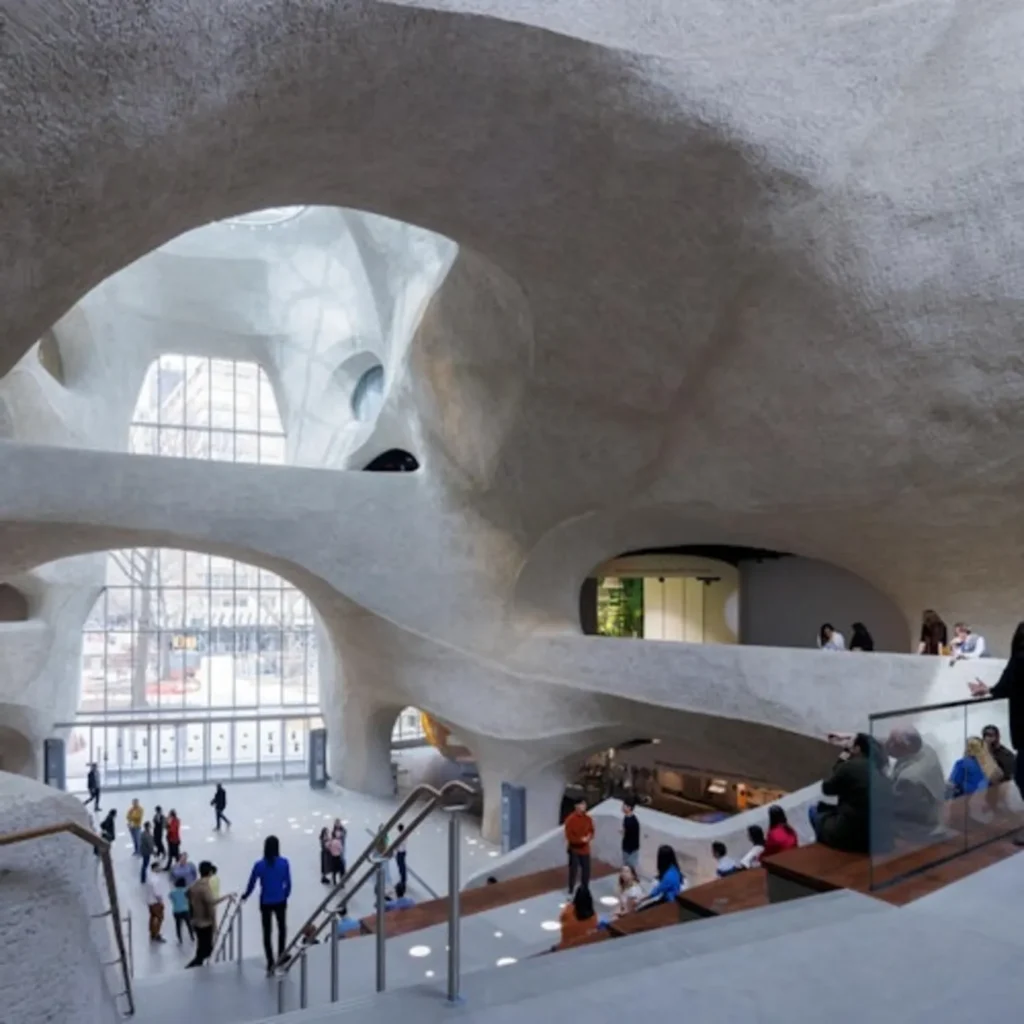
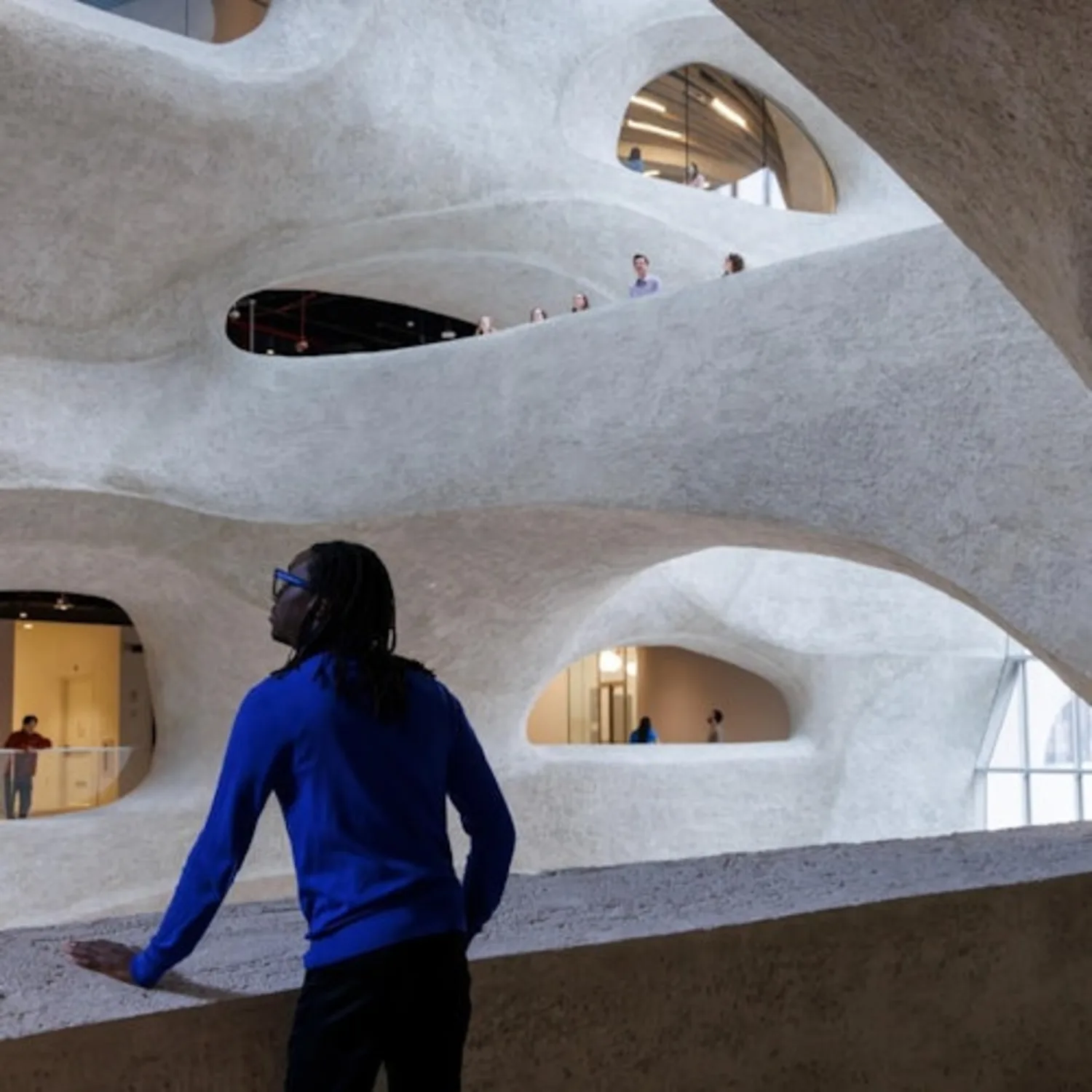
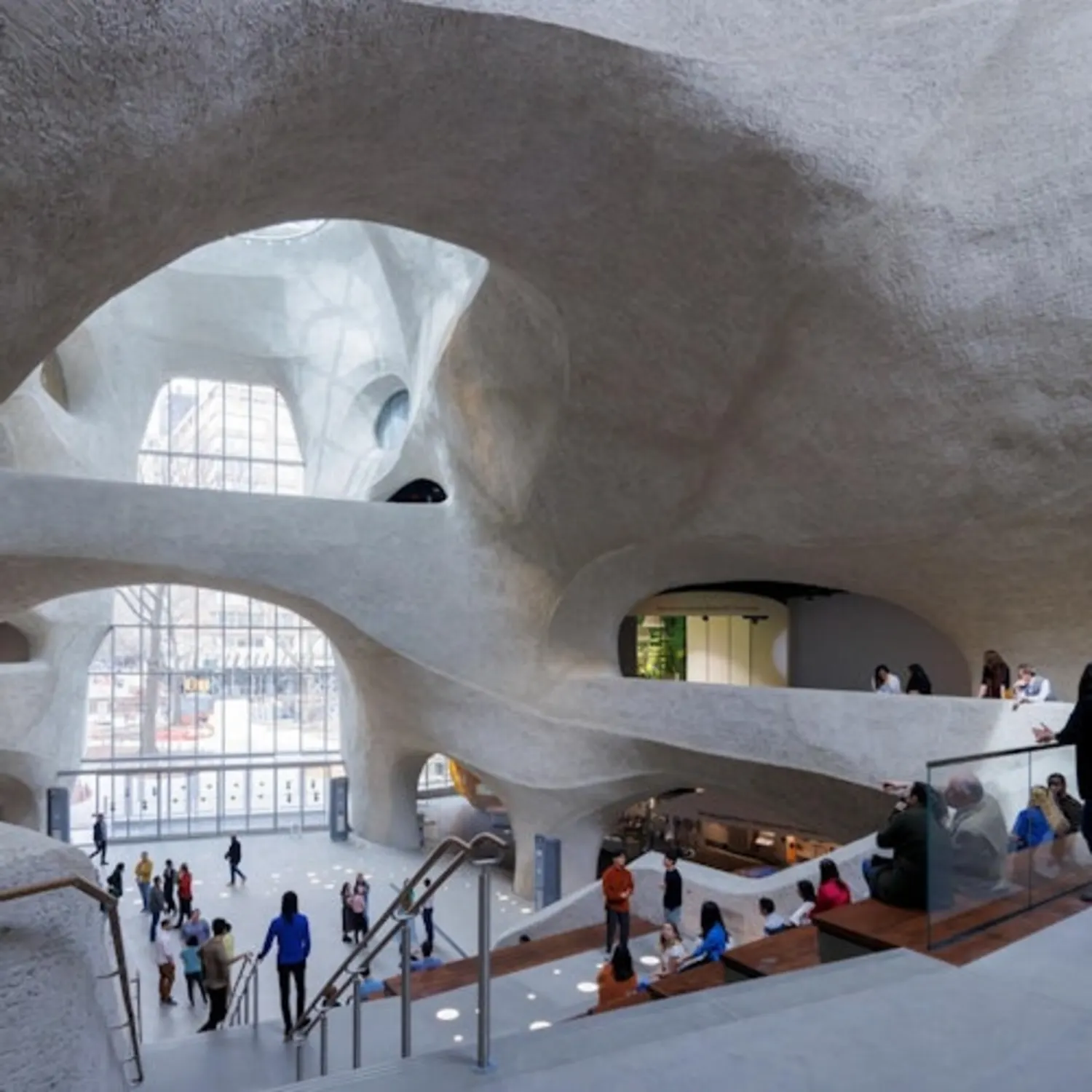
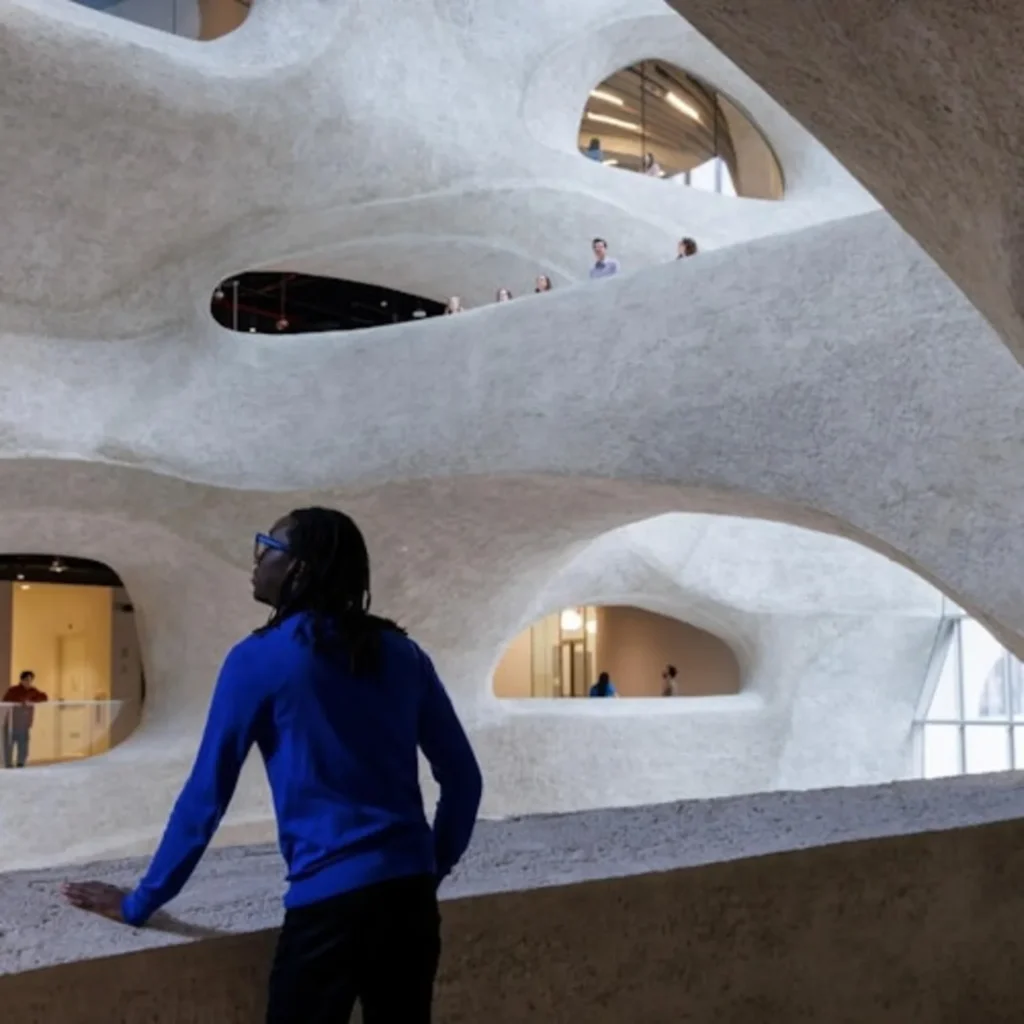
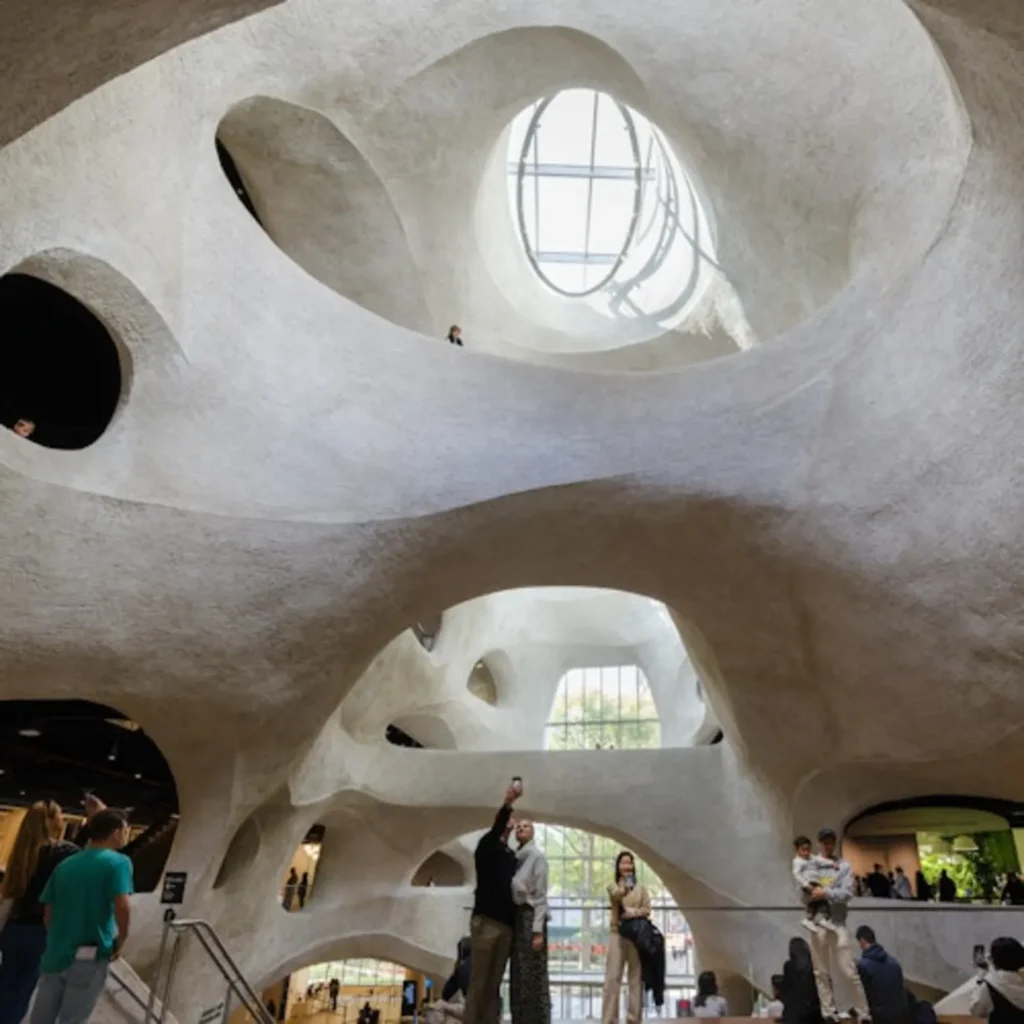
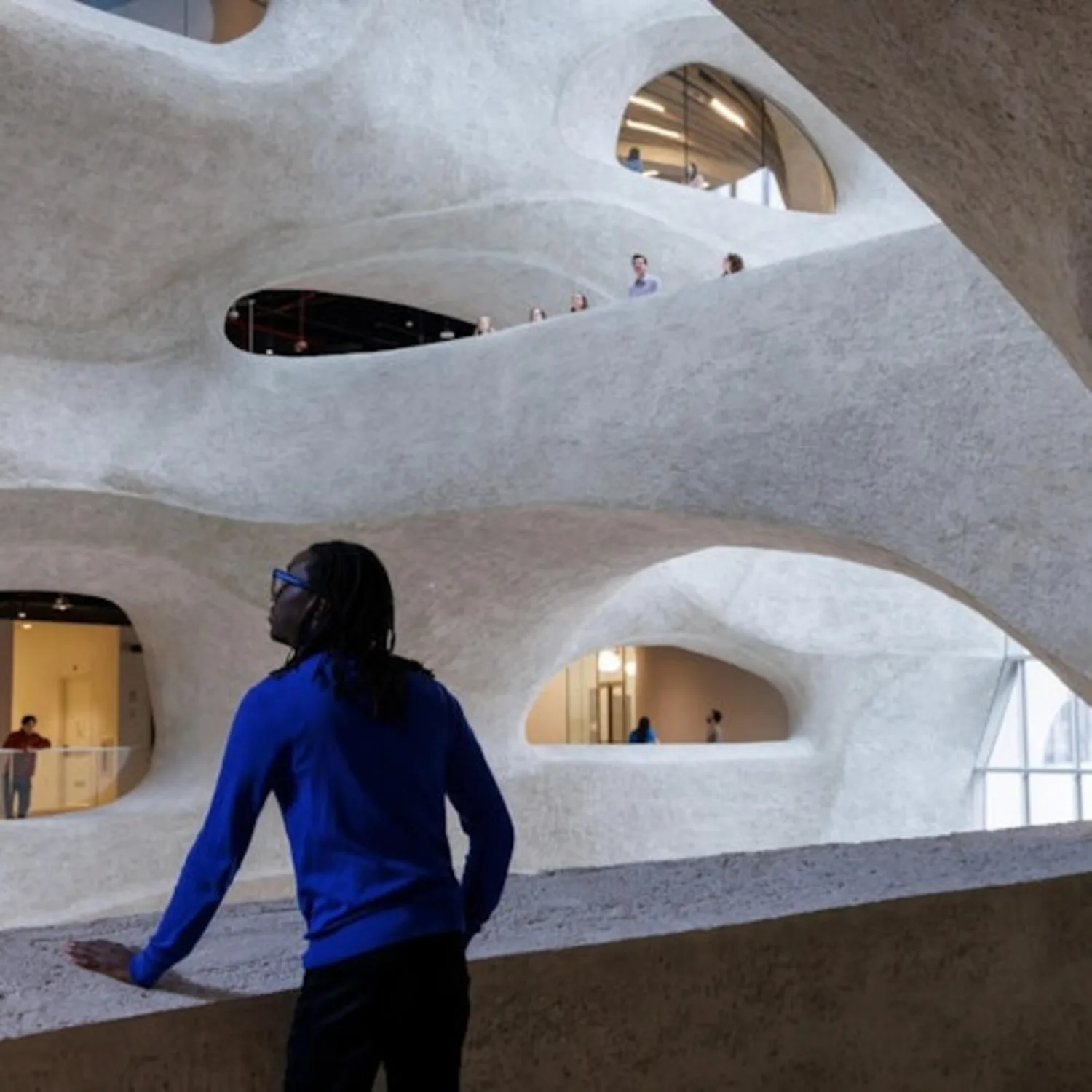
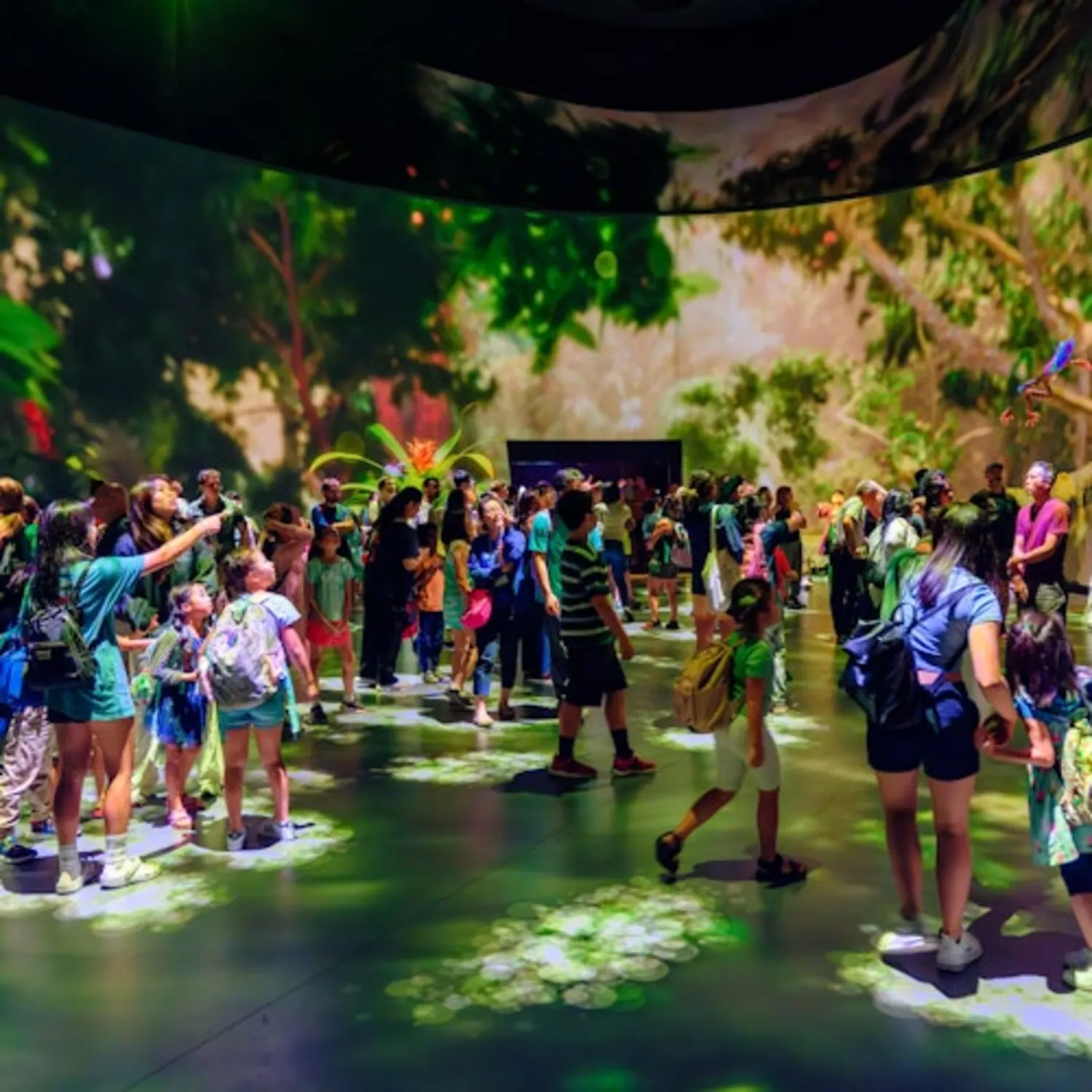
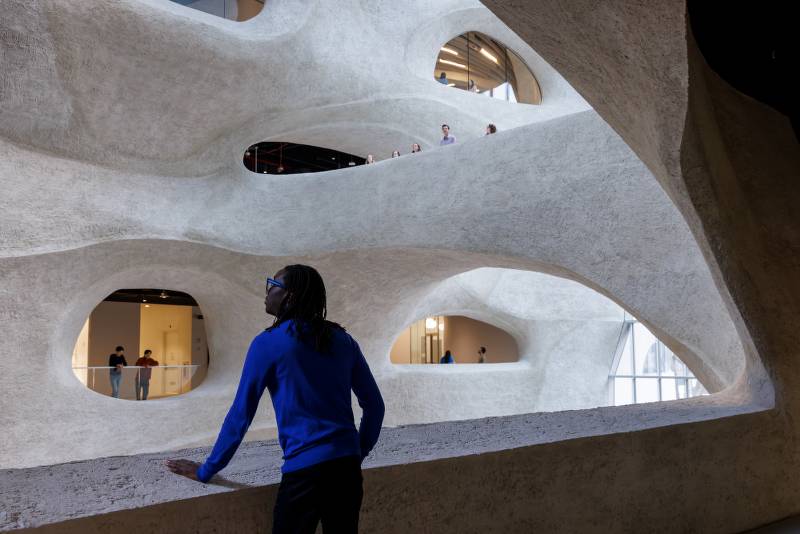
Visitor looking out from an opening inside the Gilder Center

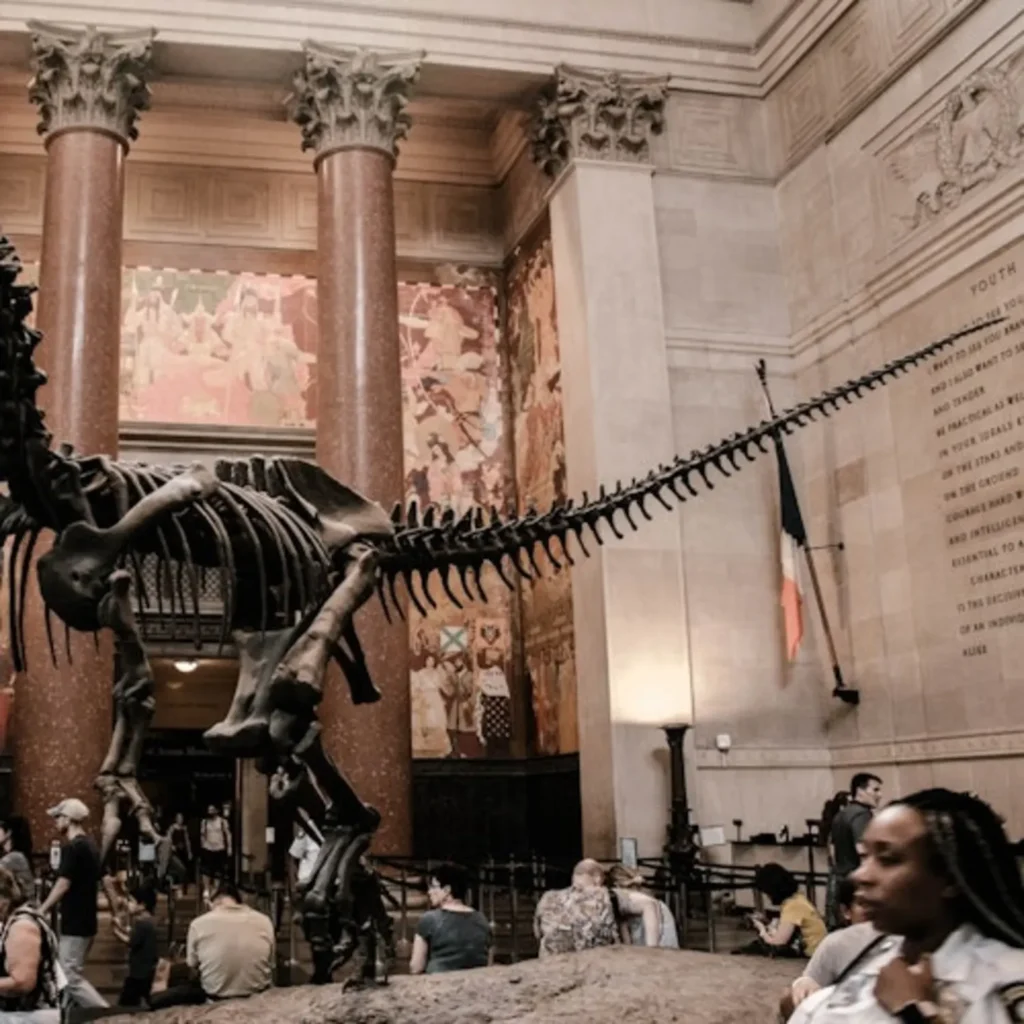
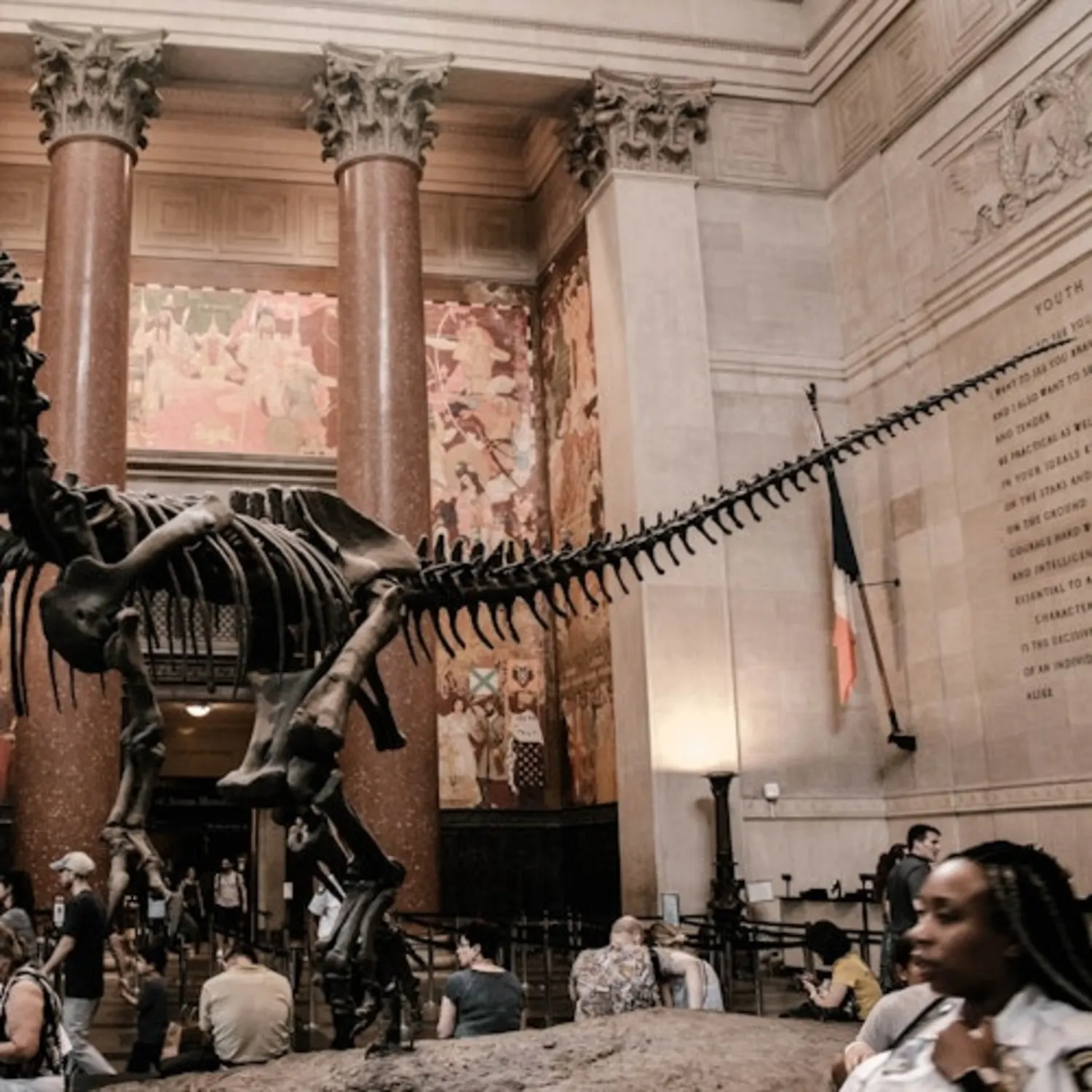
The Titanosaur is a life-sized cast of Patagotitan mayorum, a sauropod discovered in 2014 in Argentina. It is 122 feet long, which is longer than the Wallach Orientation Center, whose ceiling is only about 19 feet high. The body fills the room and the neck and head extend out toward the elevator banks.

The mount is a cast of a juvenile, and it gives a sense of scale for one of the largest dinosaurs known.

Tyrannosaurus rex

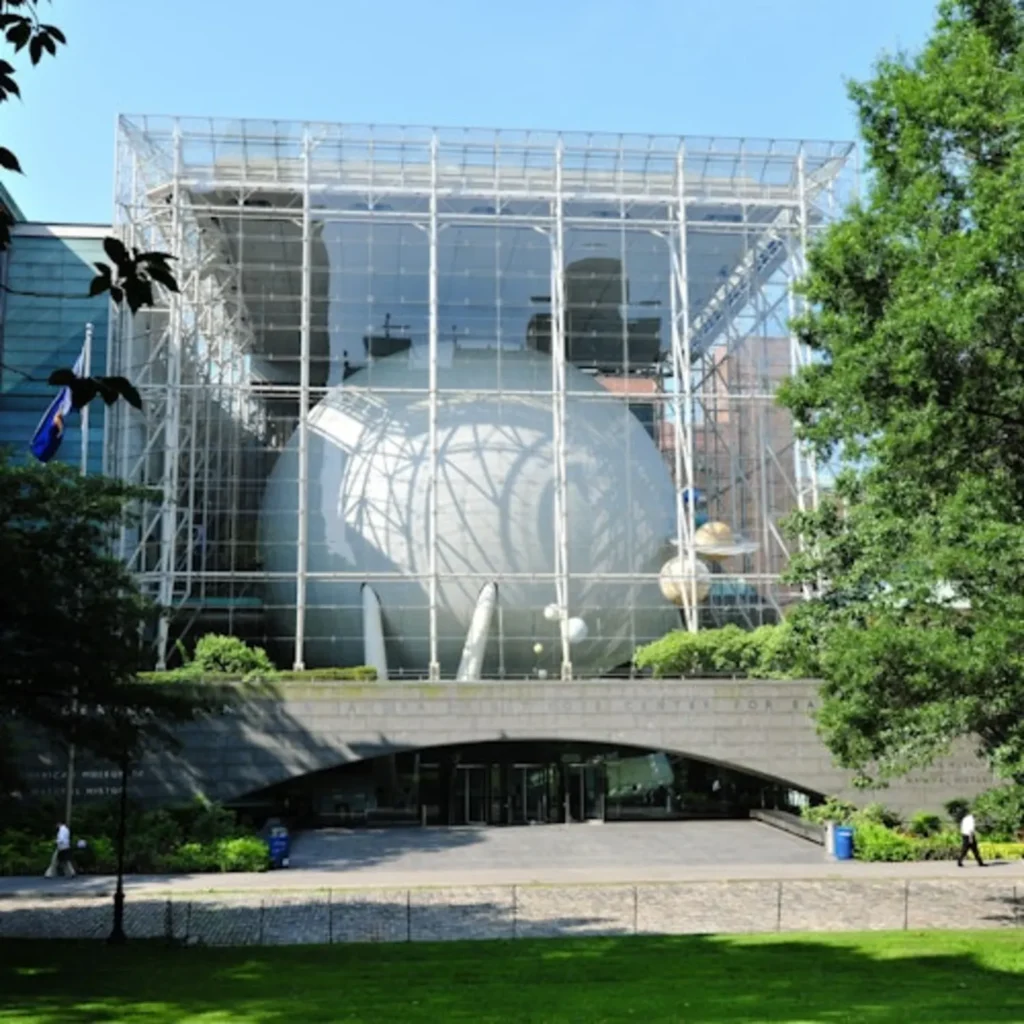
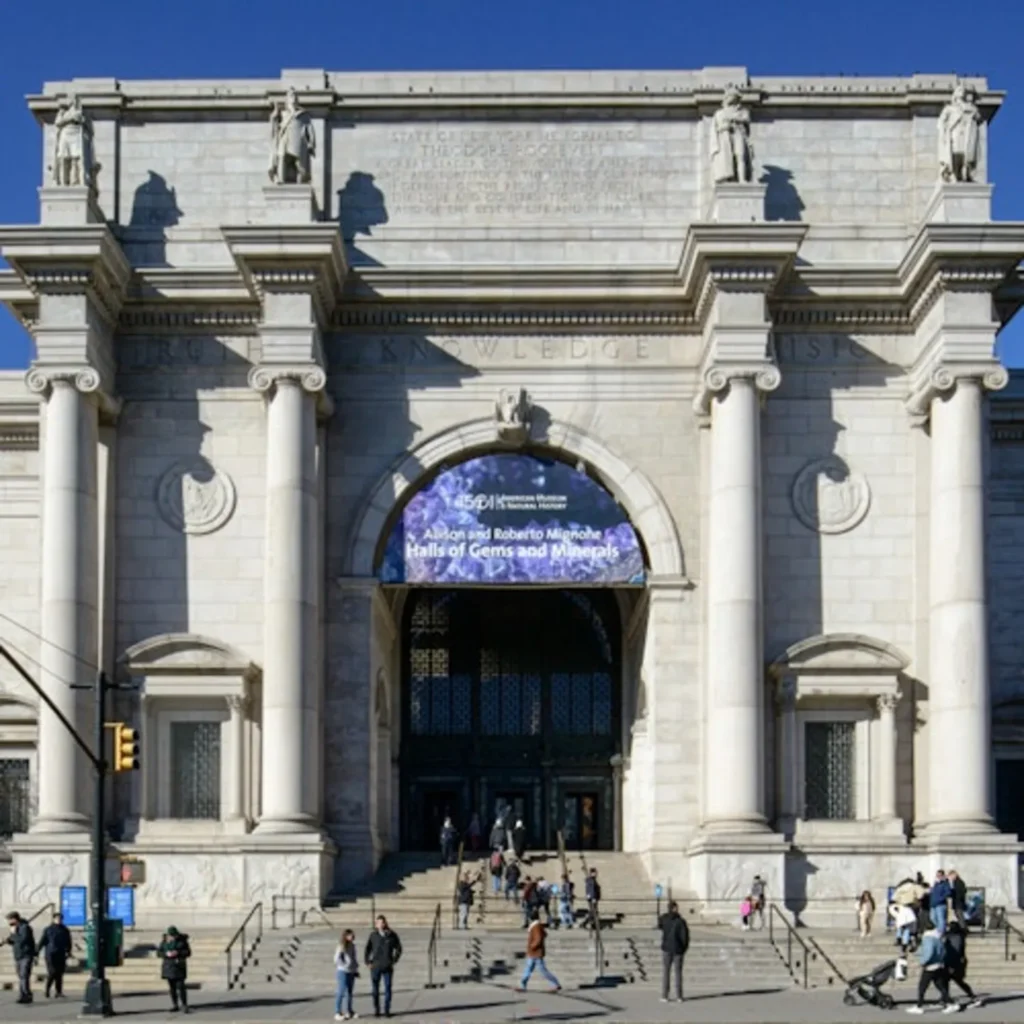
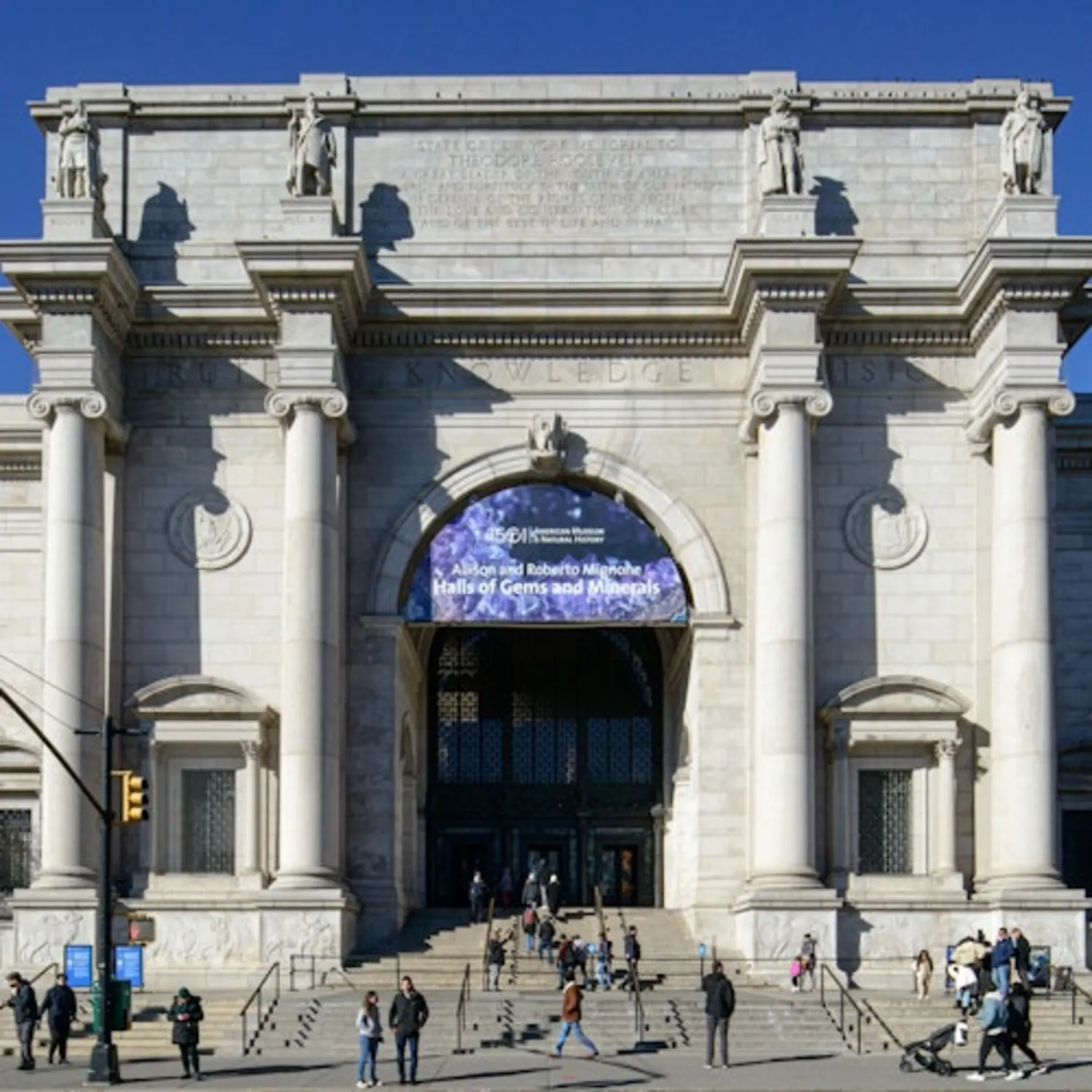
Entrance of the American Museum of Natural History

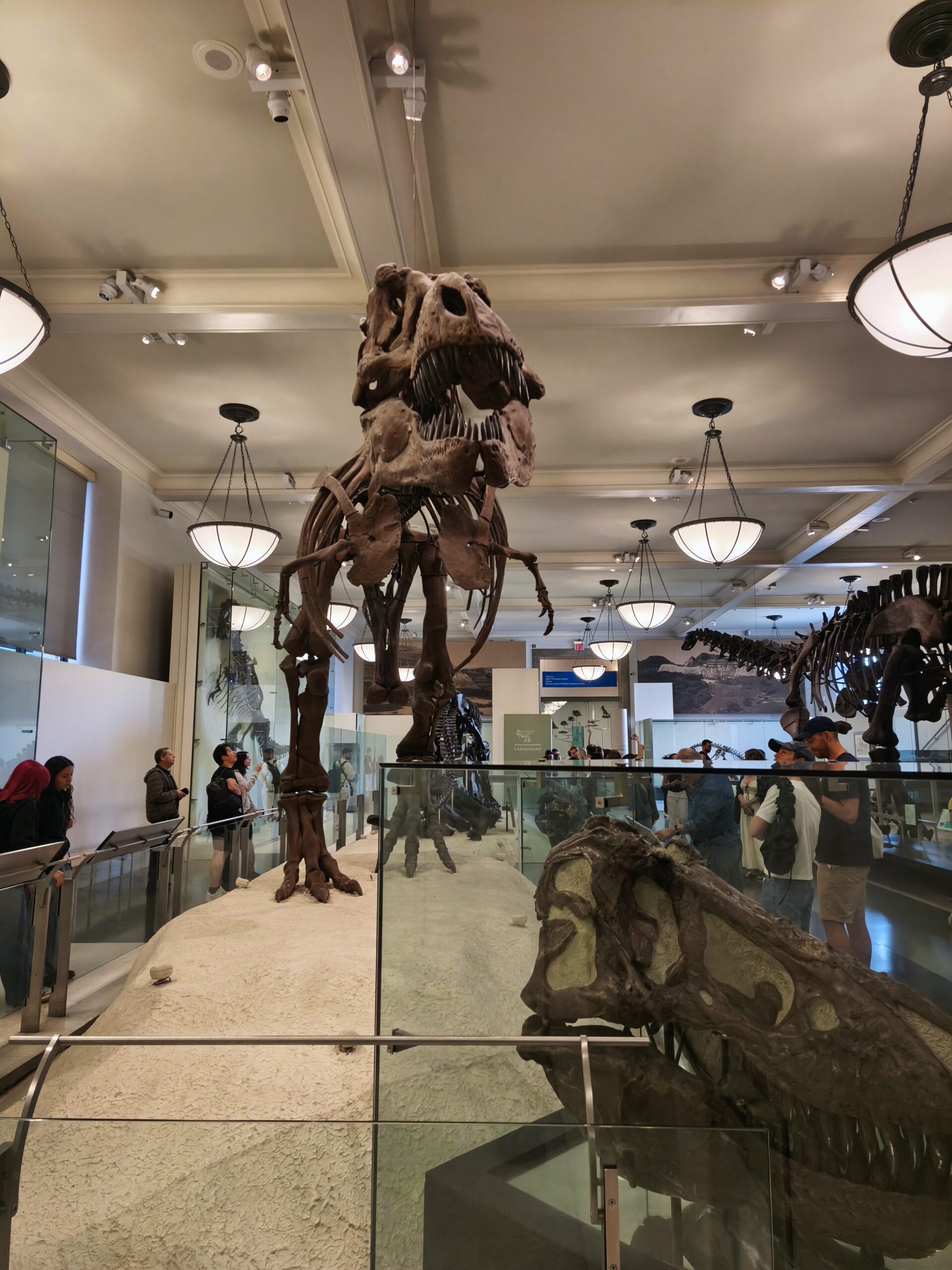
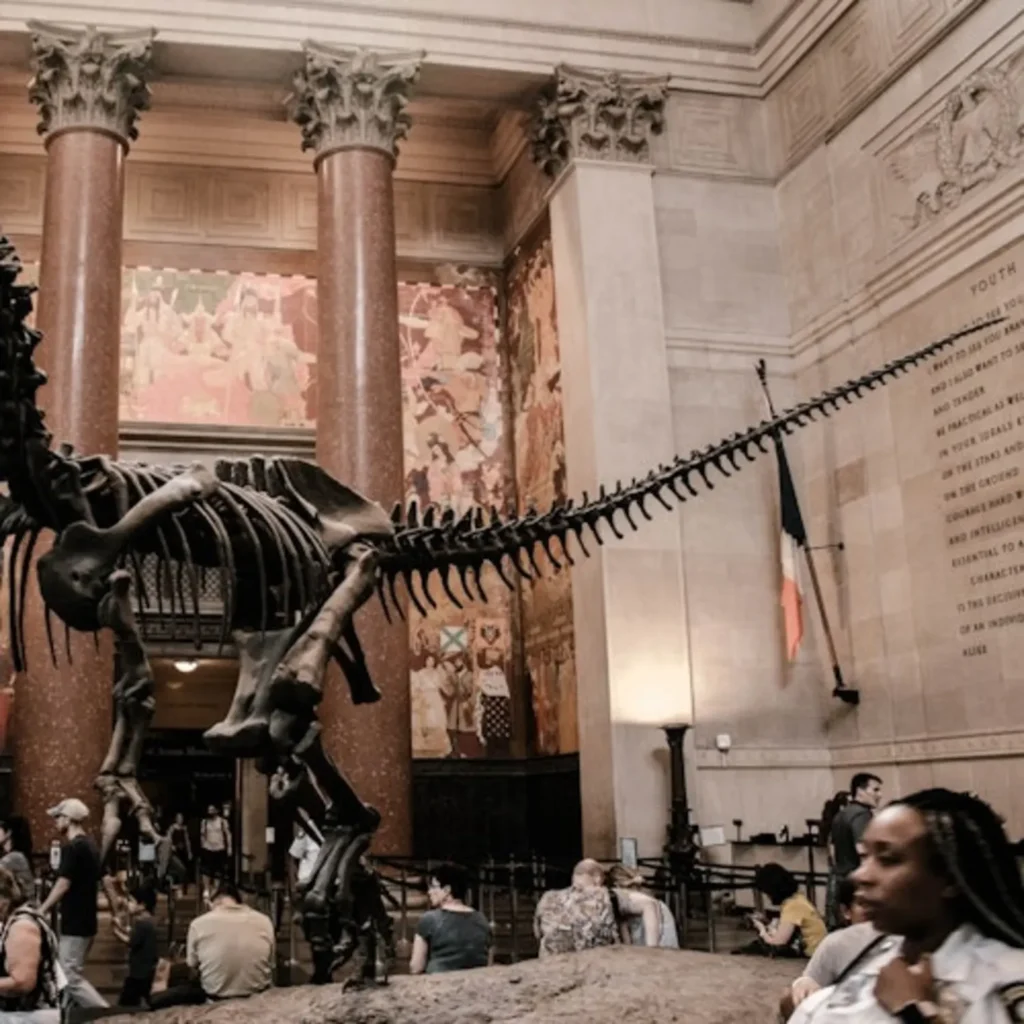
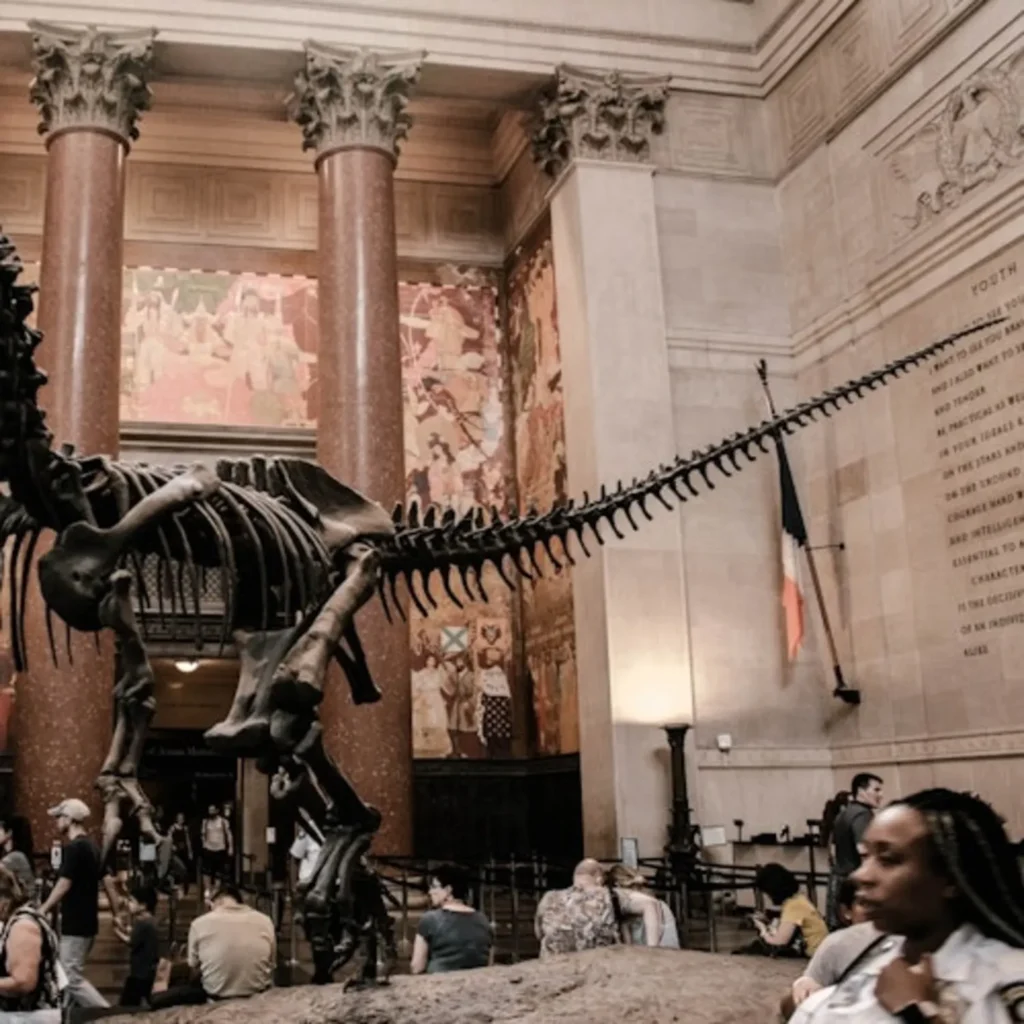
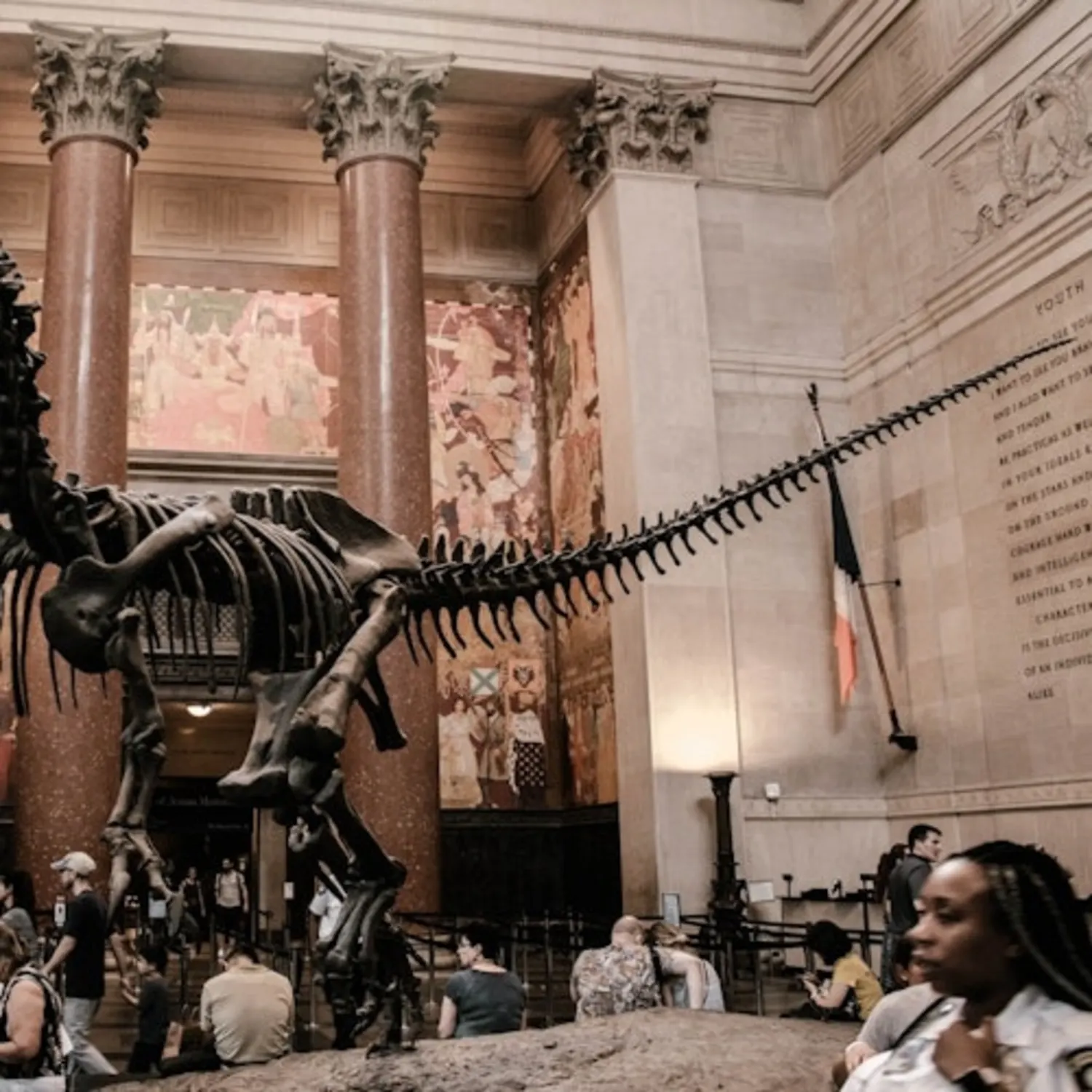
The Tyrannosaurus rex stands in the Hall of Saurischian Dinosaurs. It is one of the largest meat-eaters ever to have lived, it was found on a Museum expedition, and the mount is about 45 percent real fossil. It has been on view since 1915, and its pose has been adjusted over time. Its teeth were sharp and serrated for ripping meat.

The same hall holds the Apatosaurus, a sauropod with a small head, a long neck and a long tail whose rake-like teeth stripped leaves from branches. Saurischian means "lizard-hipped", and the hall brings the meat-eating theropods and the long-necked sauropods together.

Triceratops and the Ornithischian hall

Statue and facade of the American Museum of Natural History

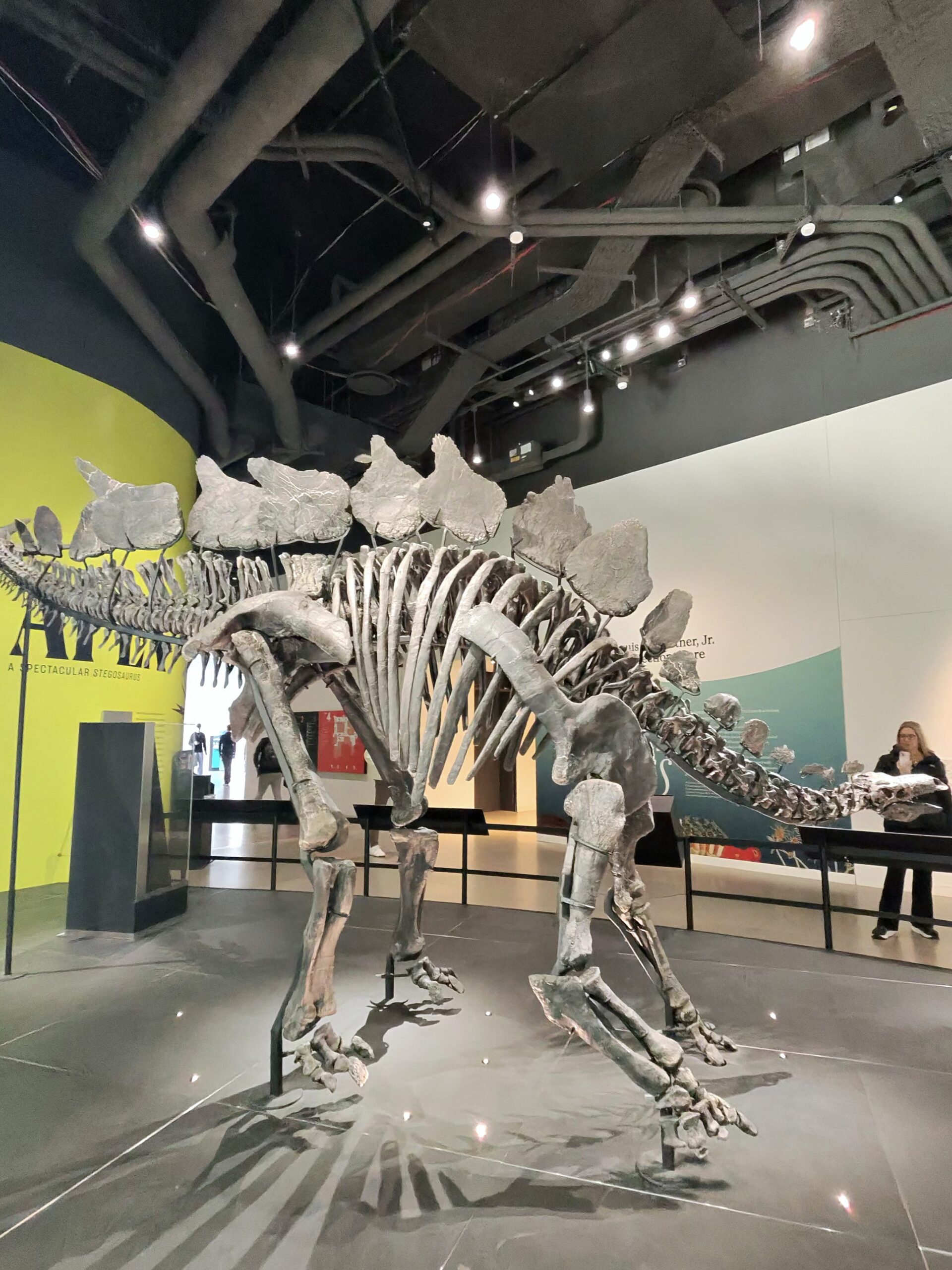
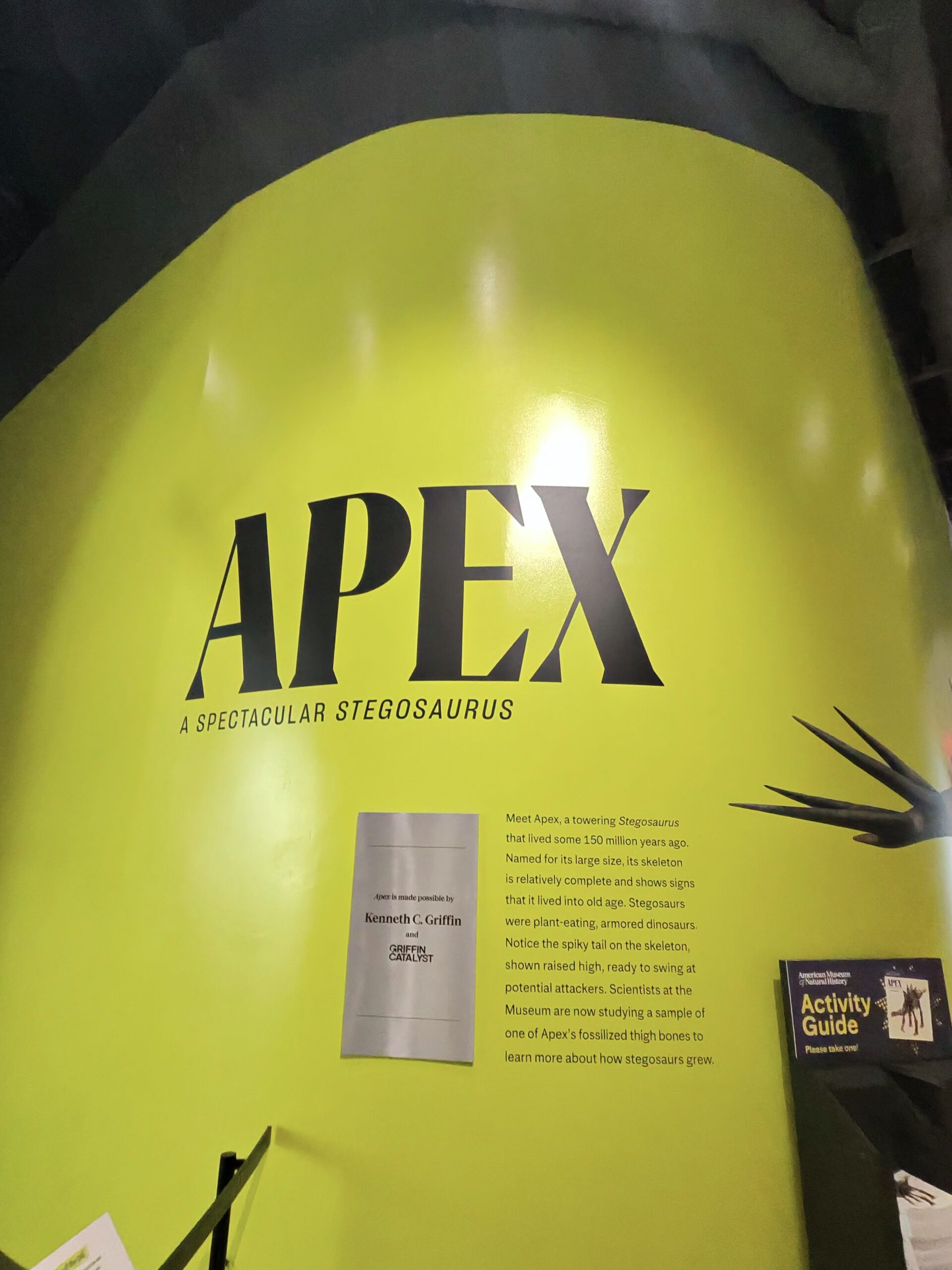
The Hall of Ornithischian Dinosaurs is home to Triceratops, an enormous plant-eater with a hooked beak and a large armored headpiece with horn-like spikes. Its beak and teeth were suited to shearing vegetation. Other ornithischians, such as Stegosaurus with its rows of triangular back plates, belong to the same branch of the family tree.

The hall covers groups such as Ankylosaurus and Pachycephalosaurus, and it shows how plant-eating dinosaurs evolved defenses and ways of feeding.

Barosaurus and Allosaurus in the Rotunda

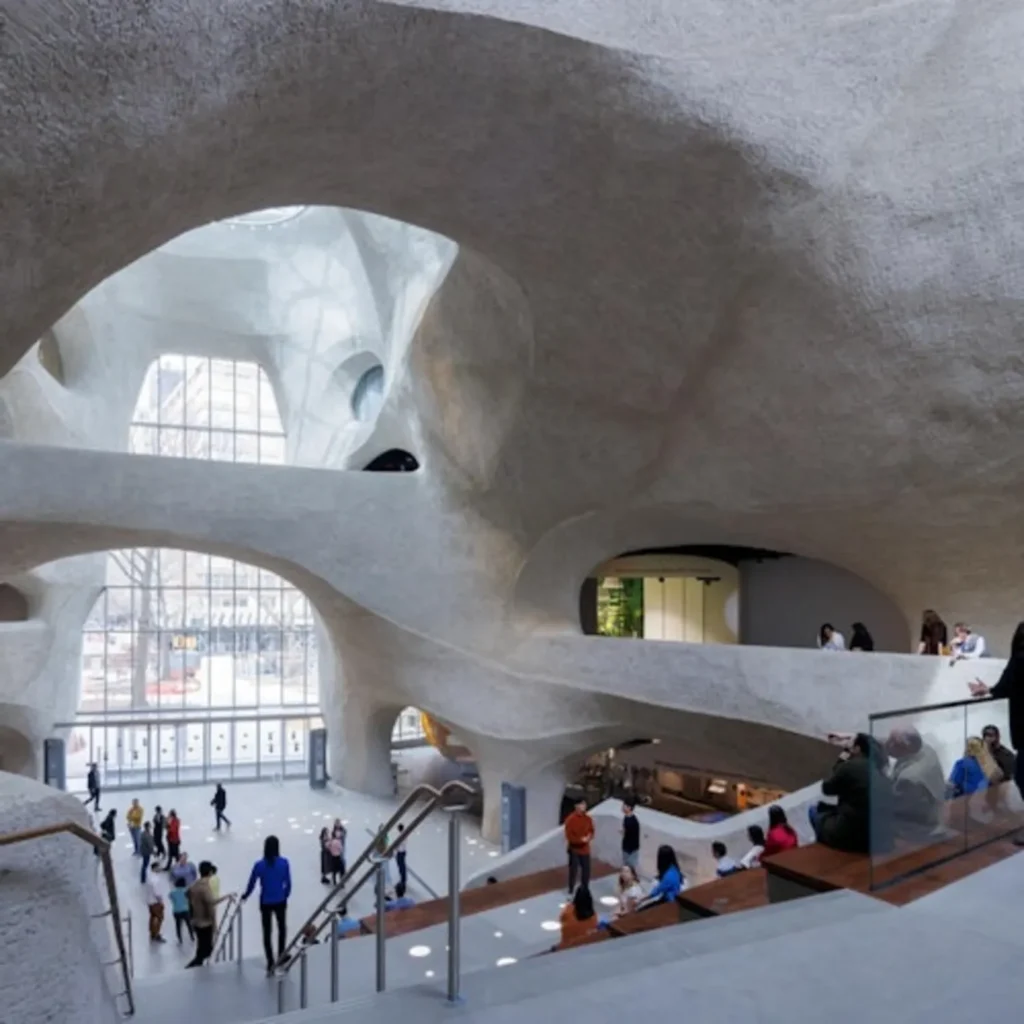
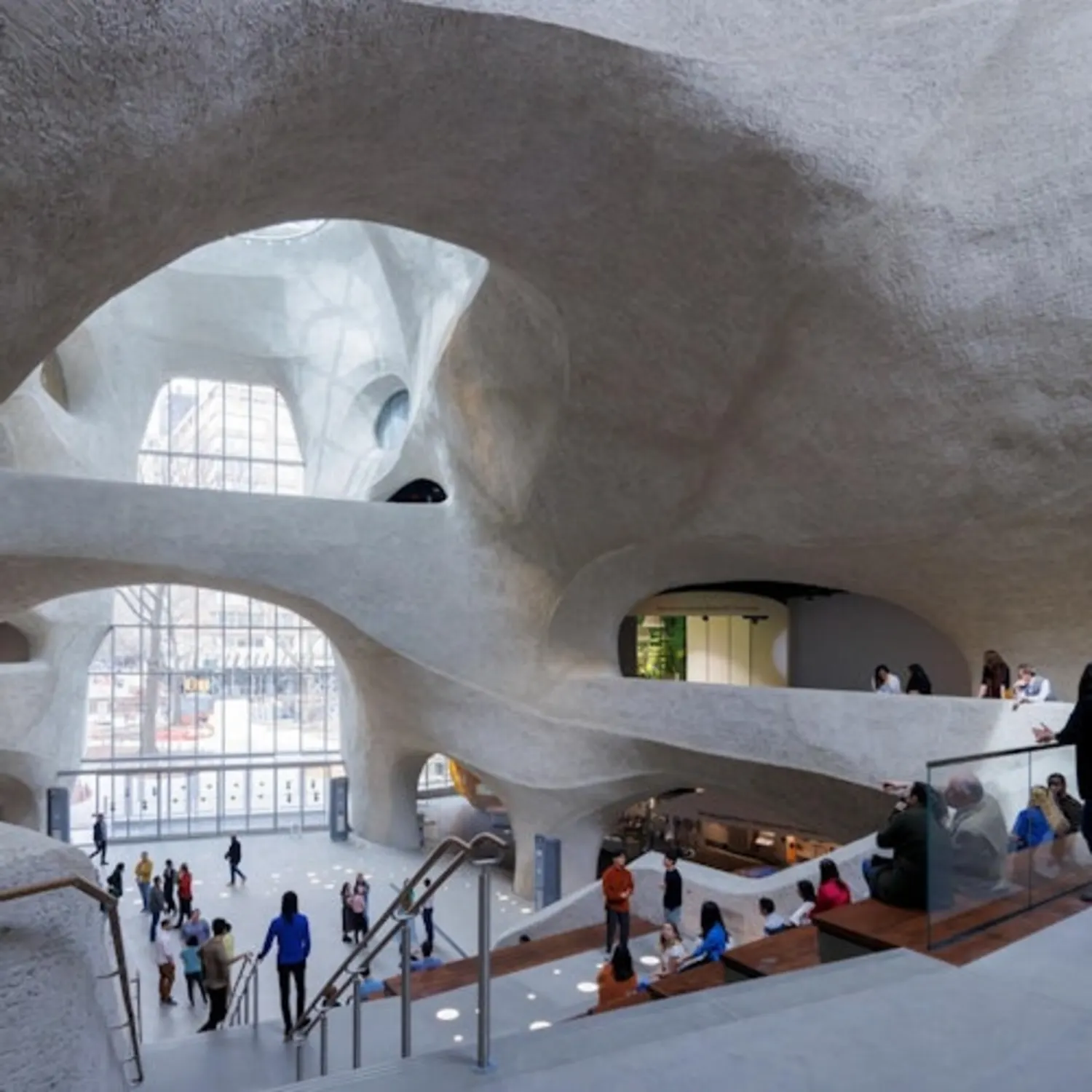
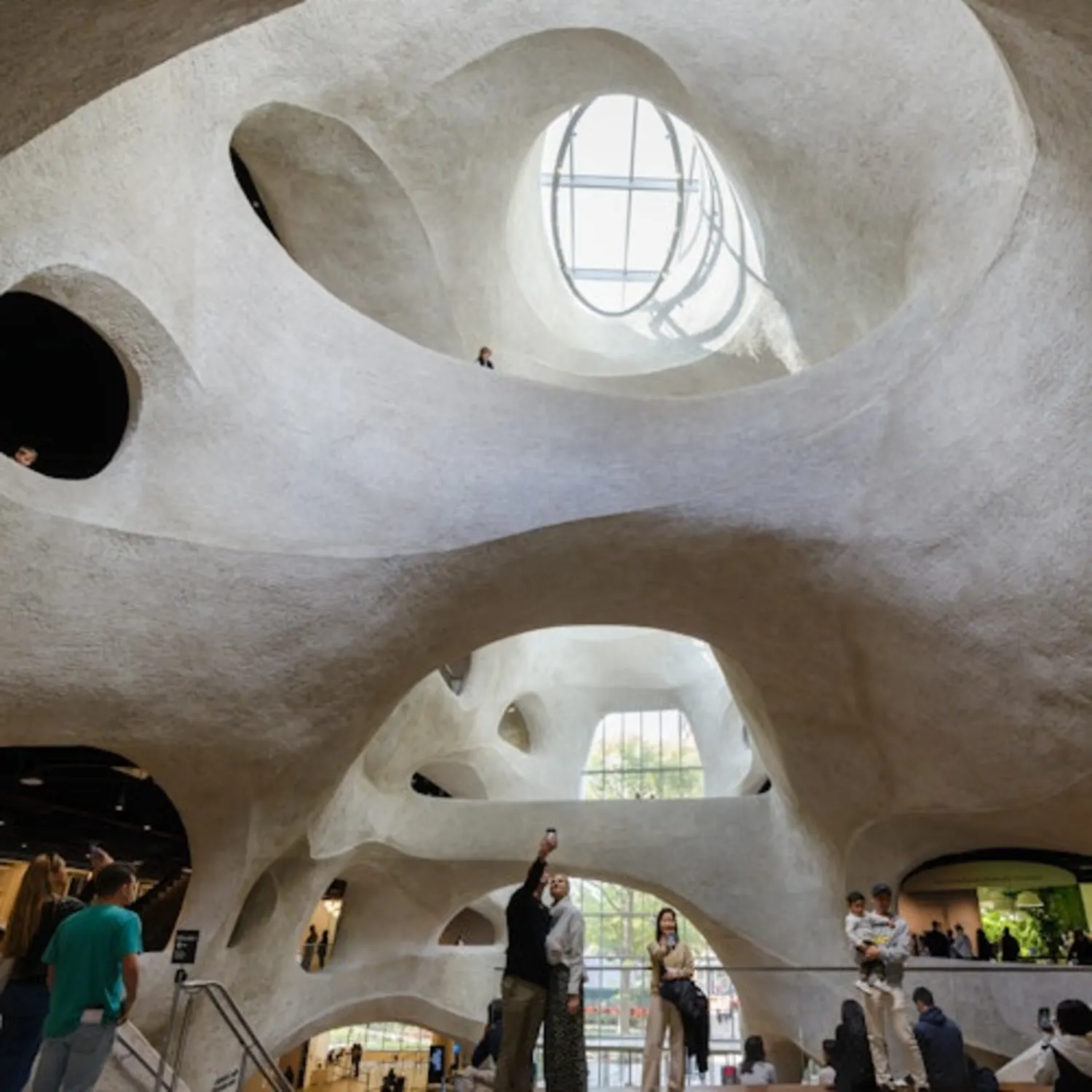
Interior of the Gilder Center at the American Museum of Natural History

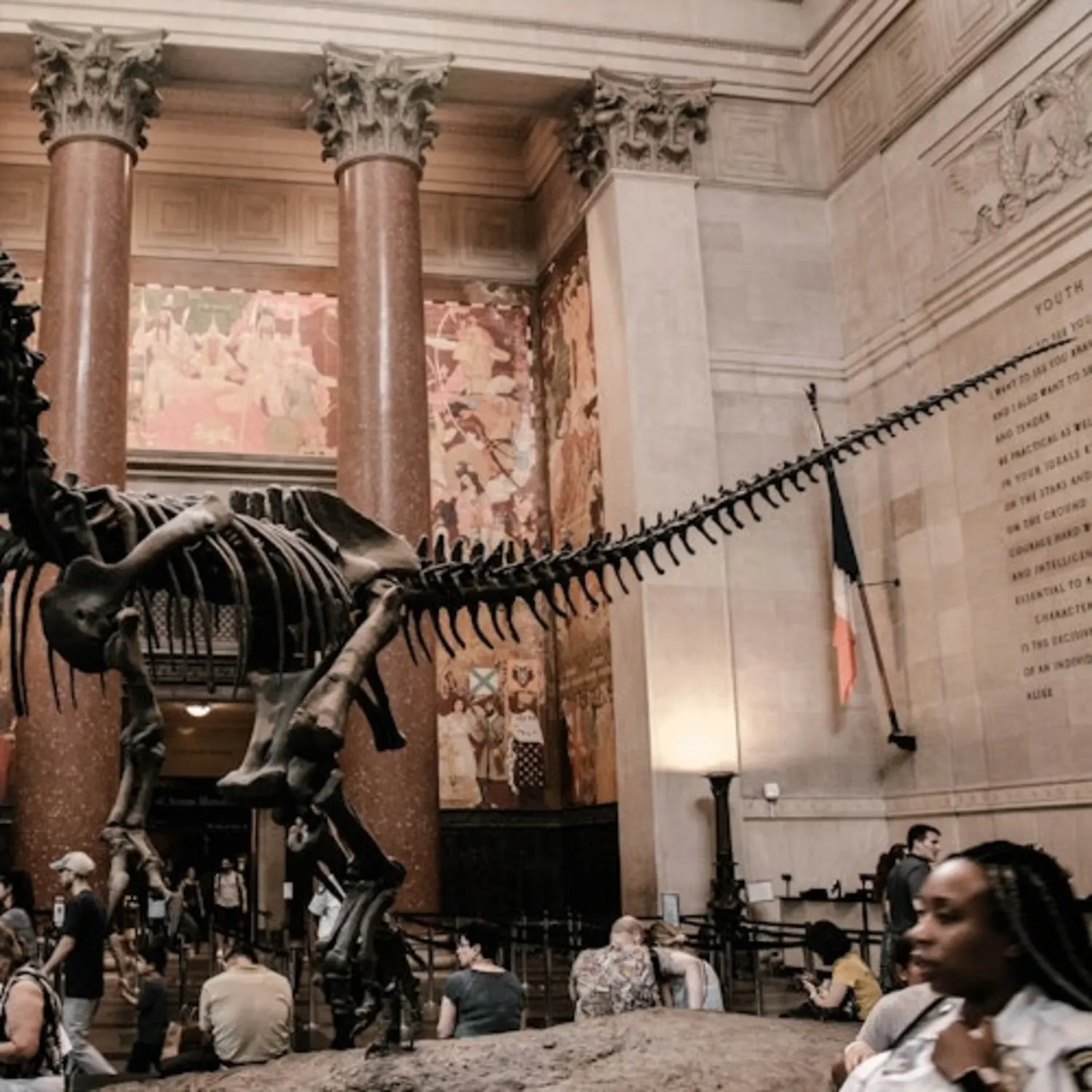
Not every dinosaur is on the fourth floor. In the Theodore Roosevelt Rotunda, formally the New York State Memorial to Theodore Roosevelt, a Barosaurus and an Allosaurus cast form the tallest freestanding dinosaur mount in the world.

Plan to see it in addition to the fourth-floor halls.

How the halls are arranged

Visitors entering the American Museum of Natural History

The fourth-floor halls were renovated in 1996 so that animals are grouped by evolutionary relationships instead of by time or place. Animals displayed side by side are close relatives, even when they lived millions of years apart. The layout is a giant cladogram: silver lines on the floor are the branches, pillars mark the points where groups split, and glass cases on either side hold fossils that share traits.

You can walk around each group of cases, and every pillar is a point where the family tree splits.

Impact: The End of the Age of Dinosaurs

Theodore Roosevelt statue outside the museum

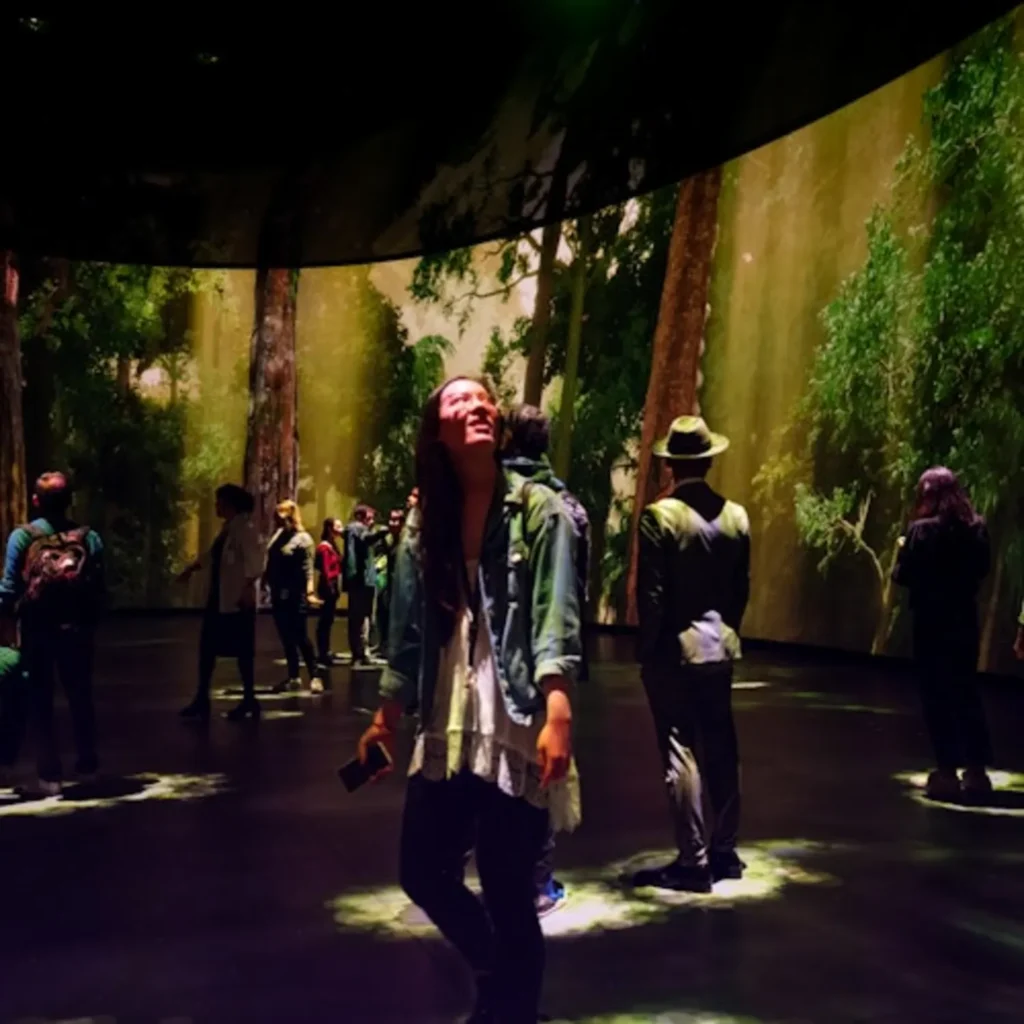
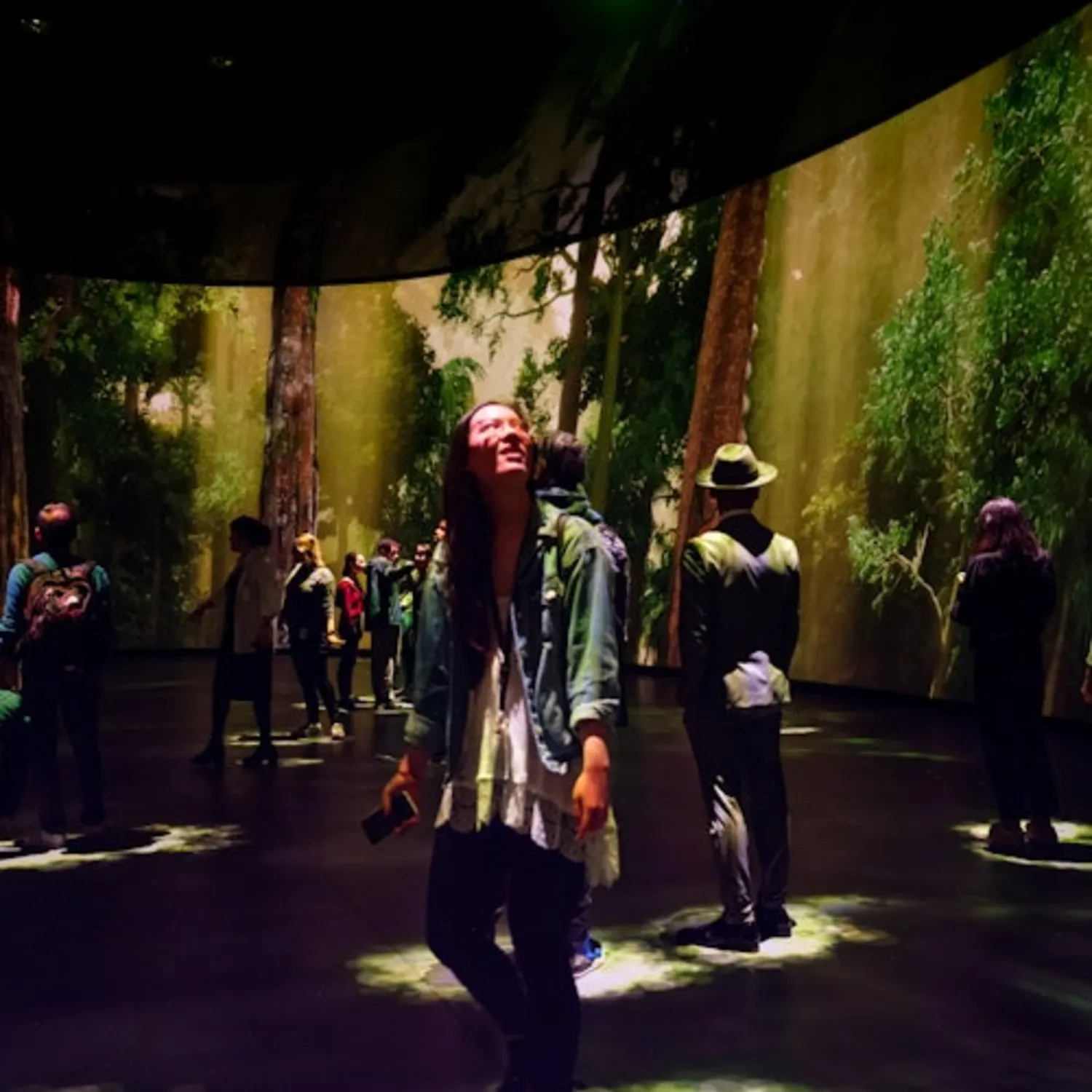
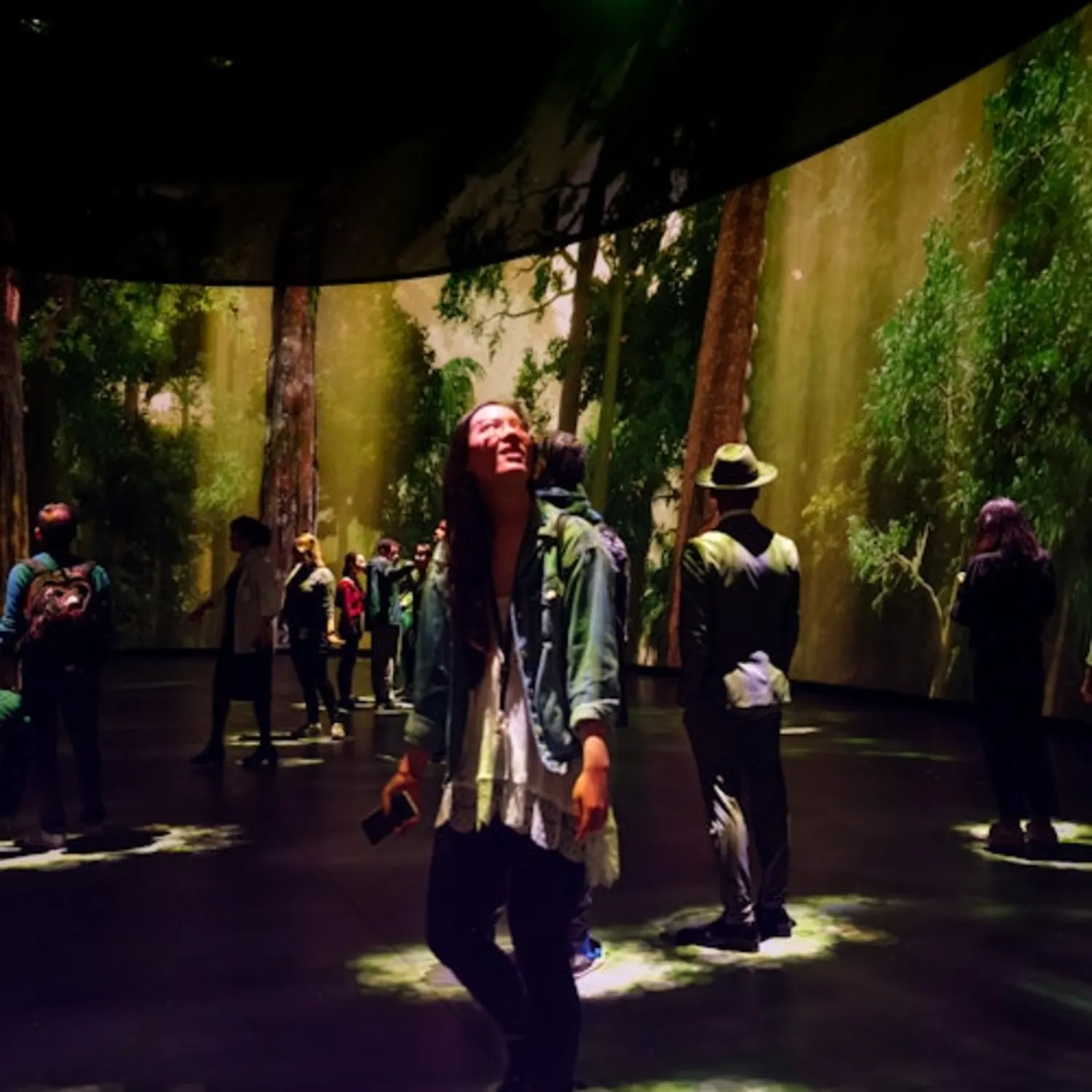
Impact: The End of the Age of Dinosaurs is a ticketed exhibition in the LeFrak Family Gallery on the fourth floor, opened to the public on November 17, 2025. It explains the asteroid, an estimated 6 to 10 miles wide, that struck about 66 million years ago and eliminated roughly 75 percent of living species. A 6-minute panoramic video shows the impact, with tsunamis, earthquakes, acid rain, wildfires and a darkened sky.

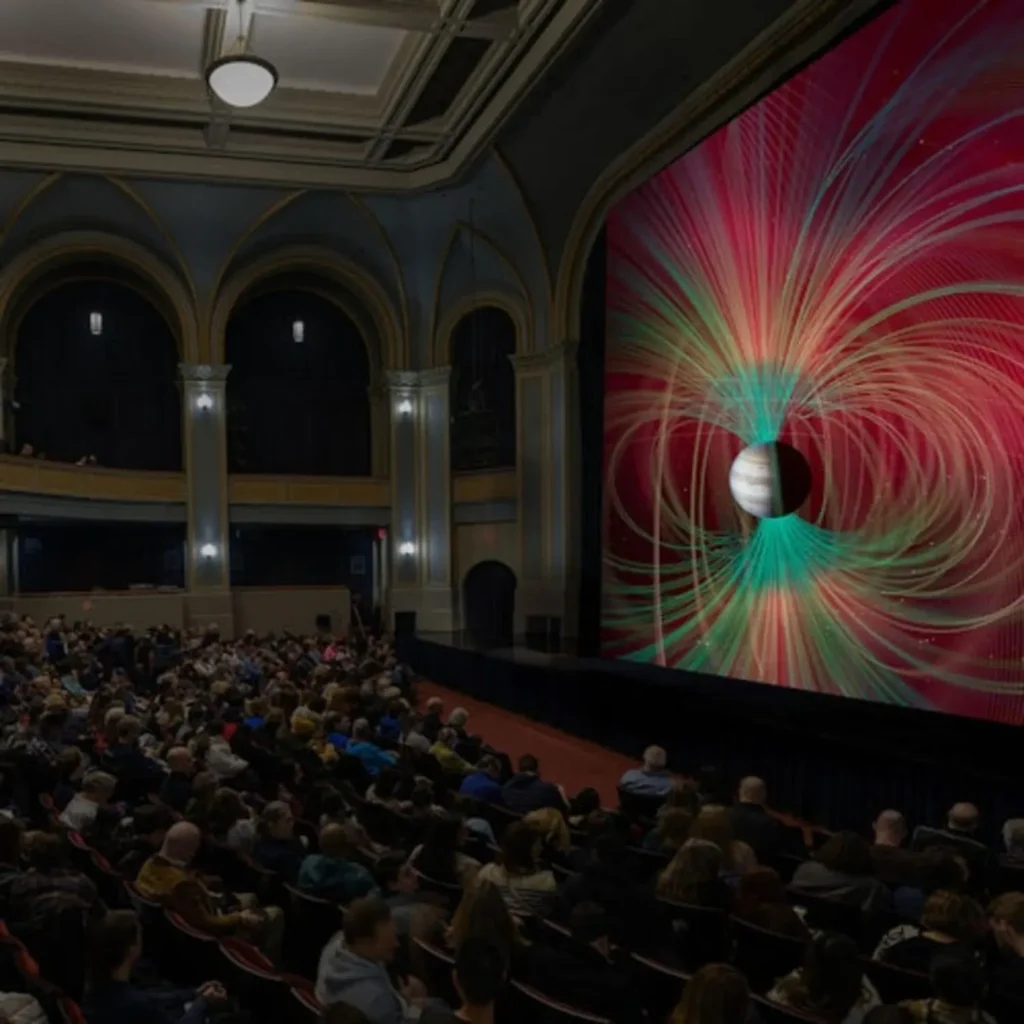
You see life-size models, including an 18-foot Triceratops, a 27-foot mosasaur and a 30-foot plesiosaur, and you can touch a real Triceratops toe fossil. The exhibition costs extra on top of general admission. The ticket options include a Plus One ticket and an All Ticketed Exhibitions ticket, so check the options shown when you book. The Hayden Planetarium Space Show is also a ticketed exhibition; read the Hayden Planetarium guide.

Planning the visit

Entrance of the American Museum of Natural History

The museum is open daily from 10 a.m. to 5:30 p.m. and closes on Thanksgiving Day and Christmas Day. Children under 12 must stay with an adult. Eating is not allowed in the galleries, and the Cafe on 4 is on the same floor as the dinosaurs.

Children under 3 enter free. Check the age bands shown when you book. The museum also lets visitors in free during the last hour of the day, but that leaves too little time for the fourth floor. Our ticket gives you a reserved time slot on any other day. The accessible entrances are on 81st Street and on Columbus Avenue. See the timings guide and the directions guide.

Visit the American Museum of Natural History

The dinosaur halls are part of every general admission ticket on the American Museum of Natural History tickets page, and the plan your visit guide covers entrances and timing.

AMNH dinosaurs FAQs

Where are the dinosaurs at the American Museum of Natural History?

On the fourth floor, in the Hall of Vertebrate Origins, the Hall of Saurischian Dinosaurs, the Hall of Ornithischian Dinosaurs, the Hall of Primitive Mammals and the Hall of Advanced Mammals.

How many dinosaur fossils does the museum display?

The fourth-floor halls display 600 fossil specimens, including about 100 dinosaur fossils and more than 250 mammal fossils.

Are the dinosaur fossils real?

About 85 percent of the specimens on the fourth floor are real fossils. The rest are exact casts.

Where is the T. rex?

In the Hall of Saurischian Dinosaurs. The mount is about 45 percent real fossil and has been on view since 1915.

How long is the Titanosaur?

122 feet. It is a cast of Patagotitan mayorum, discovered in 2014, and its neck and head extend out of the Wallach Orientation Center toward the elevator banks.

Where is the Barosaurus?

In the Theodore Roosevelt Rotunda, with an Allosaurus cast. Together they form the tallest freestanding dinosaur mount in the world.

Do I need a separate ticket for the dinosaur halls?

No. The dinosaur halls are permanent halls included in general admission. Impact: The End of the Age of Dinosaurs is a ticketed exhibition that costs extra.

What is Impact: The End of the Age of Dinosaurs?

A ticketed exhibition on the fourth floor about the asteroid that struck about 66 million years ago, with a 6-minute panoramic video and life-size models.

What are the opening hours?

Daily from 10 a.m. to 5:30 p.m. The museum is closed on Thanksgiving Day and Christmas Day.

Do children under 3 pay?

The museum admits children under 3 free. Check the age bands shown when you book.

Can you eat in the dinosaur halls?

No. Eating is not allowed in the galleries. The Cafe on 4 is on the fourth floor.

Is the American Museum of Natural History free in the last hour?

The museum lets visitors in free during the last hour of the day, which leaves too little time for the dinosaur halls. Our ticket gives you a reserved time slot on any other day.

About this guide

Sources: American Museum of Natural History, dinosaurs on display, fossil halls educator guide, Impact exhibition and plan your visit pages; Wikipedia, American Museum of Natural History.