We are processing your request.
Please, don't close or refresh the page.
New York Tickets St Patricks Cathedral

St. Patrick’s Cathedral, NYC: Tickets and Info

This website offers official tickets for this venue. Please note, however, that it is not the official website of the venue.
Smartphone tickets

Smartphone tickets

Everything you need, right in your pocket!
Why wait?

Why wait?

Skip the line and get priority access
Instant confirmation

Instant confirmation

Receive your tickets seconds after your purchase
Flexible cancellation

Flexible cancellation

Free cancellation up to 24 hours before the event available on selected experiences

St. Patrick's Cathedral: Official Tour

Highlights

Explore the cathedral with insightful narration by the Archbishop of New York.

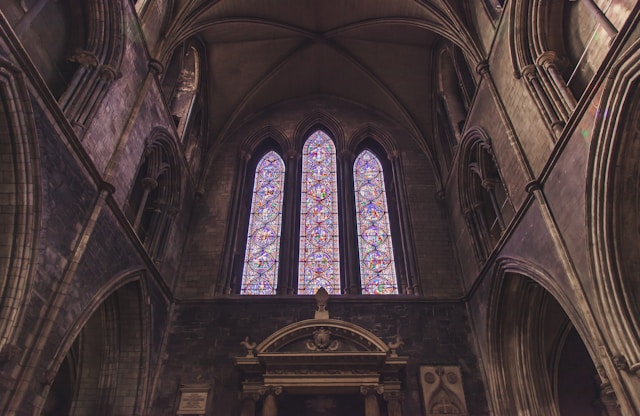
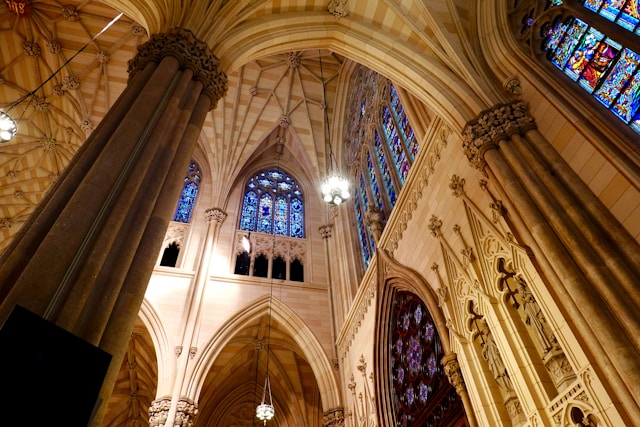
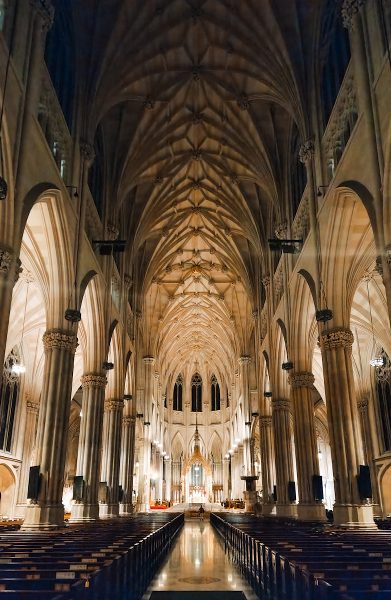
Admire Neo-Gothic architecture filled with detailed stained-glass artwork.

Learn about the church’s history and artistic features, including its renowned pietà.

Use provided Apple iPads and disposable headphones for the tour.

Experience the audio guide in multiple languages including English, French, Italian, Portuguese, and Spanish.

Good to Know Before Visiting St. Patrick’s Cathedral

General admission is free and no advance reservations are required to enter the cathedral for prayer or sightseeing.

All visitors must pass through a security screening at the entrance, which includes metal detectors and a bag inspection.

Large pieces of luggage and oversized backpacks are not permitted inside, and there are no storage facilities available on-site.

As this is an active house of worship, you should dress modestly and remove hats or headwear upon entering the building.

Photography is generally permitted for personal use, but the use of flash, tripods, or professional filming equipment is strictly prohibited.

Silence must be maintained throughout the cathedral, and all mobile devices should be turned off or switched to silent mode.

Sightseeing and photography are not allowed during the celebration of Mass to preserve the solemnity of the service for congregants.

Food and beverages, with the exception of bottled water, are not allowed inside the cathedral at any time.

The official audio tour requires the use of headphones, which you should bring with you or purchase at the tour desk.

Special events or holidays can lead to sudden changes in public access, so it is recommended to check the daily calendar before traveling.

Essential Visitor Info

St. Patrick’s Cathedral is an active house of worship and a major historical landmark. To make the most of your visit, it is important to distinguish between general visiting hours and the schedule for religious services.

The cathedral is open to the public daily from 6:45 AM to 8:45 PM.

During these hours, visitors are welcome to explore the architecture and art, provided there is no special event or high-capacity Mass in progress. Please note that while entry is free, visitors are asked to remain respectful of those in prayer.

Mass Schedule

Mass is held multiple times throughout the day, and during these times, sightseeing within the nave is restricted to ensure a solemn environment for congregants.

Monday - Friday: 7 AM, 7:30 AM, 8 AM, 12 PM, 1 PM, and 5:30 PM.

Saturday: 8 AM, 12 PM, and 5:30 PM (Vigil Mass).

Sunday: 7 AM, 8 AM, 9 AM, 10:15 AM (Solemn Mass with Choir), 12 PM, 1 PM, 4 PM (Spanish), and 5:30 PM.

Best Time to Visit

For those looking to admire the architecture and stained glass without the crowds, the early morning hours between 8:30 AM and 11 AM are typically the quietest. If your goal is to see the stained glass windows at their most vibrant, the natural light between 11 AM and 4 PM provides the best illumination.

About St. Patrick's Cathedral

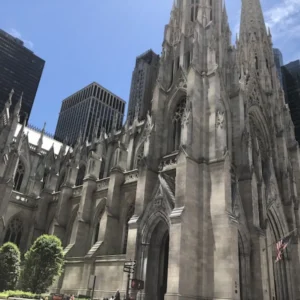
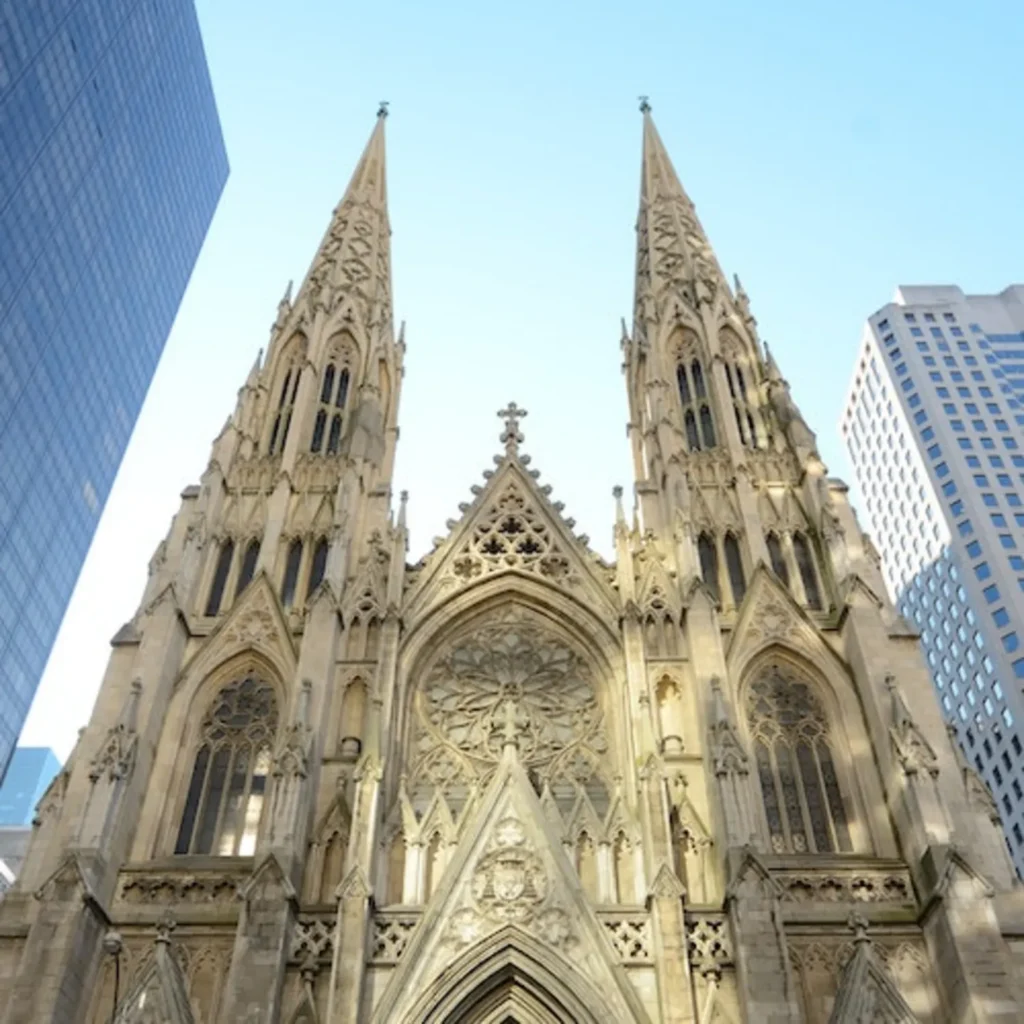
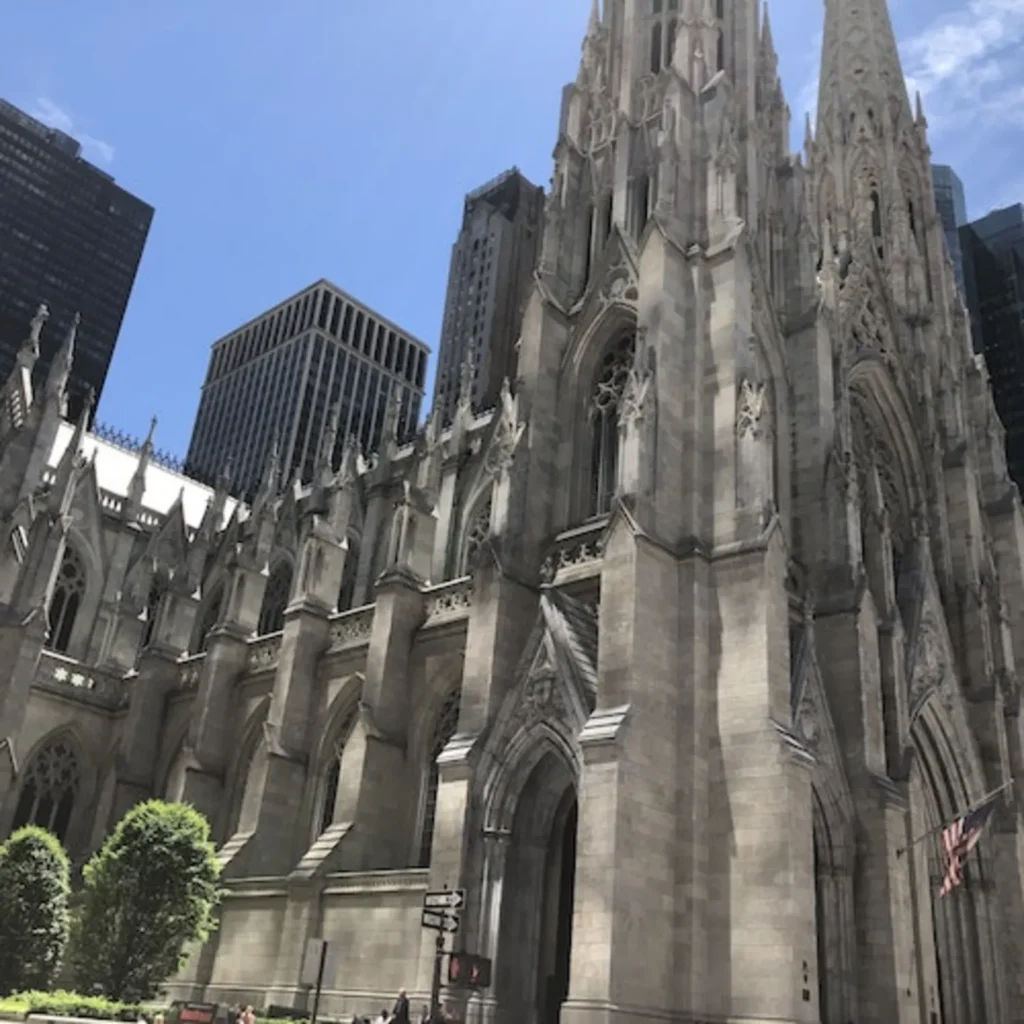
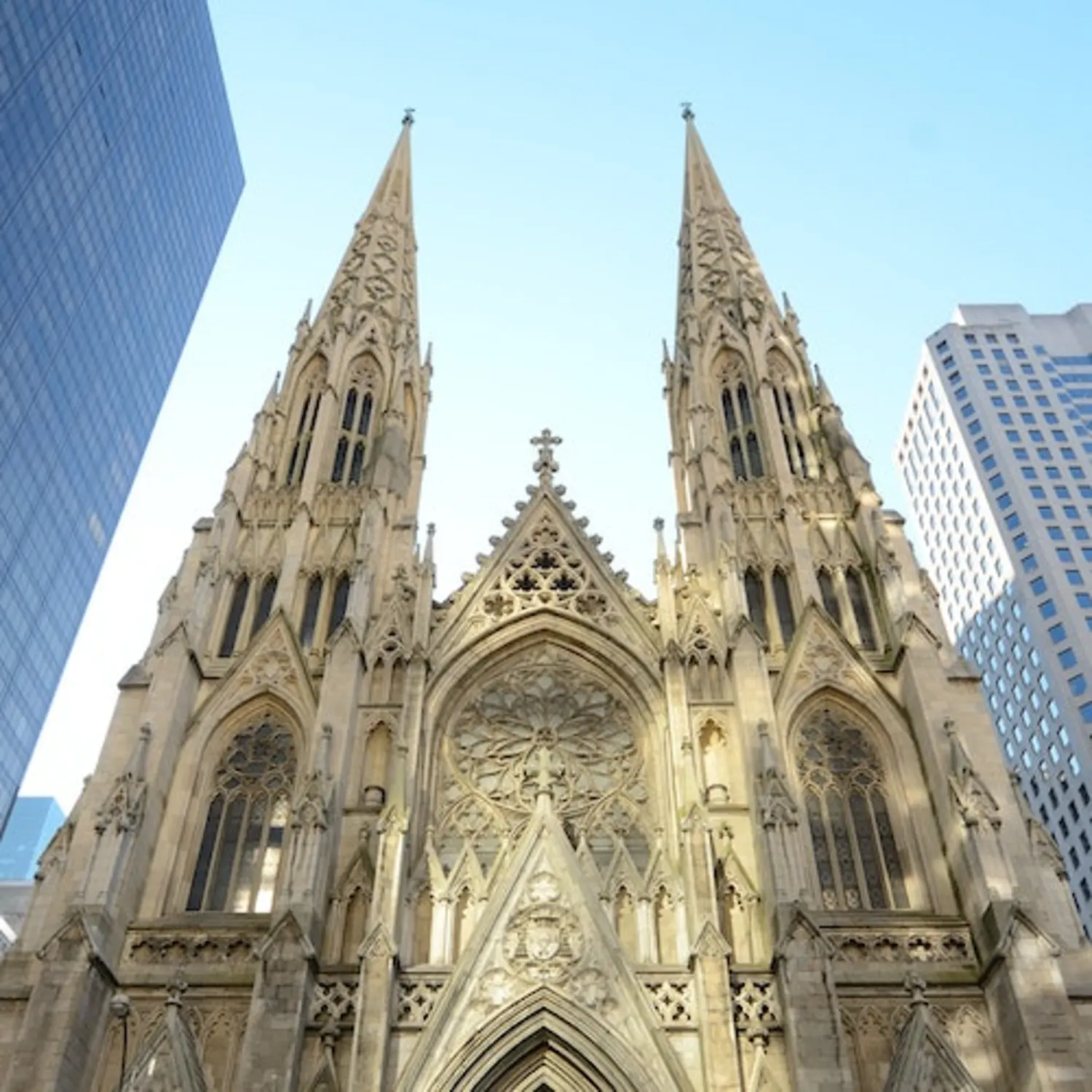
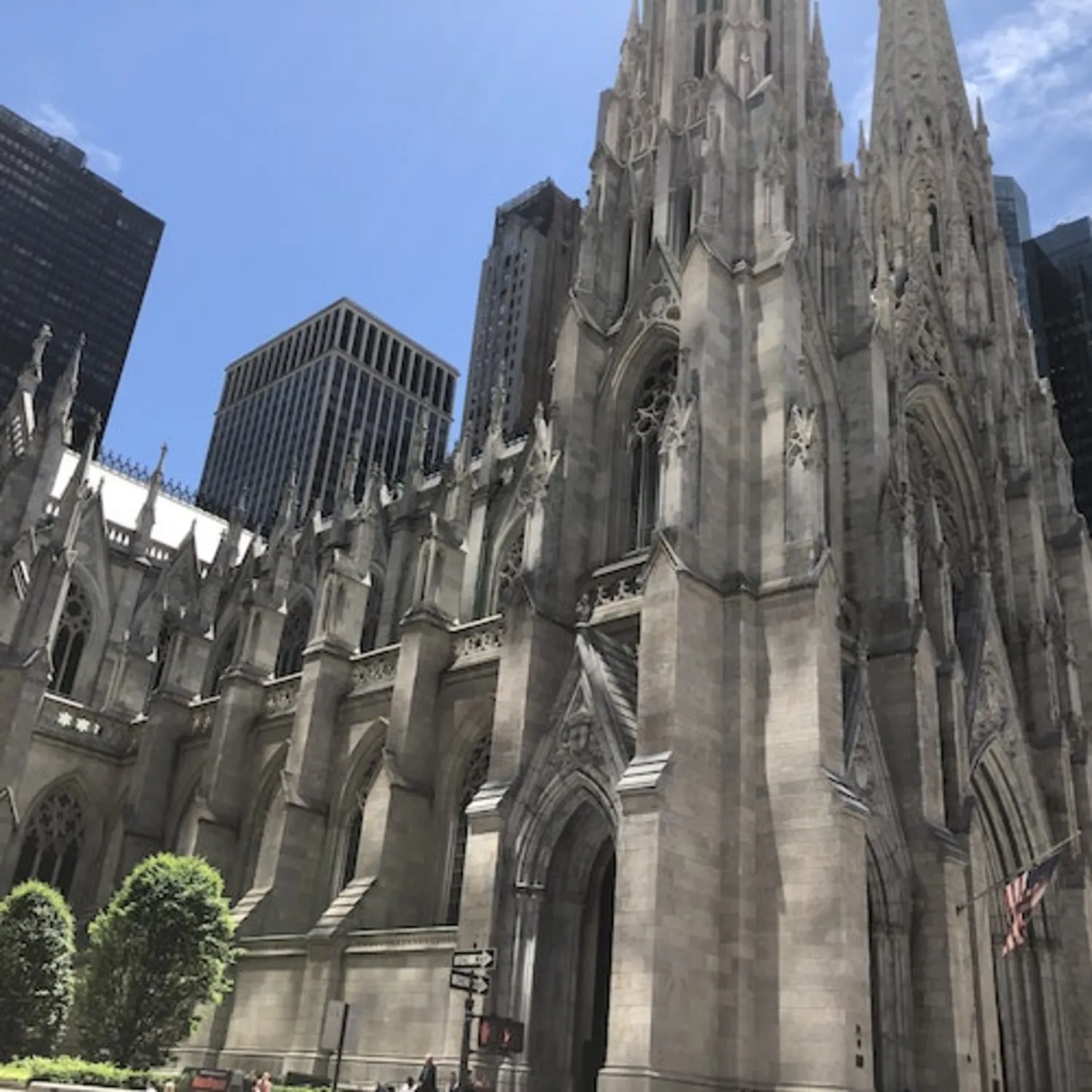
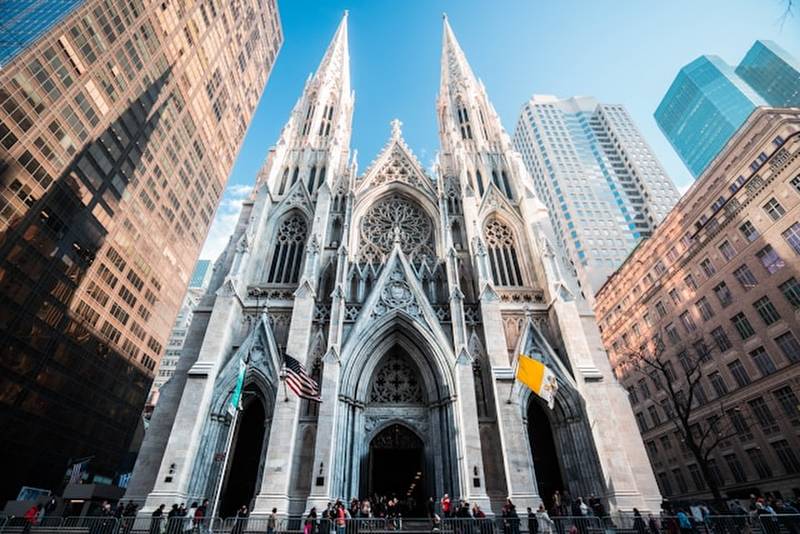
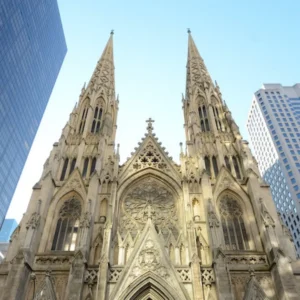
St. Patrick’s Cathedral is a world-renowned landmark and the seat of the Roman Catholic Archdiocese of New York. Designed by architect James Renwick Jr. and dedicated in 1879, the cathedral was envisioned as a testament to the growing religious freedom and influence of the city's immigrant populations. Built primarily of brick and clad in white marble, the structure occupies an entire city block on Fifth Avenue, directly across from Rockefeller Center. Its twin spires, reaching 330 feet into the skyline, were once the tallest points in New York City, serving as a soaring example of the Neo-Gothic style influenced by the great cathedrals of Europe.

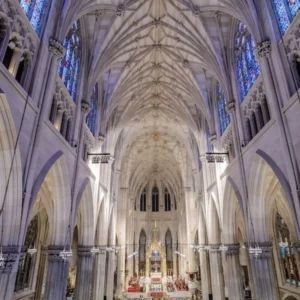
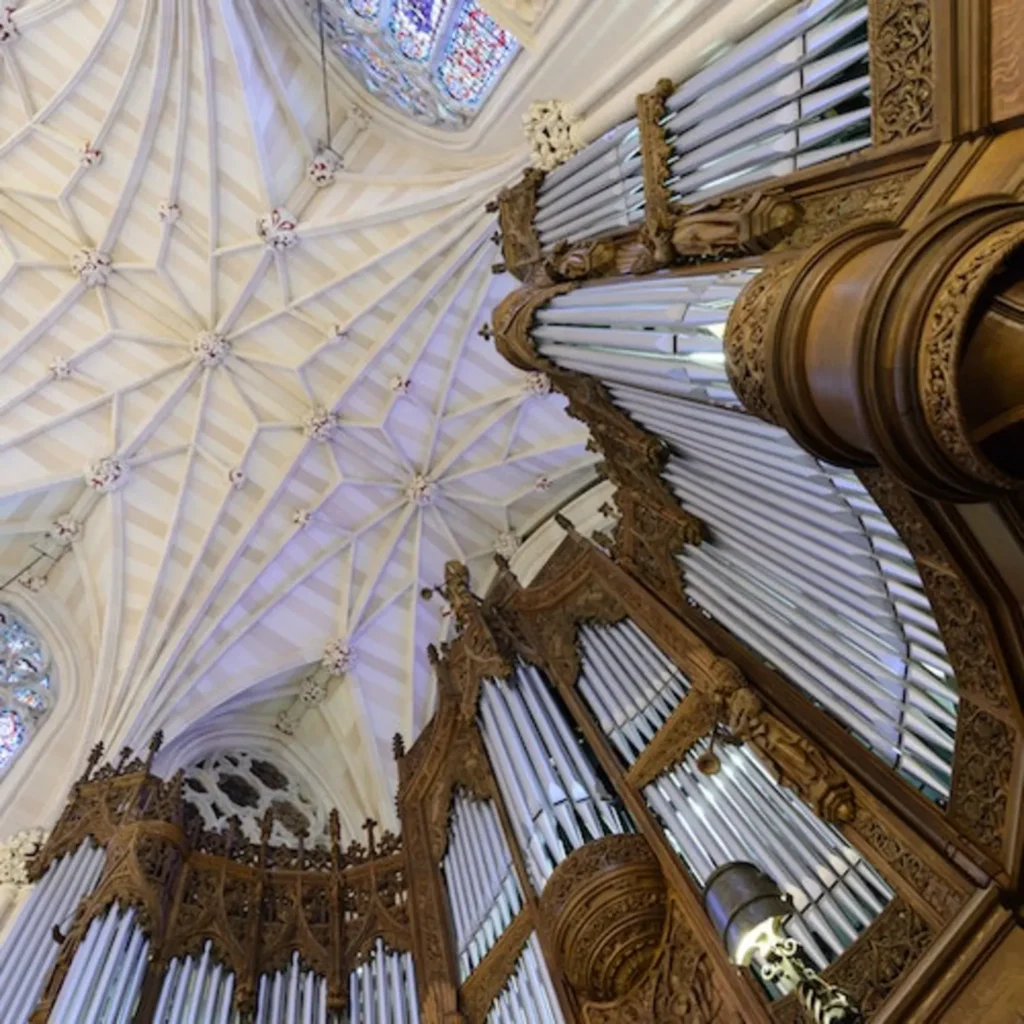
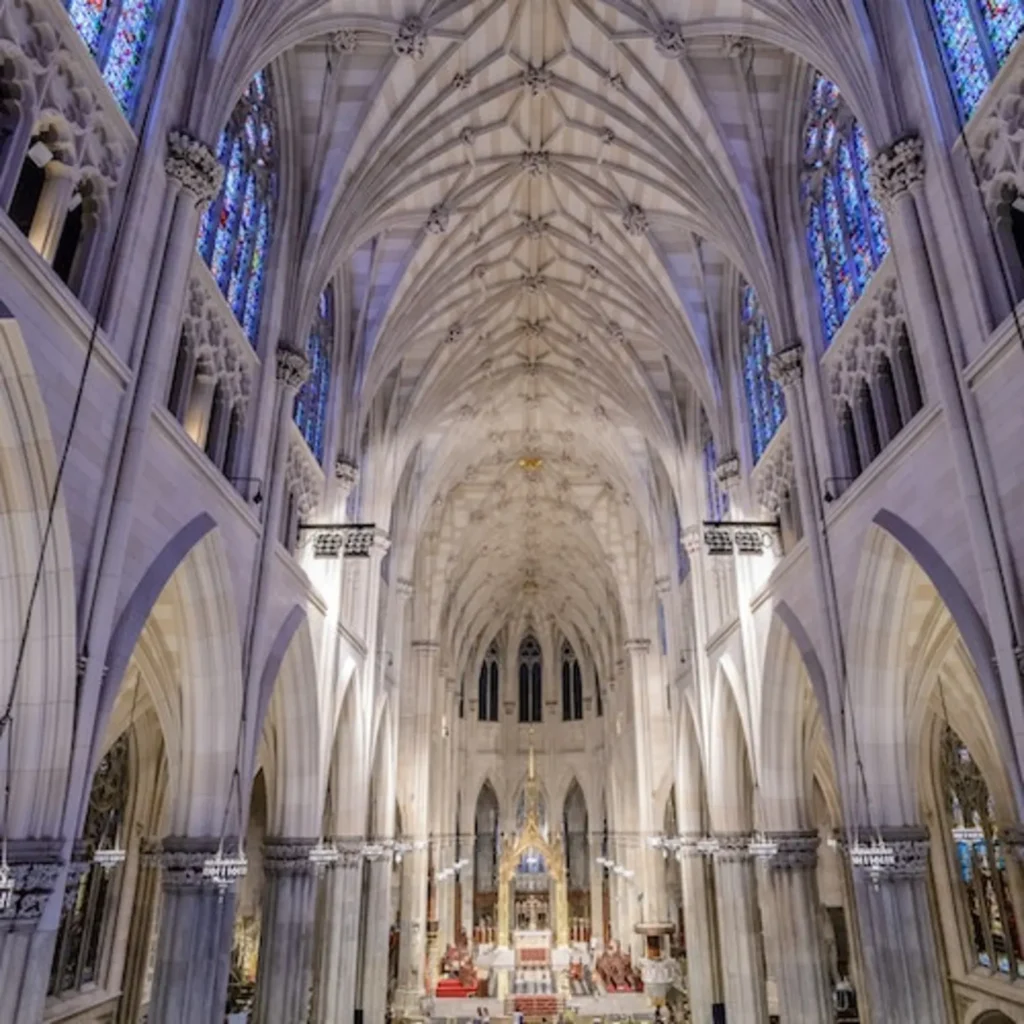
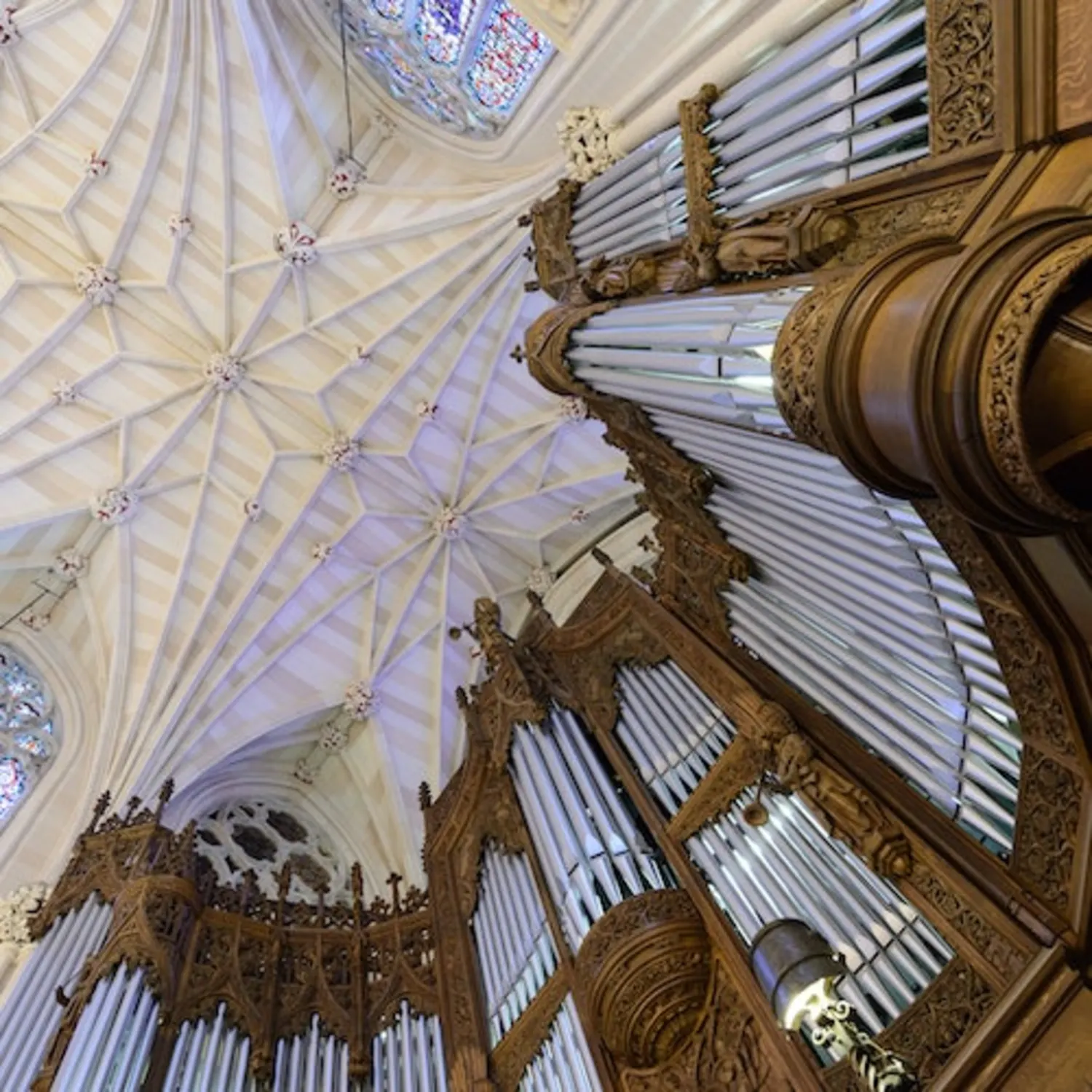
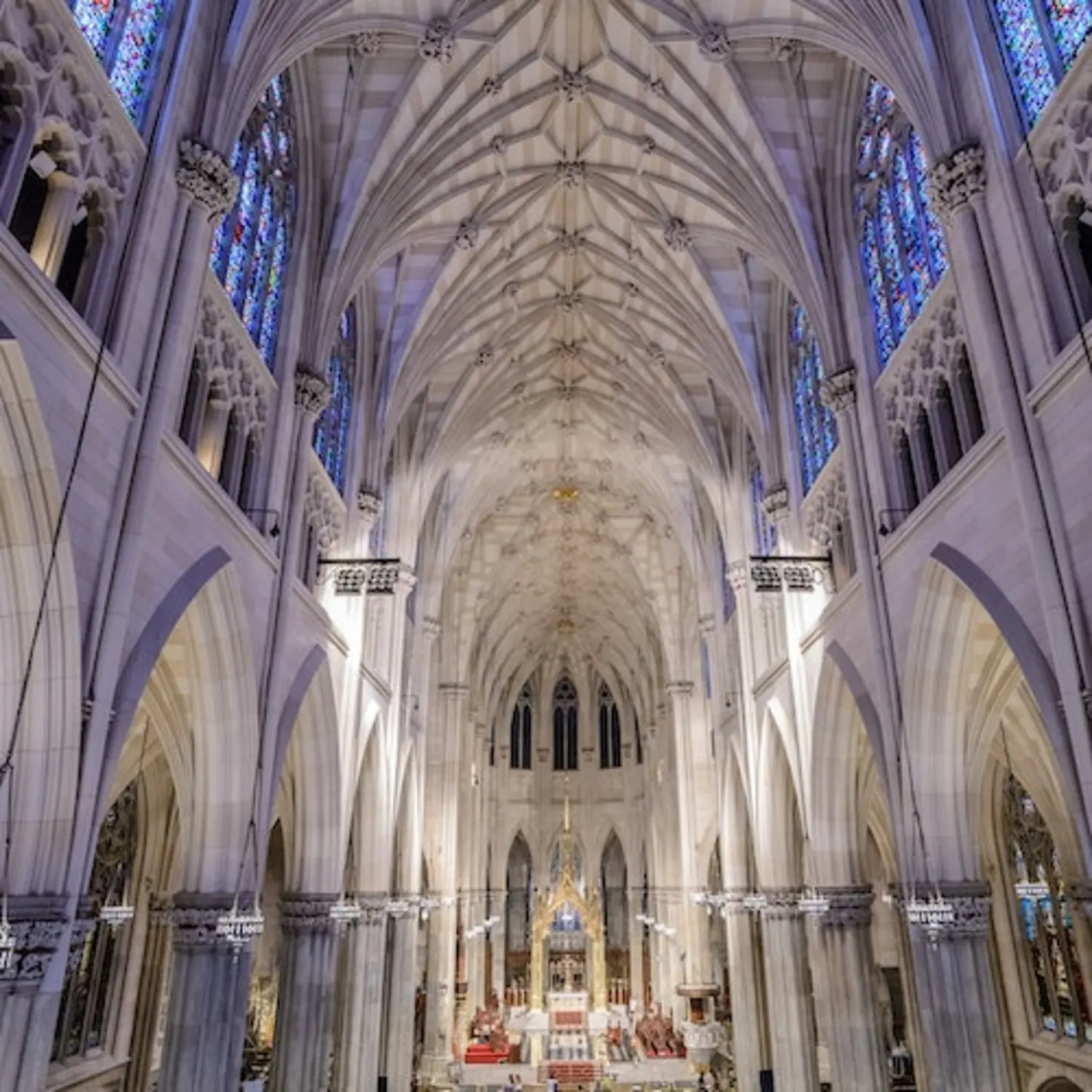
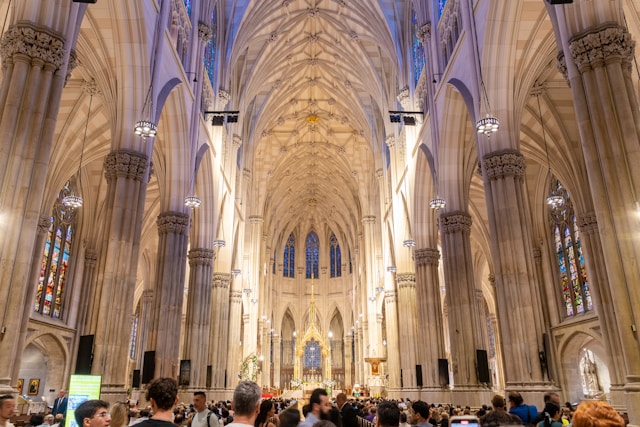
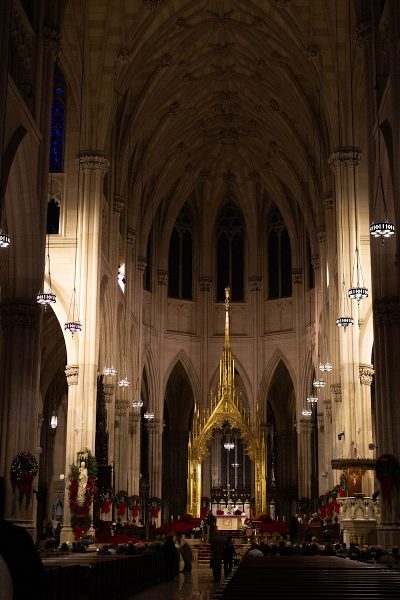
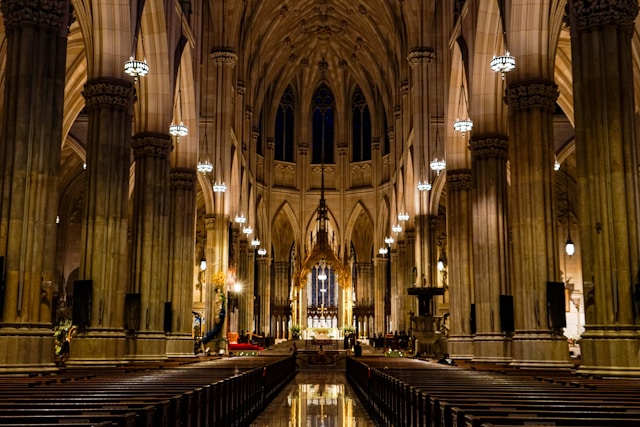
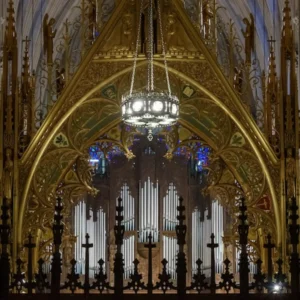
The interior of the cathedral is equally monumental, featuring a vast nave that can accommodate thousands of worshippers beneath its 110-foot vaulted ceilings. Visitors can explore more than 2,800 stained glass panels that bathe the marble in vibrant colors, alongside 21 distinct altars and a world-class pipe organ with nearly 10,000 pipes. Beyond its artistic and structural significance, the cathedral serves as a quiet refuge for millions of annual visitors who come to admire its meticulously restored sanctuary or to pay respects at the crypt where New York’s archbishops are interred. This living monument continues to bridge the city's 19th-century heritage with its modern identity as a global cultural capital.

Architectural Style: Neo-Gothic

Architect: James Renwick Jr.

Official Opening: May 25, 1879

Seating Capacity: 3,000 people

Why Visit St. Patrick’s Cathedral?

Exceptional Neo-Gothic Architecture

Designed by James Renwick Jr., the cathedral is one of the finest examples of Neo-Gothic architecture in the United States. Visitors can admire the towering twin spires that reach 330 feet into the Midtown skyline and the intricate white marble exterior that stands in stark contrast to the surrounding modern skyscrapers.

Masterful Stained Glass and Artistry

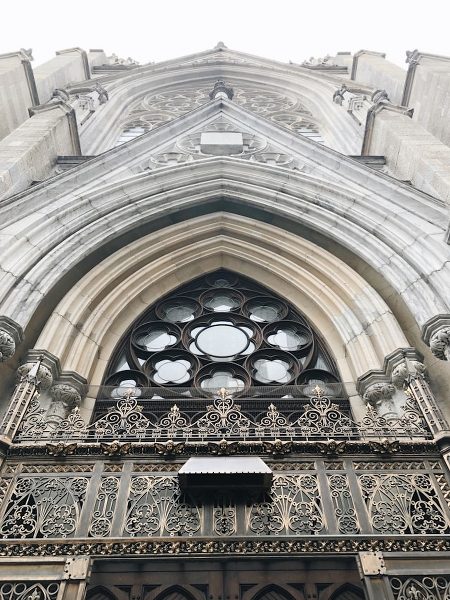
The interior is illuminated by thousands of panes of stained glass, created by renowned artists in Chartres, France, and Birmingham, England. Notable pieces include the massive Rose Window above the Fifth Avenue entrance and the Lady Chapel, which features delicate craftsmanship and a serene atmosphere for reflection.

A Sanctuary in the Heart of Manhattan

Located directly across from Rockefeller Center, the cathedral offers a profound sense of quiet and scale amidst the city’s busiest district. The vast nave can accommodate up to 3,000 people, providing a spacious and peaceful environment that serves as a physical and mental reprieve from the urban rush.

Deep Historical and Cultural Roots

Since its opening in 1879, the cathedral has served as the spiritual home of the Archdiocese of New York and a focal point for the city’s immigrant history. It has hosted world leaders, historic funerals, and papal visits, making it a living monument to the social and cultural evolution of New York City.

The Great Organ and Choral Tradition

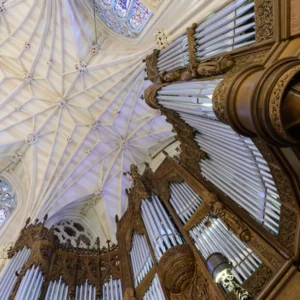
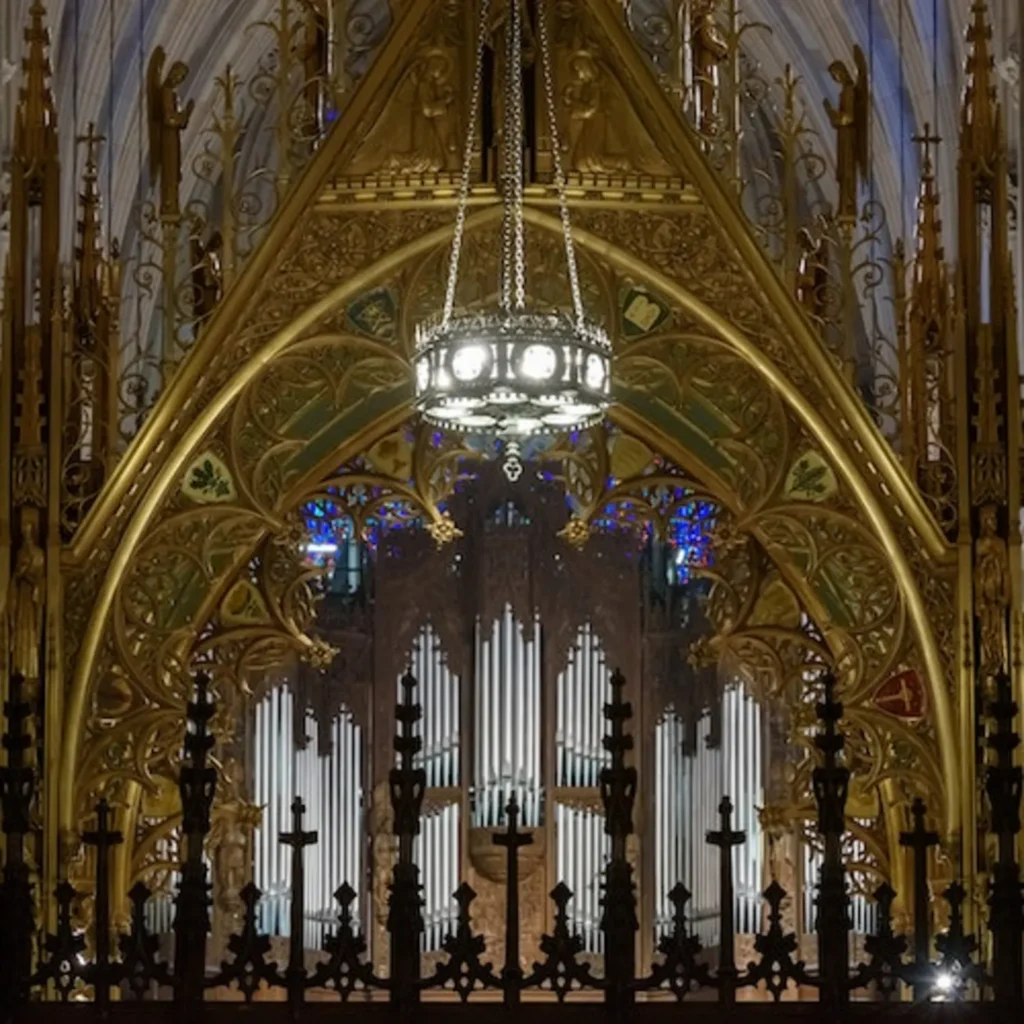
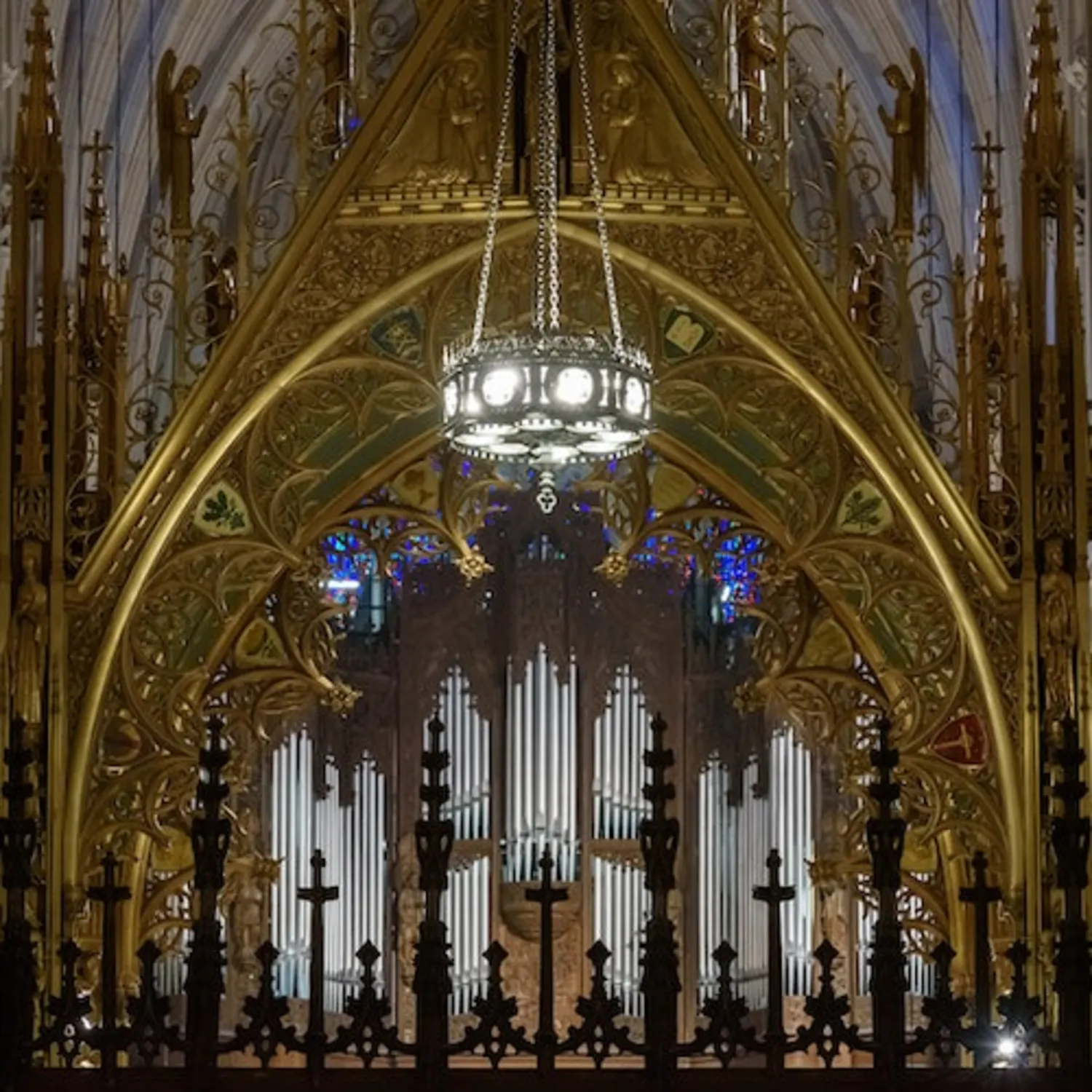
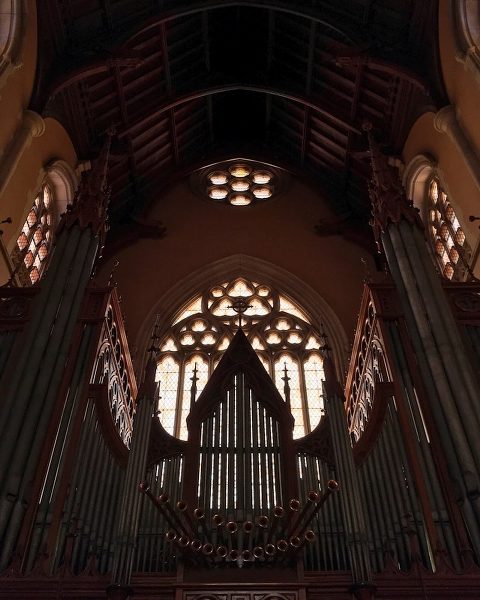
The cathedral houses one of the most famous pipe organs in the world, consisting of nearly 10,000 pipes and five manuals. Attending a service or a scheduled recital allows visitors to experience the building’s acoustics as they were intended, with music that fills the massive vaulted ceilings.

St. Patrick's Cathedral - Additional Info

While there are no dining facilities or cafes located inside St. Patrick’s Cathedral, its position on Fifth Avenue places it within walking distance of some of the city's most diverse culinary options.

Visitors can find everything from quick-service cafes and bakeries to high-end seated dining within a two-block radius. Because food and beverages are strictly prohibited inside the cathedral, visitors are encouraged to finish any refreshments before entering the building.

Directly across the street at Rockefeller Center, there are numerous subterranean and street-level dining concourses that offer a variety of international cuisines. For a more formal experience, several historic hotels and restaurants in the immediate vicinity provide traditional New York afternoon tea or full-course meals.

The area also features several public plazas with seating where visitors can enjoy a meal outdoors during the warmer months.

Interesting Facts about St. Patrick's Cathedral

When the cornerstone of the cathedral was laid in 1858, it was left open for two years so that New Yorkers could leave offerings inside.

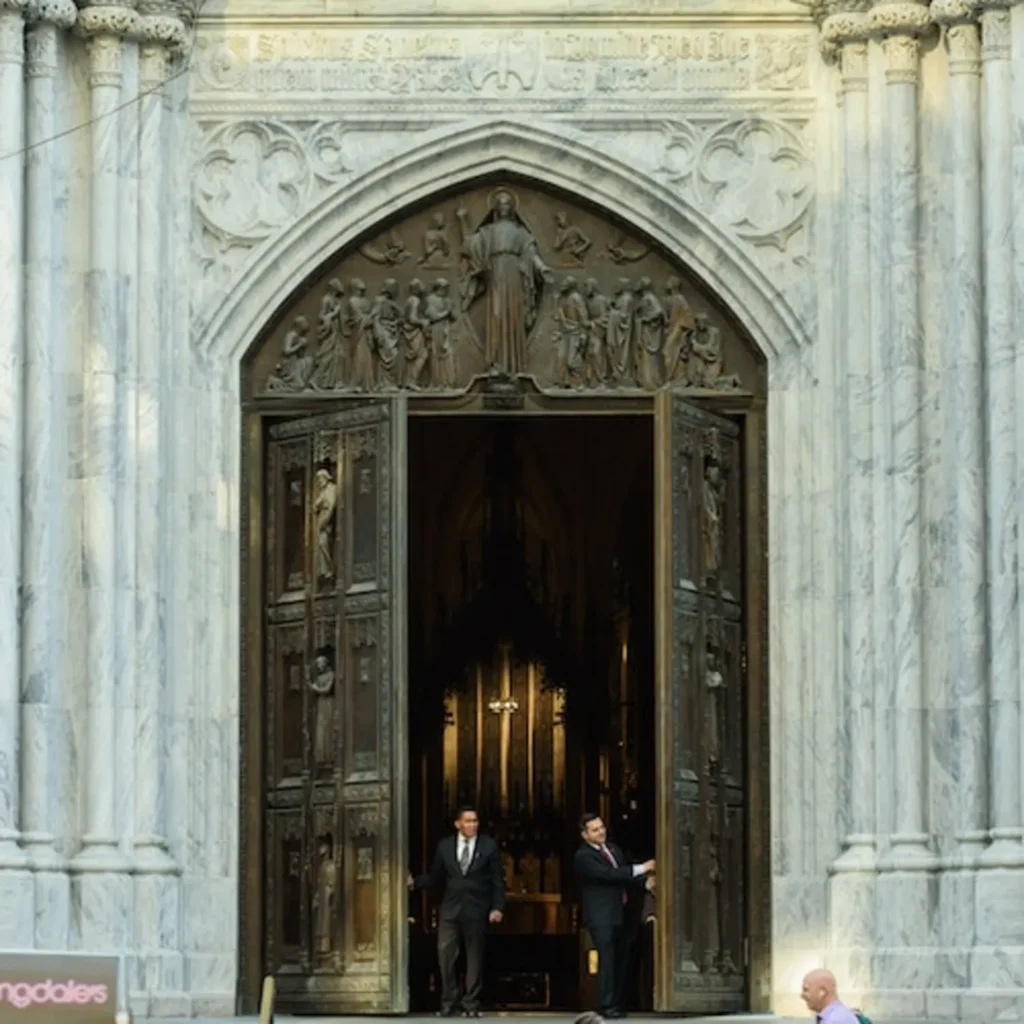
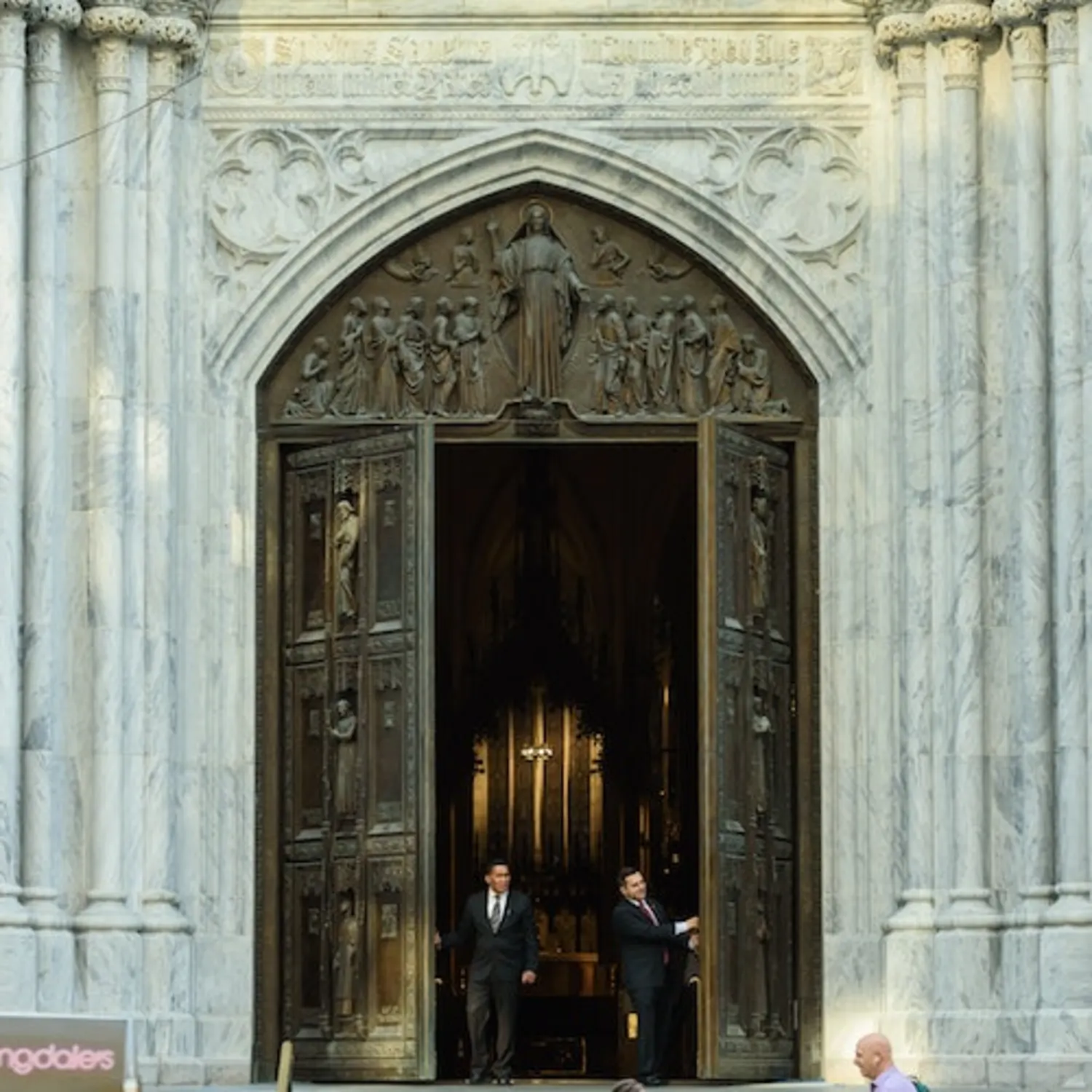
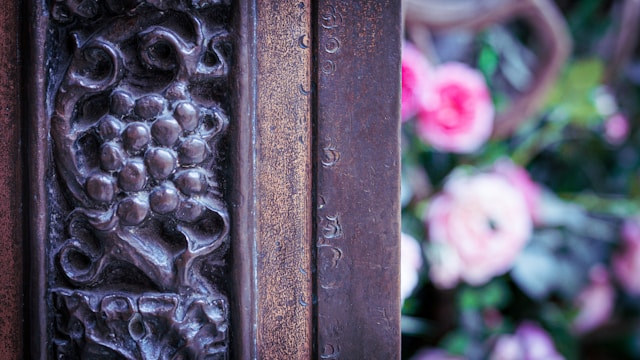
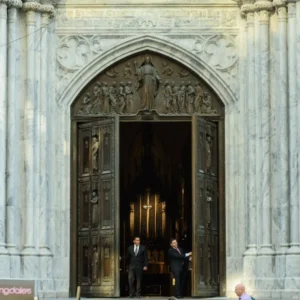
The massive bronze entrance doors weigh 9,000 pounds each but are so perfectly balanced they can be pushed open with one hand.

For a brief period after its spires were completed in 1888, the cathedral was the tallest building in all of New York City.

The cathedral’s Pieta sculpture is nearly three times larger than Michelangelo’s famous original version located in St. Peter’s Basilica.

The high altar features a solid bronze baldachin that stands nearly 60 feet tall and was inspired by the architecture of the Basilica of St. Paul Outside the Walls.

More than 2,800 stained glass panels fill the cathedral, including a 26-foot-wide Rose Window that sits above the Fifth Avenue entrance.

The crypt beneath the main altar is the final resting place of New York’s archbishops and the Venerable Pierre Toussaint, a former slave and philanthropist.

The building is constructed primarily of brick but is entirely overlaid in white marble quarried from Massachusetts and New York.

Construction was famously halted for several years during the American Civil War due to a lack of funding and labor.

The cathedral houses two separate organs that contain a combined total of nearly 10,000 pipes.

F. Scott Fitzgerald, the author of The Great Gatsby, married Zelda Sayre in the cathedral’s rectory in 1920.

The 19 bells in the north tower are each named after a different saint and were originally manually operated before being electrified.

The cathedral occupies an entire city block and can accommodate up to 3,000 worshippers at once.

Two of the cathedral’s side altars were designed by the world-famous Tiffany & Co. jewelry and design house.

In recent years, the cathedral has transitioned to a sustainable subterranean geothermal system to provide heating and cooling for the massive structure.

FAQs about St. Patrick's Cathedral

What architectural style is St. Patrick’s Cathedral?

The building is a premier example of Neo-Gothic architecture, characterized by its towering spires and pointed arches.

Who was the architect responsible for the cathedral’s design?

The cathedral was designed by James Renwick Jr., who also designed the Smithsonian Institution Building in Washington, D.C.

When did St. Patrick’s Cathedral officially open to the public?

The cathedral was formally dedicated and opened for services on May 25, 1879.

How many people can the cathedral accommodate at one time?

The vast nave has a seating capacity of approximately 3,000 worshippers.

What is the significance of the cathedral’s bronze doors?

The doors weigh over 9,000 pounds each and feature detailed sculptures of various saints and religious figures.

Where is the marble used for the exterior from?

The white marble was primarily sourced from quarries in Massachusetts and New York.

Who is buried in the crypt beneath the high altar?

The crypt serves as the final resting place for the Archbishops of New York and the Venerable Pierre Toussaint.

Do I need to pay an entrance fee to visit?

General admission is free for all visitors, though donations for the upkeep of the landmark are welcomed.

Are reservations required to enter the cathedral?

No advance reservations are needed for general entry, prayer, or attending a scheduled Mass.

What is the best time of day to see the stained glass?

The windows are most vibrant between 11 AM and 4 PM when natural light is strongest.

Can I take photos inside the building?

Photography is allowed for personal use, provided you do not use a flash or tripods.

Is sightseeing permitted during a Mass?

Sightseeing and photography are strictly prohibited while Mass is in progress to respect those in prayer.

Is there a specific dress code for visitors?

Guests should dress modestly and are required to remove hats or headwear before entering.

Are there storage facilities for large bags or luggage?

No, the cathedral does not provide luggage storage, and large bags are prohibited for security reasons.

How do I access the cathedral if I have mobility issues?

The primary ADA-compliant entrance with a ramp is located at 14 East 51st Street.

Is there an audio tour available for visitors?

Yes, an official audio tour is available, but you must provide your own headphones or purchase them at the desk.

Are service animals allowed inside the cathedral?

Trained service animals are permitted as long as they remain leashed and under the owner's control.

Is there a place to buy souvenirs on-site?

The official gift shop is located near the 51st Street entrance and offers various religious and commemorative items.

Can I eat or drink inside the cathedral?

Food and beverages are prohibited, though bottled water is permitted if necessary.

Is there parking available at the venue?

There is no private parking, but several commercial garages are located within a few blocks of the cathedral.

This website sells official tickets for this venue. Please note, however, that it is not the official website of the venue.
The images and videos on this website may contain visual elements that have been created or enhanced using AI technology. They are provided for illustrative purposes only.