St. Paul’s Chapel, NYC: Tickets and Info
This website offers official tickets for this venue. Please note, however, that it is not the official website of the venue.
Smartphone tickets
Why wait?
Instant confirmation
Flexible cancellation
>> no product. will add exp card when available.
Good to Know Before Visiting St. Paul’s Chapel
Admission to the chapel and churchyard is free of charge for all visitors as it is a public house of worship.
All guests must pass through a security screening and a metal detector before entering the grounds.
Large suitcases, carry-ons, and bulky backpacks are not permitted inside and there is no on-site storage available.
The chapel is an active parish, so visitors should remain quiet and respectful of those who are there to pray.
Photography is generally allowed for personal use, but the use of flash, tripods, or professional filming equipment is prohibited.
George Washington’s original pew is located on the north side of the interior and is clearly marked for public viewing.
Food and beverages are strictly prohibited inside the sanctuary to help preserve the historic 18th-century architecture.
The churchyard typically closes earlier than the chapel interior, so plan to arrive before 4 pm to see the historic monuments.
Service animals are the only pets permitted inside the building and must remain on a leash at all times.
Public restrooms are available on the premises but are limited, so it is advisable to use facilities in the nearby Oculus if traveling in a large group.
Essential Visitor Info
- Timings
- Address & Directions
- Facilities
- Accessibility
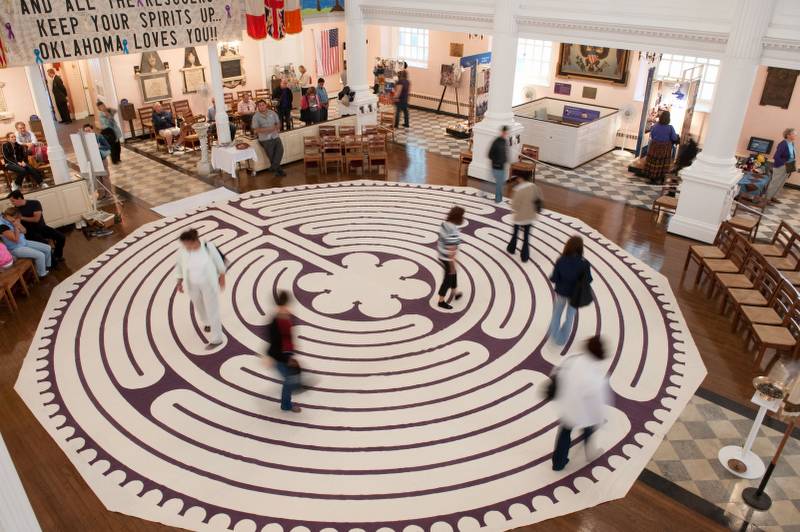
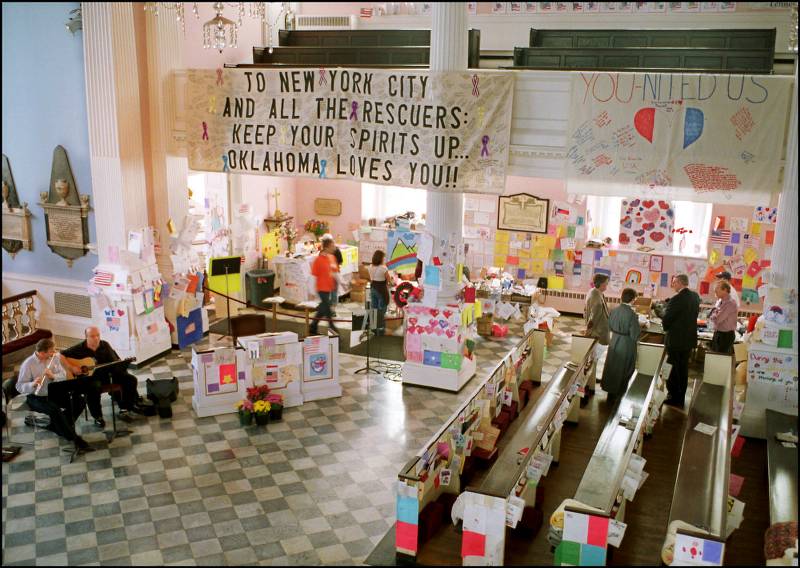
The chapel and its historic grounds are open to the public daily. While the interior provides a space for reflection and historical exploration, the churchyard offers a unique perspective on the city’s colonial past.
Chapel Interior: 8:30 AM – 6 PM daily
Churchyard and Cemetery: 8:30 AM – 4 PM daily

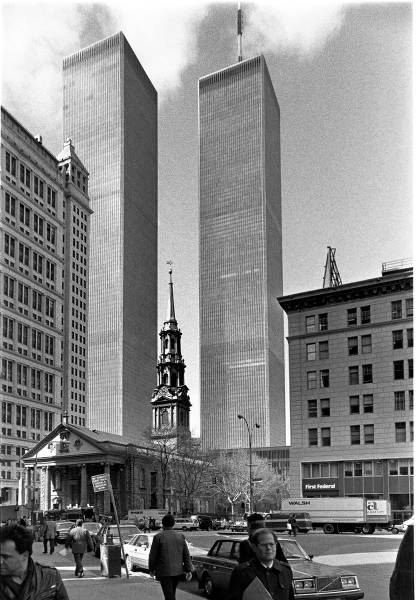
St. Paul’s Chapel is situated in the heart of Lower Manhattan, directly across from the World Trade Center site. Its central location makes it easily accessible from all five boroughs and major transit hubs.
Address: 209 Broadway New York, NY 10007
By Subway: The New York City Subway is the most efficient way to reach the chapel. Several major lines stop within a short walking distance of the entrance.
Fulton Street Station (A, C, J, Z, 2, 3, 4, 5 lines): This is the closest major transit hub. Exit toward Broadway and walk one block north to reach the chapel.
World Trade Center Station (E line): Provides direct access to the west side of the chapel grounds.
Cortlandt Street / WTC Cortlandt (N, R, W, 1 lines): These stations are located just steps away from the chapel’s main gates on Broadway and Church Street.
By Bus: Multiple bus routes serve the Financial District and stop near the chapel, providing a convenient alternative to the subway.
M55 (Northbound/Southbound): Stops along Broadway and Church Street directly adjacent to the chapel.
M9 and M22: Provide service to the nearby City Hall and Park Row areas, approximately a five-minute walk from the chapel.
By PATH Train: For visitors traveling from New Jersey, the PATH train offers direct service to the World Trade Center Transportation Hub (Oculus). From the Oculus, follow signs for the Broadway or Church Street exits; the chapel is located immediately across the street.
By Car and Parking: While driving to Lower Manhattan is possible, it is generally discouraged due to heavy traffic and limited street parking. If you choose to drive, several commercial parking garages are available in the surrounding area.
Nearby Garages: Paid parking facilities can be found on Barclay Street, Murray Street, and Greenwich Street.
Drop-off Point: The most convenient location for taxi or rideshare drop-offs is the corner of Broadway and Fulton Street.

St. Paul’s Chapel is equipped to accommodate both worshippers and the high volume of tourists who visit the historic site daily. The primary facilities include a visitor welcome area where staff and volunteers are available to answer historical questions and provide site maps.
For those attending for reflection, the chapel provides designated quiet areas and prayer pews separate from the main tourist flow.
While the chapel is a historic structure, it has been modernized to include essential public amenities. Restrooms are available on-site for visitors, though they are limited in number due to the building’s age.
It is important to note that the chapel does not offer luggage storage or coat check services; all personal belongings must remain with the visitor throughout their stay and must pass through security screening at the entrance.

St. Paul’s Chapel is committed to ensuring that all visitors can experience its history and spiritual atmosphere.
The site is fully ADA-compliant, featuring a level-access entrance that allows wheelchair users and those with limited mobility to enter the chapel and the churchyard without navigating stairs.
The main entrance on Broadway is equipped with ramps where necessary, and the interior floor plan is open and flat, providing easy maneuverability for strollers and mobility aids.
Within the chapel, the “Unwavering Spirit” exhibit and George Washington’s pew are located on the ground level, ensuring they are accessible to all guests.
For visitors with visual or hearing impairments, the chapel provides clear signage and printed materials to assist with self-guided tours.
Service animals are permitted on the grounds and inside the building in accordance with federal law.
Accessible restroom facilities are also available on the premises to accommodate guests with specific physical requirements.
About St. Paul’s Chapel

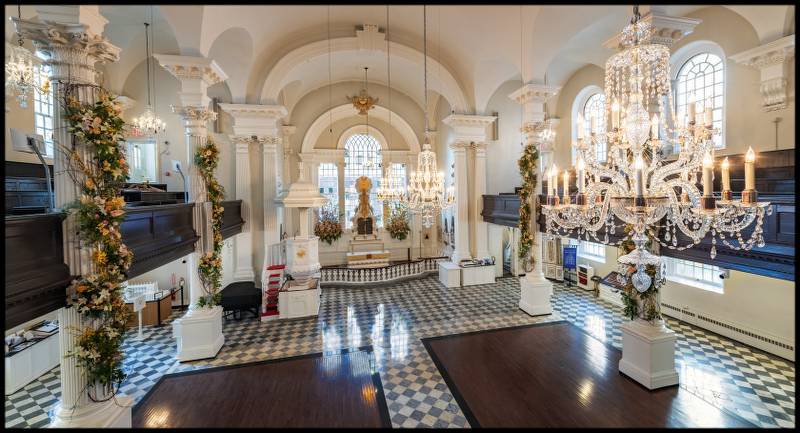
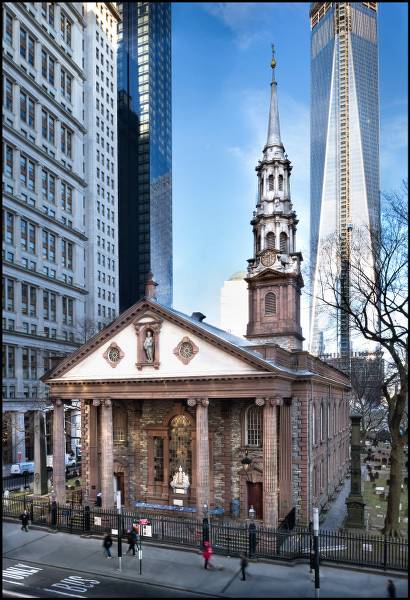
Completed in 1766, St. Paul’s Chapel stands as a rare surviving example of late Georgian church architecture in the United States. Designed by architect Thomas McBean, the chapel was originally established as a secondary place of worship for the growing congregation of Trinity Church. Its historical significance was solidified in 1789 when George Washington attended services here following his first inauguration, a tradition that linked the chapel to the foundations of the American government. Today, the interior remains a museum of colonial craftsmanship, featuring original Waterford crystal chandeliers and hand-carved woodwork that have been meticulously preserved for over two centuries.
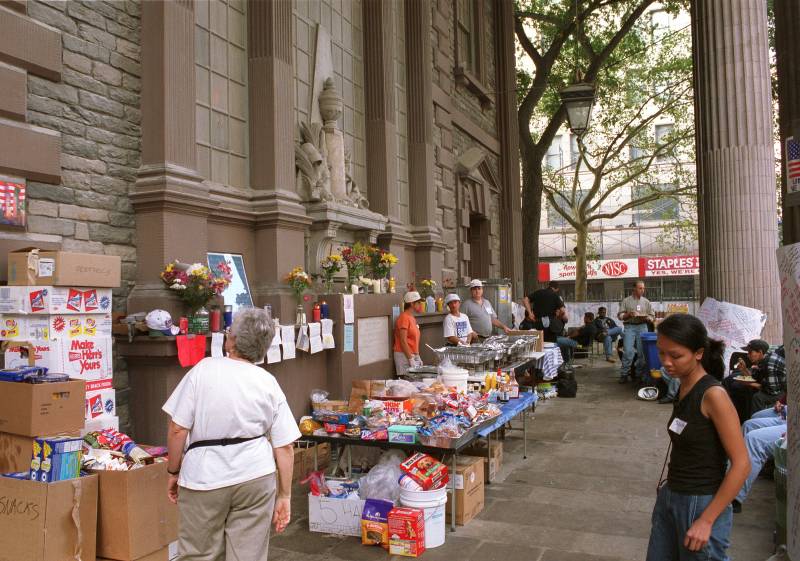
In the modern era, the chapel gained global recognition as “The Little Chapel That Stood” for its remarkable survival during the collapse of the nearby World Trade Center towers. Despite its proximity to Ground Zero, the building suffered no structural damage, shielded in part by a massive sycamore tree in the churchyard. For the nine months following the attacks, the chapel transformed into a 24-hour relief center, providing physical and spiritual nourishment to thousands of recovery workers and first responders. This dual identity as both a Revolutionary War-era landmark and a symbol of contemporary resilience makes it one of the most visited and revered sites in New York City.
Architectural Style: Georgian Classicism
Area: 0.94 acres
Date Completed: 1766
Architect: Thomas McBean
Capacity: Approximately 400 people
Why Visit St. Paul’s Chapel?
New York City’s Oldest Surviving Church
Completed in 1766, St. Paul’s Chapel is the oldest public building in continuous use in Manhattan. Its Georgian architecture provides a rare physical link to the colonial era, offering visitors a glimpse of the city as it existed before the American Revolution.
The Connection to George Washington
On the day of his inauguration in 1789, George Washington came to this chapel to pray for the future of the new nation. Today, visitors can view the original pew where the first president sat, marking the chapel as a cornerstone of American executive history.
The “Little Chapel That Stood”
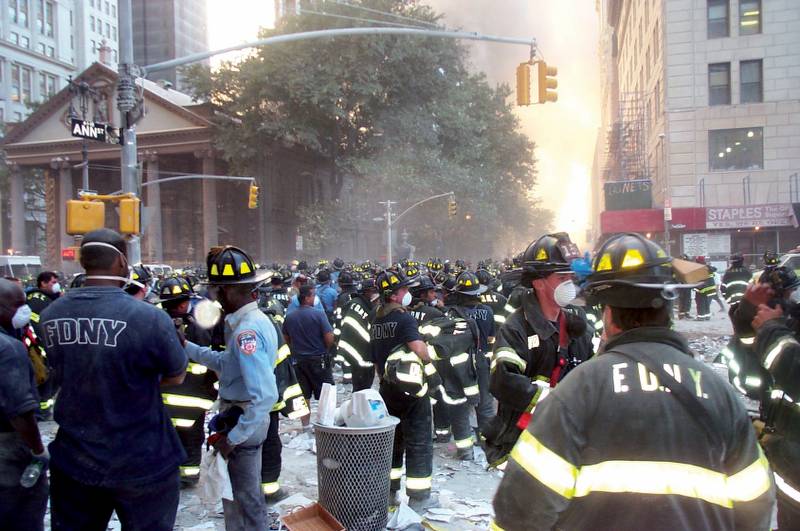
During the events of September 11, 2001, the chapel remained remarkably unscathed despite being located directly across from the World Trade Center. It became a vital 24-hour relief center for recovery workers, and it remains a powerful symbol of resilience and sanctuary in the heart of the Financial District.
Historical Artifacts and Memorials
The interior houses significant exhibits, including the Bell of Hope, which was a gift from the City of London following the 9/11 attacks. You will also find an array of tributes and artifacts that honor the volunteers and first responders who worked at Ground Zero.
A Historic Churchyard in Urban Manhattan
The surrounding churchyard is a peaceful green space that serves as the final resting place for several notable historical figures, including Revolutionary War heroes. It offers a stark, contemplative contrast to the modern skyscrapers and bustling streets of Lower Manhattan.
St. Paul’s Chapel – Additional Info
- Dining
- Souvenir Store
St. Paul’s Chapel does not have an on-site cafe or restaurant, and food and drinks are not permitted inside the sanctuary to preserve the historic interior.
However, its location at the intersection of the Financial District and Tribeca puts visitors within walking distance of a vast array of dining options.
The neighboring World Trade Center complex and the Oculus offer diverse food courts and upscale dining experiences.
For a more casual experience, the streets surrounding the chapel – particularly Fulton and Church Streets – are lined with quick-service eateries, coffee shops, and classic New York delis.
Many visitors choose to grab a meal nearby and utilize the benches in the churchyard for a quiet break, provided they follow the site’s guidelines regarding cleanliness and waste disposal.

A selection of commemorative items and historical literature is available at the back of the chapel and through the nearby Trinity Gift Shop.
These items often focus on the chapel’s dual legacy as a Revolutionary War-era landmark and a site of 9/11 remembrance.
Visitors can find books detailing the history of the parish, postcards of the Georgian architecture, and items related to the Bell of Hope.
Proceeds from the sale of these items contribute to the ongoing maintenance and preservation of the chapel and its historic churchyard.
While the selection is curated to remain respectful of the chapel’s primary function as a house of worship, it offers meaningful keepsakes for those wishing to remember their visit to “The Little Chapel That Stood.”
Interesting Facts about St. Paul’s Chapel
St. Paul’s Chapel is the oldest public building in continuous use on the island of Manhattan, having opened its doors in 1766.
The chapel was originally built as a “chapel-of-ease” for parishioners of Trinity Church who did not want to walk a long distance to the main church.
Architect Thomas McBean designed the building based on the plans of St. Martin-in-the-Fields in London.
During the Great Fire of 1776, the chapel was saved from destruction because citizens organized a bucket brigade to keep the roof wet.
George Washington famously walked to this chapel to attend a service immediately following his first inauguration in 1789.
The “President’s Pew” is the same seat Washington used during the nearly two years that New York City served as the national capital.
Despite being directly across the street from the World Trade Center towers, not a single pane of glass in the chapel was broken on September 11, 2001.
The chapel earned the nickname “The Little Chapel That Stood” because a giant sycamore tree in the churchyard shielded it from falling debris during the 9/11 attacks.
For nine months following the attacks, the chapel operated 24 hours a day as a volunteer-led relief center for recovery workers at Ground Zero.
Inside the chapel, a permanent memorial exhibit titled “Unwavering Spirit” displays artifacts and tributes from the recovery effort.
The Bell of Hope, which sits in the churchyard, was a gift from the Lord Mayor of London and is rung on significant anniversaries of 9/11.
The spire of the chapel contains a bell that was cast in 1797 and still rings out today for services and special occasions.
The churchyard contains the monument of General Richard Montgomery, a Revolutionary War hero whose remains were moved there in 1818.
The interior features hand-carved woodwork and Waterford crystal chandeliers that were installed in 1802.
St. Paul’s Chapel is a designated National Historic Landmark and is listed on the National Register of Historic Places.