We are processing your request.
Please, don’t close or refresh the page.
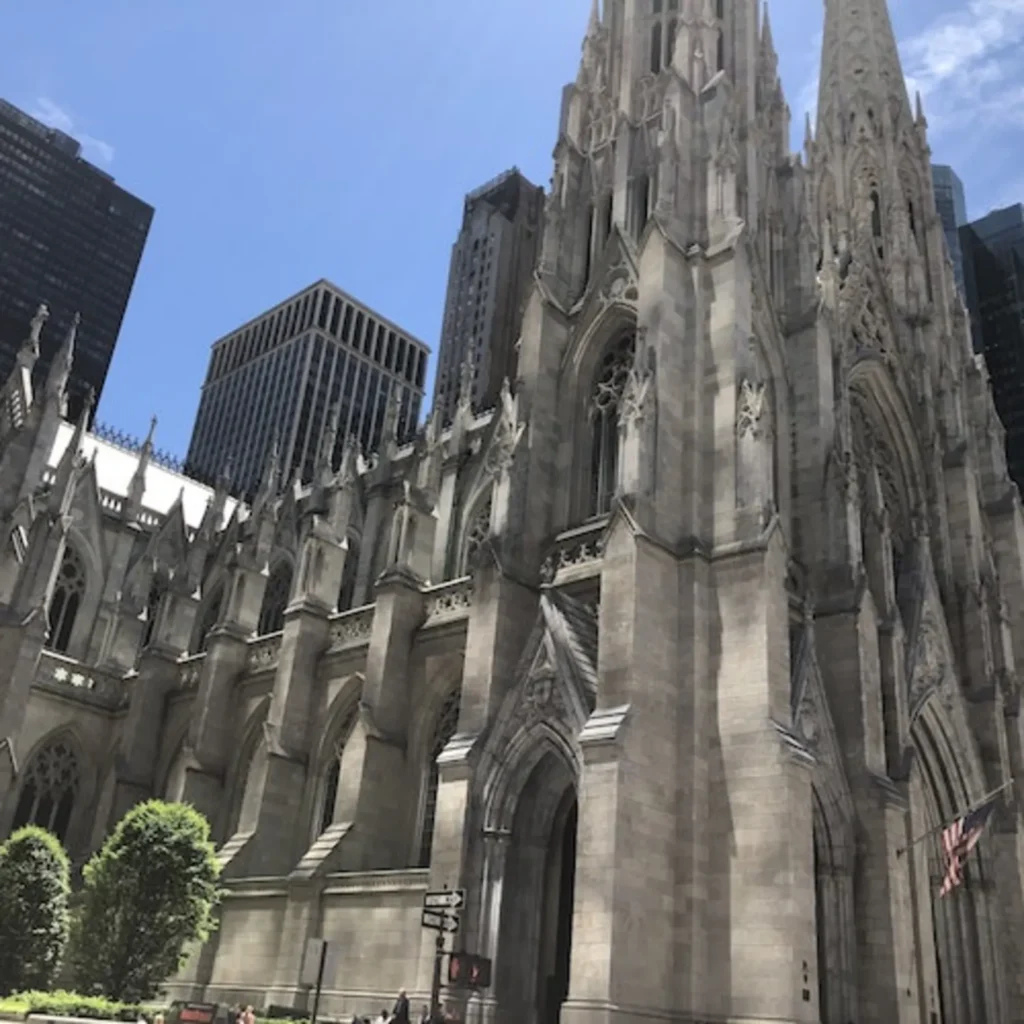
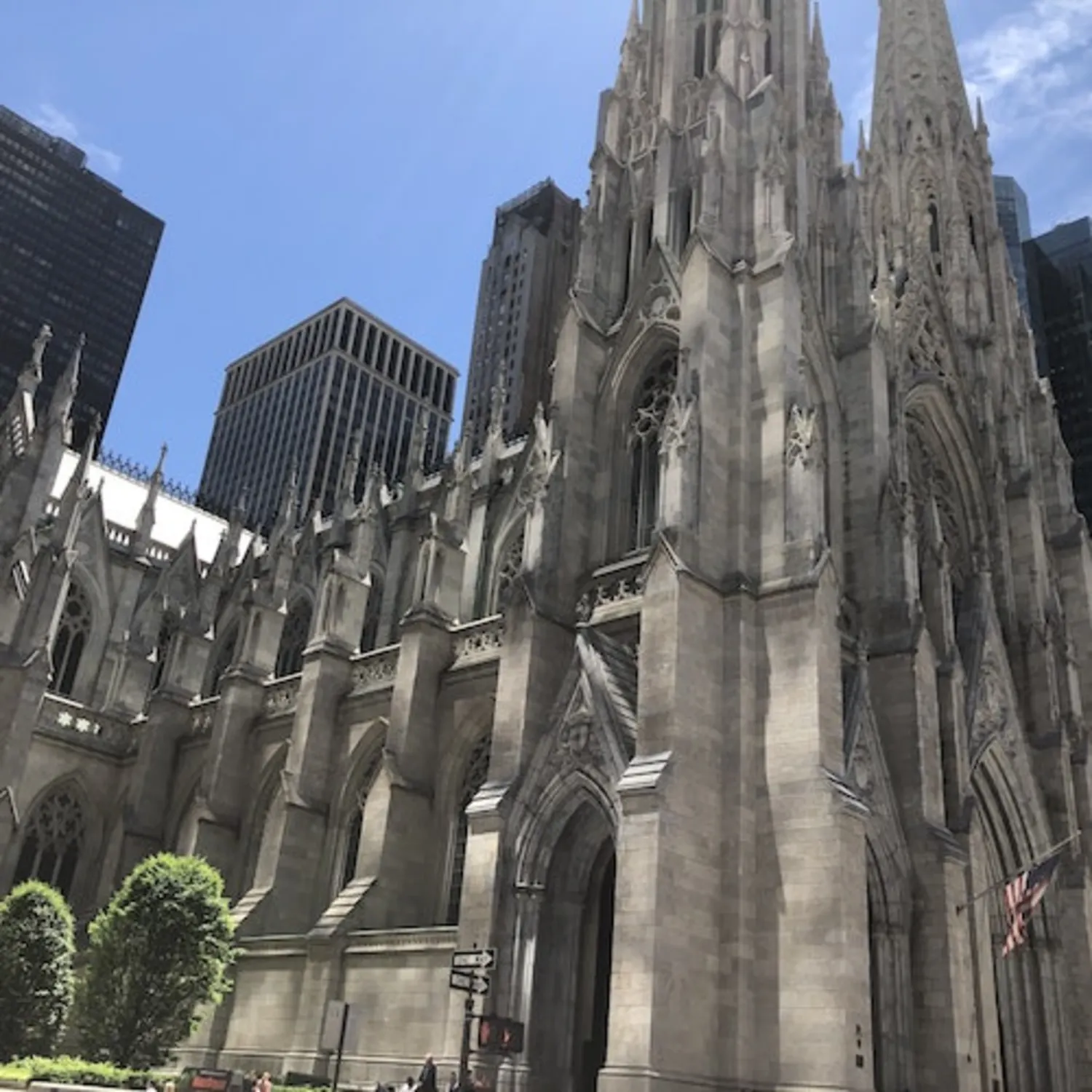
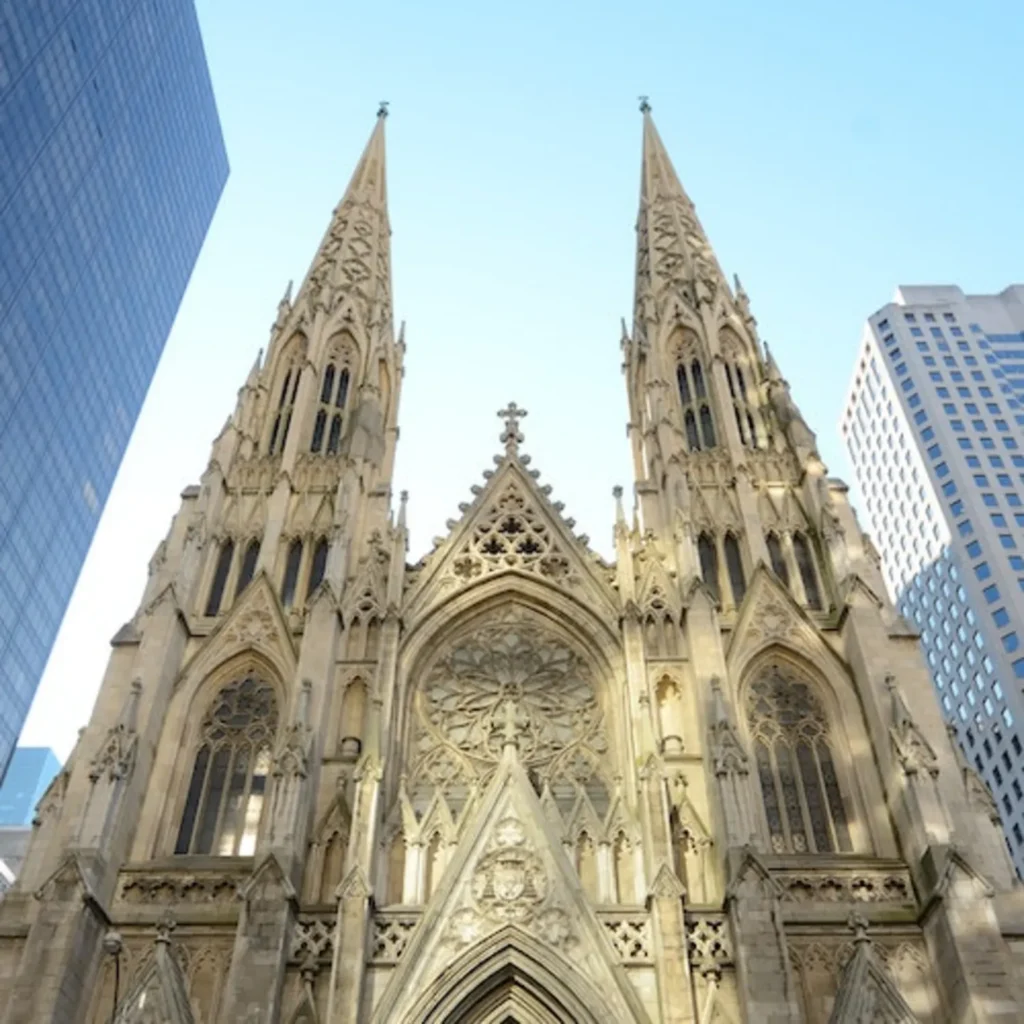
Neo-Gothic facade of St. Patrick's Cathedral on Fifth Avenue

St. Patrick's Cathedral History: Hughes' Folly

St. Patrick's Cathedral took 21 years to go from cornerstone to opening day, and its critics nicknamed it Hughes' Folly along the way. Here is how it was planned, paid for, built and finished.

St. Patrick's Cathedral is the seat of the Roman Catholic Archdiocese of New York, and the building on Fifth Avenue has a long story behind it. Archbishop John Hughes began pressing for a new cathedral in 1850, the cornerstone was laid on August 15, 1858, the cathedral opened on May 25, 1879, the spires were completed in October 1888 and the building was consecrated on October 5, 1910. This guide follows each stage, from the site that critics mocked to the marble, bells, doors and art that visitors see today. Entry to the cathedral is free. If you want the story told as you walk through, the Official Tour is a self-guided audio experience narrated by Cardinal Timothy Dolan.

St. Patrick's Cathedral: Official Tour

Highlights

Explore the cathedral with insightful narration by the Archbishop of New York.

Admire Neo-Gothic architecture filled with detailed stained-glass artwork.

Learn about the church’s history and artistic features, including its renowned pietà.

Use provided Apple iPads and disposable headphones for the tour.

Experience the audio guide in multiple languages including English, French, Italian, Portuguese, and Spanish.
St. Patrick's Cathedral history at a glance

Cornerstone: laid on August 15, 1858 by Archbishop John Hughes, before about 100,000 spectators.

Key dates: opened May 25, 1879; spires completed October 1888; consecrated October 5, 1910.

Architect: James Renwick Jr., in a Neo-Gothic design inspired by the cathedral in Cologne, Germany.

Spires: two towers of 329.5 feet (100.4 m) each, the tallest structures in New York when they were finished.

Materials: Tuckahoe marble in the main section, with exterior marble from Lee, Massachusetts and Pleasantville, New York.

Restoration: a $177 million project that ran from 2012 to 2015.

Landmark status: New York City Landmark since 1966 and National Historic Landmark since December 8, 1976.

Hughes' Folly: the plan for a new cathedral
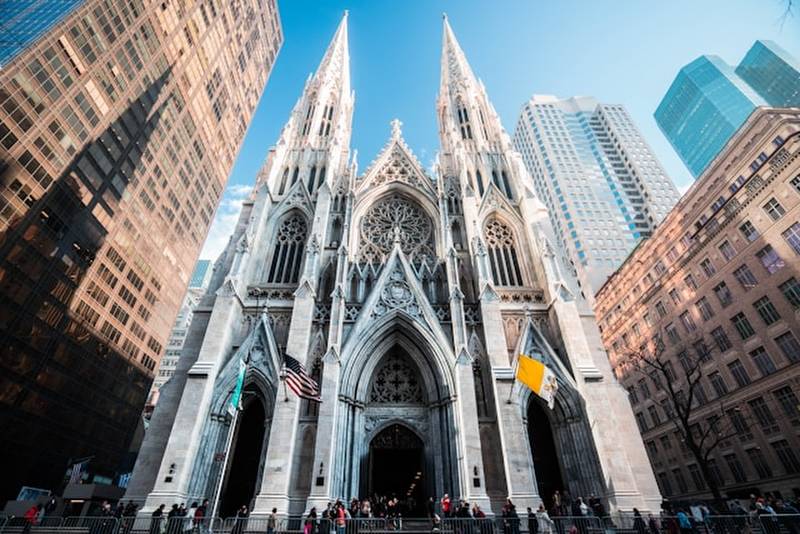
St. Patrick's Cathedral seen from Fifth Avenue

The Catholic story in New York begins smaller. The diocese was founded in 1808, and St. Patrick's Old Cathedral on Mulberry Street was dedicated in 1815, when the diocese counted 15,000 Catholics. The land on Fifth Avenue had been bought in 1810 by Father Anthony Kohlmann, and the Jesuits sold it to the diocese in 1813. New York became an archdiocese on July 19, 1850, and that year Archbishop John Joseph Hughes judged that the city needed a large new cathedral.

In 1853 Hughes announced that the firm of Renwick and Rodrigue would design it, and James Renwick Jr. was largely responsible for the result. Renwick spent three years in Europe studying Gothic models, above all the unfinished cathedral in Cologne. In 1857 Hughes asked for smaller dimensions, so the ambulatory and the chapel for the Blessed Virgin were dropped and the heavy buttresses were cut. The plans were final in 1858. The site lay so far north of the built-up city of his day that critics nicknamed the project Hughes' Folly.

Paying for it: pledges and a cornerstone
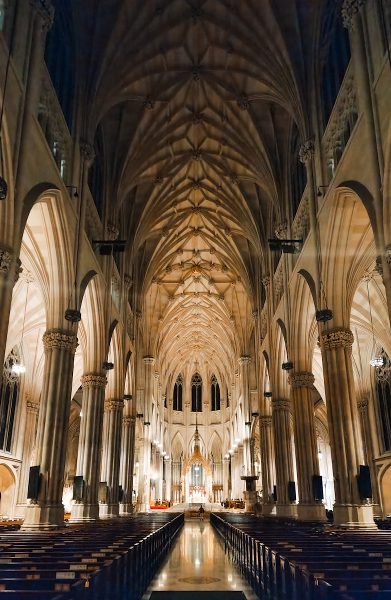
Marble exterior of St. Patrick's Cathedral

The money came from the people of the diocese. Thousands of immigrant parishioners paid for the cathedral with their donations, and the building fund also counted 103 Catholic subscribers who gave $1,000 each, together with two non-Catholic subscribers. Renwick recommended white marble. The estimate for the marble alone was $850,000, within a total estimate of $867,500, and the marble contract went to James Hall and William Joyce in March 1859.

Hughes laid the cornerstone on August 15, 1858, before about 100,000 spectators, although the exact spot where he laid it is not recorded. By January 1860 the walls stood about 7 feet above ground.

The Civil War pause

Detail of St. Patrick's Cathedral on Fifth Avenue

Work was suspended in August 1860, when the $73,000 in the fund ran out and the walls averaged only 12 feet. The Civil War began in 1861, and construction did not resume for several years. Archbishop Hughes died in January 1864, fifteen years before the doors opened, and John McCloskey succeeded him.

Progress was slow after the war. By mid-1866 the walls were 20 feet high, and by late 1870 they reached 54 feet and the transept was finished. The trustees borrowed $300,000 from the Emigrant Industrial Savings Bank in 1874 and another $100,000 in 1876. By late 1875 the roof was slated and the walls were finished, apart from a small part on Fifth Avenue. That long pause is why the cathedral took 21 years to go from cornerstone to opening day.

Opening day in 1879

Twin spires of St. Patrick's Cathedral rising above Fifth Avenue

The unfinished cathedral first opened to the public for viewing on November 29, 1877. A month-long fair that began on October 22, 1878 aimed to raise $200,000 and netted $173,000. It ran for 36 nights, drew about 250,000 visitors and gave 45 parishes a stall of their own.

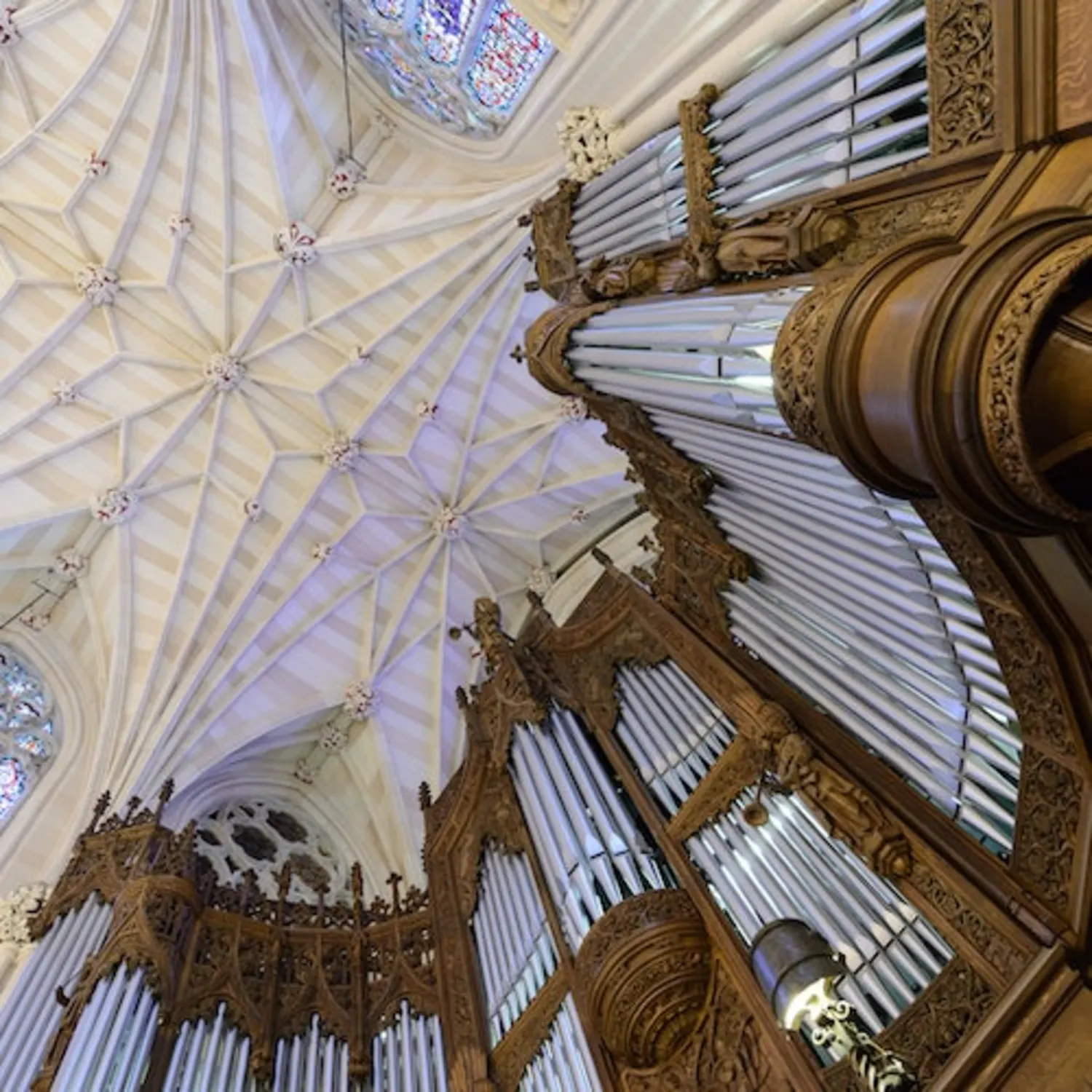
The cathedral opened on May 25, 1879, with 35 bishops and six archbishops attending. The first bishop consecrated there was Michael J. O'Farrell of Trenton, New Jersey. The building was open, but it still had no spires, and its ceiling was a temporary plaster-and-wood construction installed to save money. That ceiling was never replaced.

The spires of 1888 and the bells

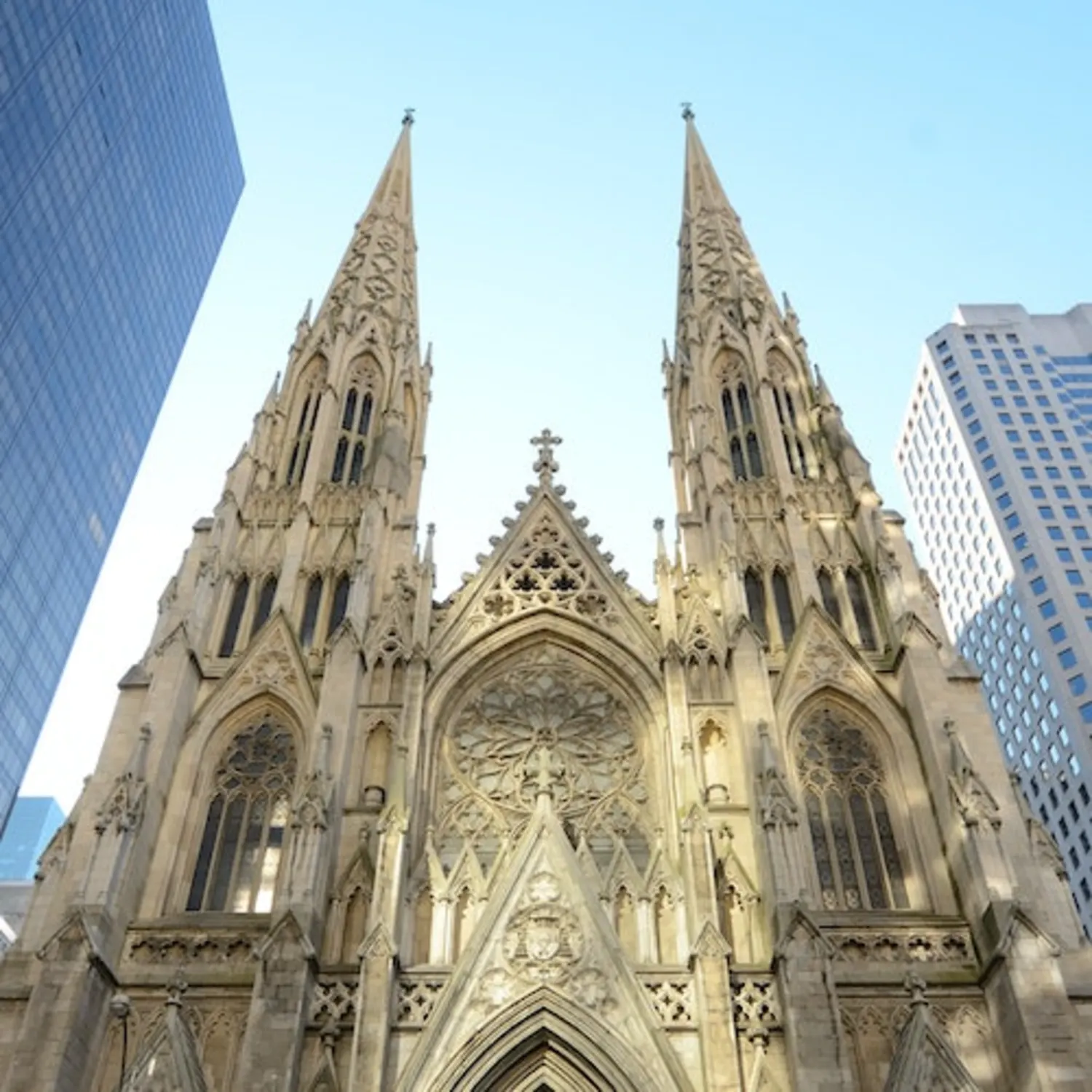
St. Patrick's Cathedral and its twin spires

The spires were not funded when the cathedral opened. Renwick filed plans in September 1885, and George Mann and Company of Baltimore won the contract. Excavation began in January 1886, spire construction in September 1886, and the last stones were set in October 1888. Each tower stands 329.5 feet (100.4 m) tall, and they were the tallest structures in New York until the spire of the New York World Building, at 349 feet, passed them within a year.

The north tower holds 19 bells, more than any other church in the city at the time. The first set was American made and was found defective after it was blessed, so it was never hung. A second set was ordered in 1895 from the Paccard foundry in France, and Archbishop Michael Corrigan blessed it on August 15, 1897. The bells ring every hour, on the hour.

Renwick's Neo-Gothic design in numbers
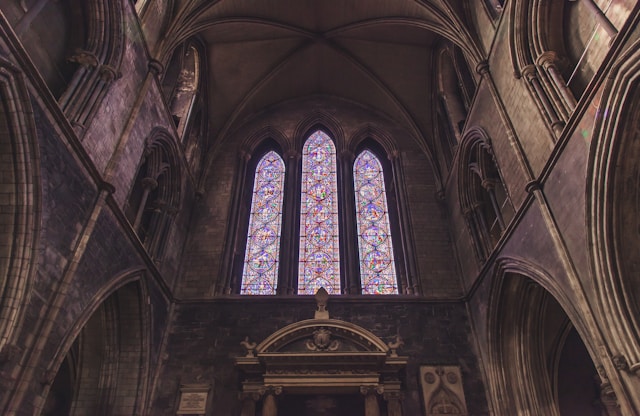
Stained glass in St. Patrick's Cathedral

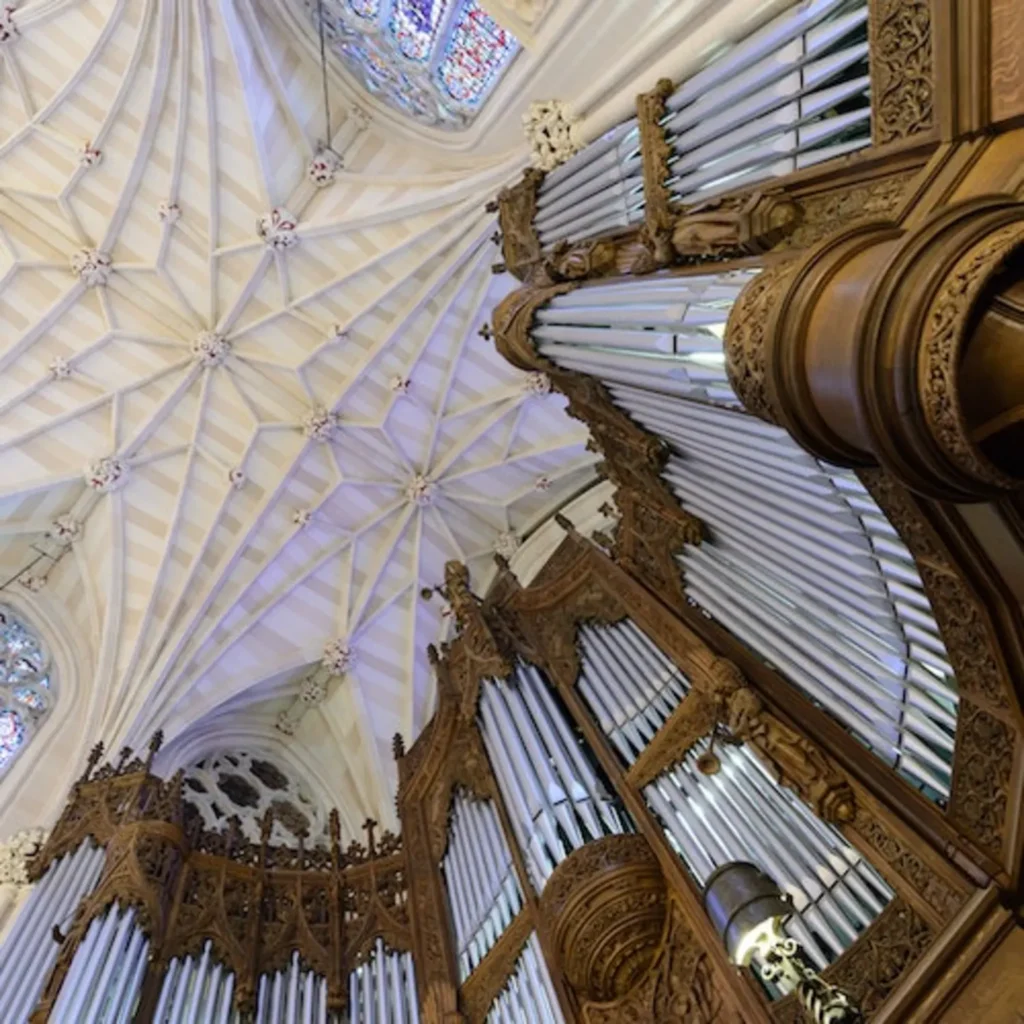
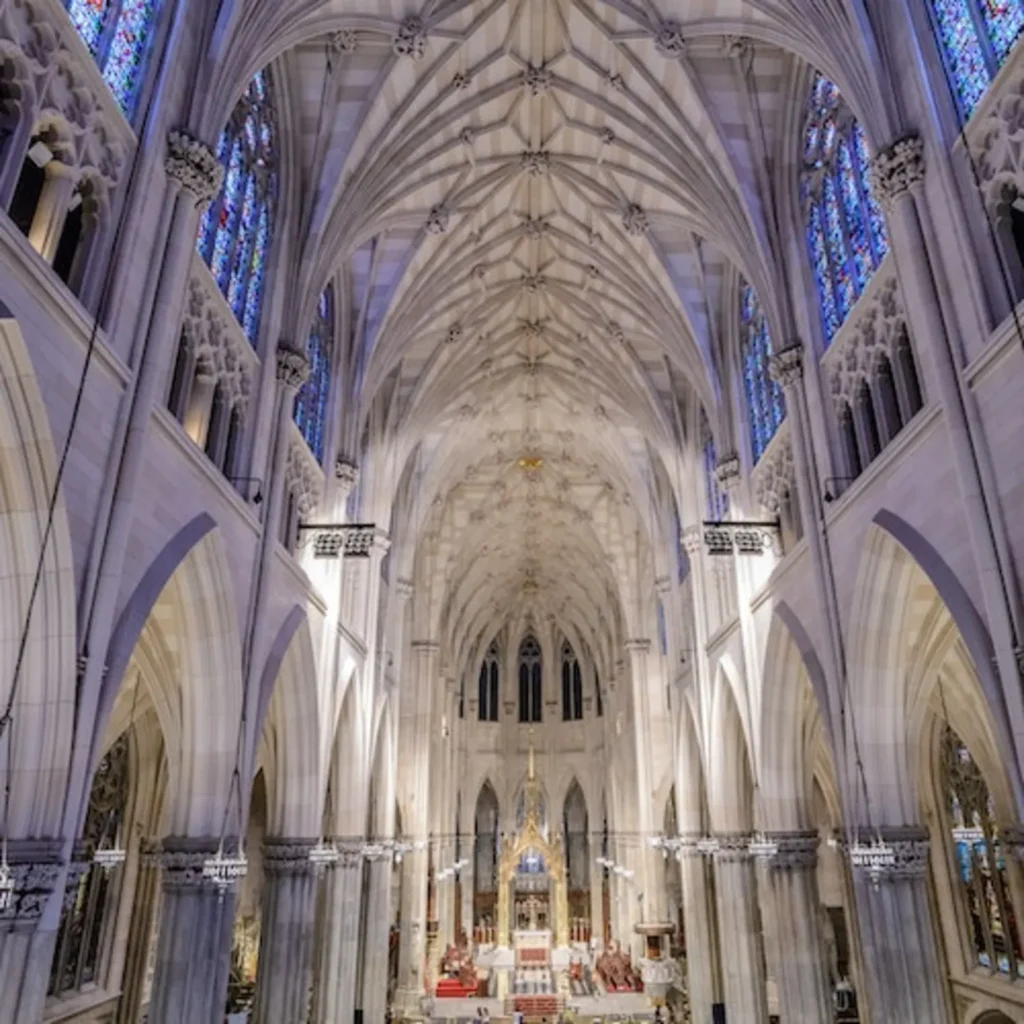
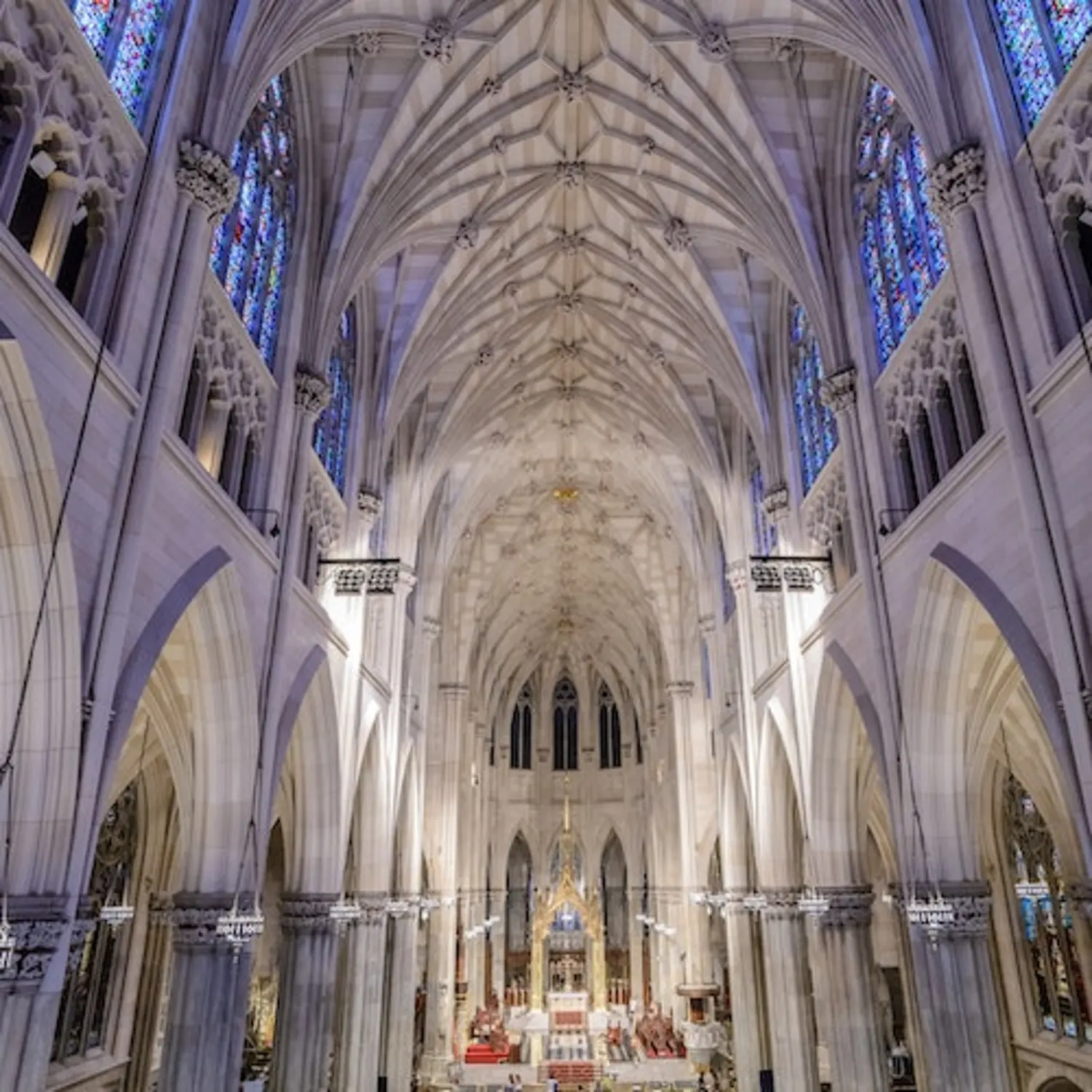
James Renwick Jr. gave St. Patrick's a Latin cross plan. The main section is built of Tuckahoe marble, and the exterior is also clad in marble from Lee, Massachusetts and Pleasantville, New York. The body of the cathedral measures 332 feet (101 m) along its exterior buttresses and 174 feet (53 m) across the transepts. The nave is about 164 feet long, and its center aisle is 48 feet wide and 112 feet high. Seating is for about 2,400 people on about 300 wooden pews.

The cathedral has 103 windows. Forty-five of the original stained-glass windows were made in France by Nicholas Lorin and Henry Ely, and the clerestory windows were made by Morgan Brothers. The detailed stained-glass artwork is one of the features the Official Tour points out.

The Lady Chapel and the Pietà

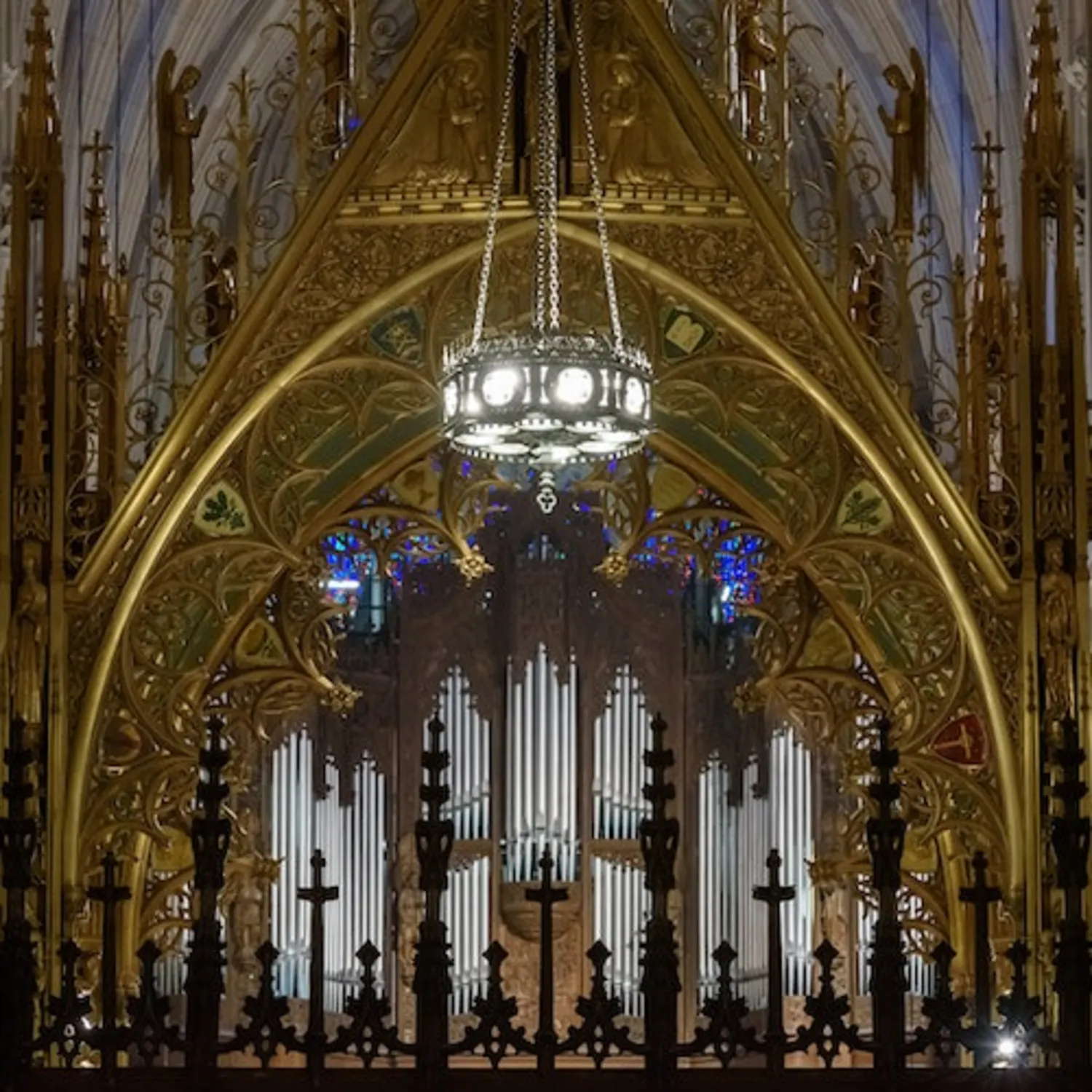
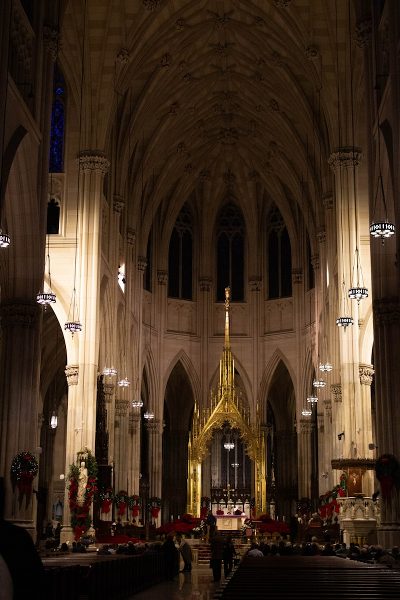
Altar inside St. Patrick's Cathedral

The Lady Chapel was paid for by a bequest. Margaret A. Kelly, the widow of the banker Eugene Kelly, died in 1899 and left $200,000 for it. An architectural competition in 1900 was won by Charles T. Mathews, work began in July 1901, the first Mass was held at Christmas 1906 and the furnishings were completed in 1908. The chapel cost $800,000 in total, and Paul Vincent Woodroffe completed its remaining windows by late 1930.

The cathedral's renowned Pietà is the work of the sculptor William O. Partridge and dates from 1906. It is three times the size of Michelangelo's Pietà in St. Peter's Basilica in Rome.

Consecration in 1910 and the 20th-century changes

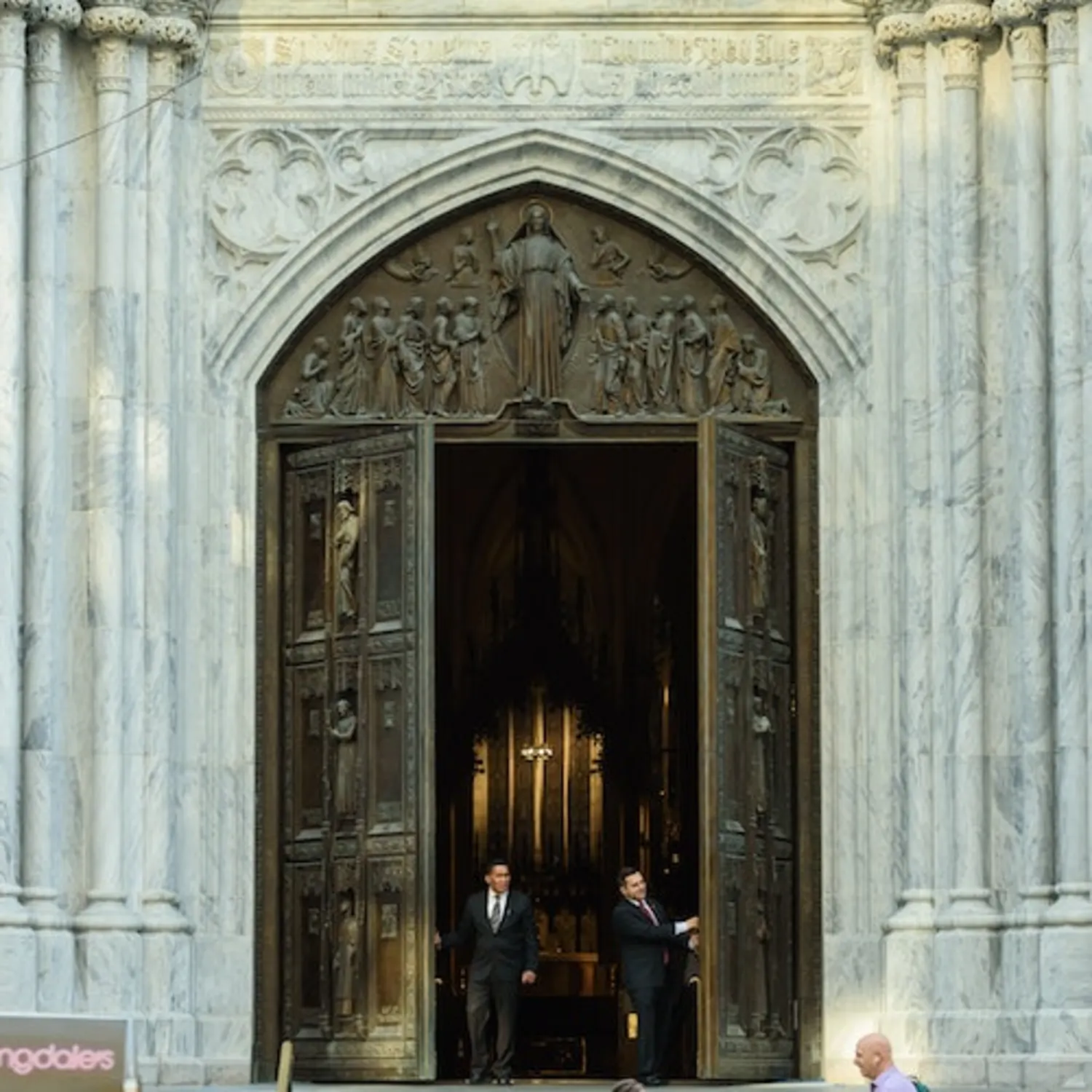
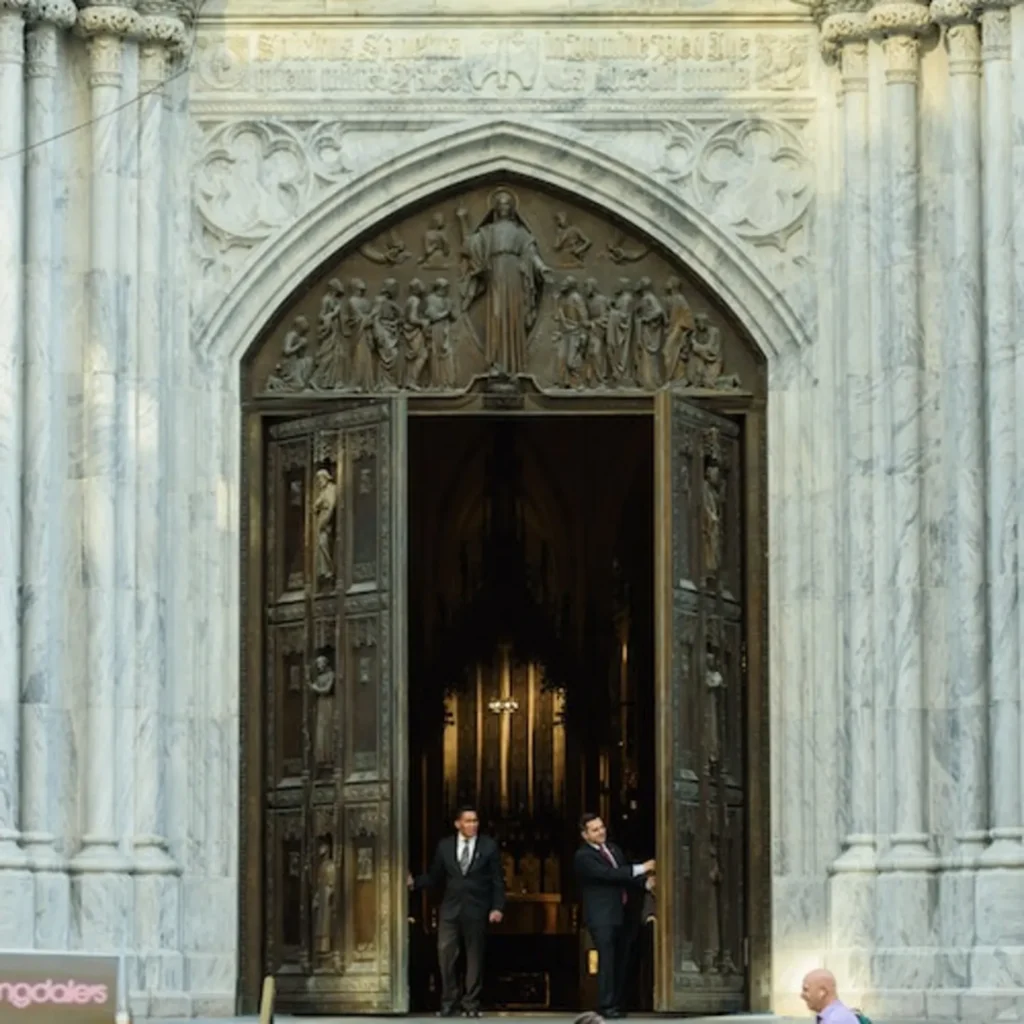
Bronze doors and facade of St. Patrick's Cathedral

The cathedral's $800,000 debt was fully paid in the first half of 1910, and it was consecrated on October 5, 1910, with Archbishop John Murphy Farley officiating.

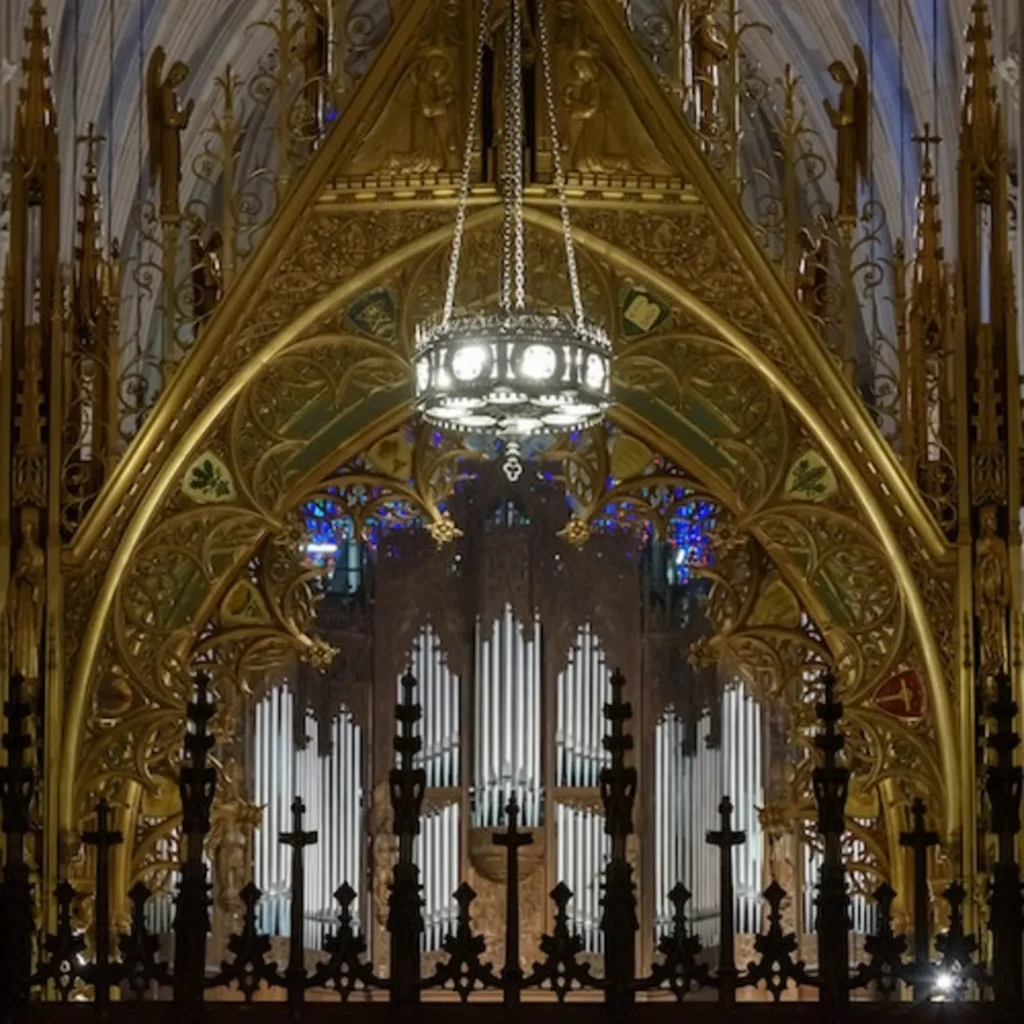
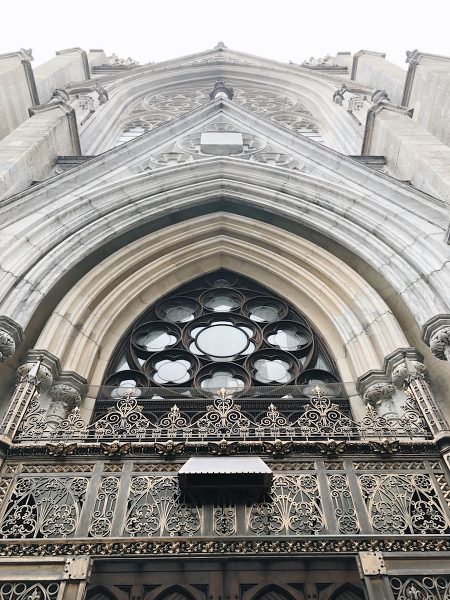
Later decades added much of what visitors see inside. In 1927 the architect Robert J. Reiley laid a marble floor, extended the sanctuary by about 8 feet and installed two new organs. A new high altar designed by Charles Maginnis was consecrated in May 1942. The bronze doors, designed by Maginnis and sculpted by John Angel, were installed in 1949 and blessed in December of that year. Charles Connick designed the rose window, 26 feet (7.9 m) in diameter, and the clerestory windows of 1954 show 12 male and 12 female saints. By the cornerstone centennial in 1958 the cathedral was receiving more than three million visitors a year.

Landmark status and the modern restoration

St. Patrick's Cathedral on Fifth Avenue in Midtown Manhattan

The Landmarks Preservation Commission designated the cathedral a New York City Landmark in 1966. An interior restoration under Cardinal Terence Cooke ran from 1972 to April 1973 and cost $800,000. The cathedral close was listed on the National Register of Historic Places and declared a National Historic Landmark on December 8, 1976.

The most recent restoration, from 2012 to 2015, cost $177 million. It was designed by Murphy Burnham and Buttrick, with Structure Tone as construction manager, and the work was complete by September 17, 2015, a week before the visit of Pope Francis. Scaffolding came down in July 2016, and a geothermal system with ten wells, each 2,200 feet deep, was completed in 2017. Busts in the nave honor four popes who visited: Paul VI, John Paul II, Benedict XVI and Francis.

See the history in person

Entry to St. Patrick's Cathedral is free. The Official Tour adds a self-guided audio experience narrated by Cardinal Timothy Dolan. You collect an Apple iPad and disposable headphones at the tour desk, and the narration covers the cathedral's history, its Neo-Gothic architecture, its stained glass and its renowned Pietà. The audio guide is available in English, French, Italian, Portuguese and Spanish, and each visitor needs a ticket. Free cancellation applies until 24 hours before your visit.

This is a place of worship, so dress and behave respectfully. For Mass times and opening hours, read the St. Patrick's Cathedral hours guide, and for the route from the subway, see getting to St. Patrick's Cathedral.

St. Patrick's Cathedral history FAQs

When was St. Patrick's Cathedral built?

The cornerstone was laid on August 15, 1858 and the cathedral opened on May 25, 1879. The spires were completed in October 1888 and the building was consecrated on October 5, 1910.

Who designed St. Patrick's Cathedral?

James Renwick Jr. was largely responsible for the Neo-Gothic design. Archbishop John Hughes hired the firm of Renwick and Rodrigue in 1853.

Why was it called Hughes' Folly?

Critics thought Archbishop John Hughes had chosen a site too far north of the city to be practical, so they nicknamed the project Hughes' Folly.

Who paid for the cathedral?

Thousands of immigrant parishioners paid for it with their donations, along with 103 Catholic subscribers who each gave $1,000 and two non-Catholic subscribers.

Why did construction stop?

Work was suspended in August 1860 when the fund of $73,000 ran out, and the Civil War, which began in 1861, prevented it from resuming for several years.

How tall are the spires?

Each of the two spires is 329.5 feet (100.4 m) tall. They were completed in October 1888.

What style is the cathedral?

It is Neo-Gothic. James Renwick Jr. drew on the Gothic cathedral in Cologne, Germany, and the building follows a Latin cross plan.

What is St. Patrick's Cathedral made of?

The main section is Tuckahoe marble, and the exterior is also clad in marble from Lee, Massachusetts and Pleasantville, New York.

When was the cathedral restored?

A restoration from 2012 to 2015 cost $177 million. It was designed by Murphy Burnham and Buttrick, with Structure Tone as construction manager.

Is it a National Historic Landmark?

Yes. The cathedral close was listed on the National Register of Historic Places and declared a National Historic Landmark on December 8, 1976. It has also been a New York City Landmark since 1966.

Is it free to visit, and how can I learn the history inside?

Entry is free. The Official Tour is a self-guided audio experience narrated by Cardinal Timothy Dolan that covers the history, the architecture and the Pietà, with iPads and headphones provided and audio in English, French, Italian, Portuguese and Spanish.

About this guide

Sources: Wikipedia, St. Patrick's Cathedral (New York City); A View on Cities, St. Patrick's Cathedral.